
Home decorator Lara Winter is one of Ideal Home's Open House contributors, sharing her thoughts on revamping a 200 year old cottage to make it right for modern family life. See the rest of her articles here.
There are two types of people in a charity shop. The ones who walk past an old cabinet and think “absolutely not”. And the ones who squint at it slightly and think, “you could actually be quite nice, you know”. Unsurprisingly, I’m the second type.

I love filling our home with thrifted finds. Not just because it’s cheaper, but because it makes a home feel personal. The trick is learning to look past what something is now and see what it could become.
1. Try to picture it in your home
Charity shops can be visually overwhelming. Nothing looks appealing squeezed between twelve pine wardrobes and somebody’s abandoned treadmill.
I always try to mentally remove the piece from the chaos around it and picture it in our home instead. Sometimes I’ll even take photos of the room I’m shopping for before I go out, so I can compare colours and proportions. It has genuinely stopped me buying things that felt “quirky” in the shop but would’ve looked completely ridiculous once I got home.
Once I can picture something in the room, I stop focusing on the flaws and start seeing the potential instead.
2. Don’t panic about the finish
Some of my favourite furniture finds have looked awful when I first bought them. Orange varnish. Scratches. Very questionable shiny lacquer.
But I’ve learned not to panic, because underneath there’s often beautiful wood hiding away. Sanding and stripping furniture can completely transform it. Yes, there’s usually dust everywhere and a point halfway through where I regret all my life choices, but it’s always worth it in the end.
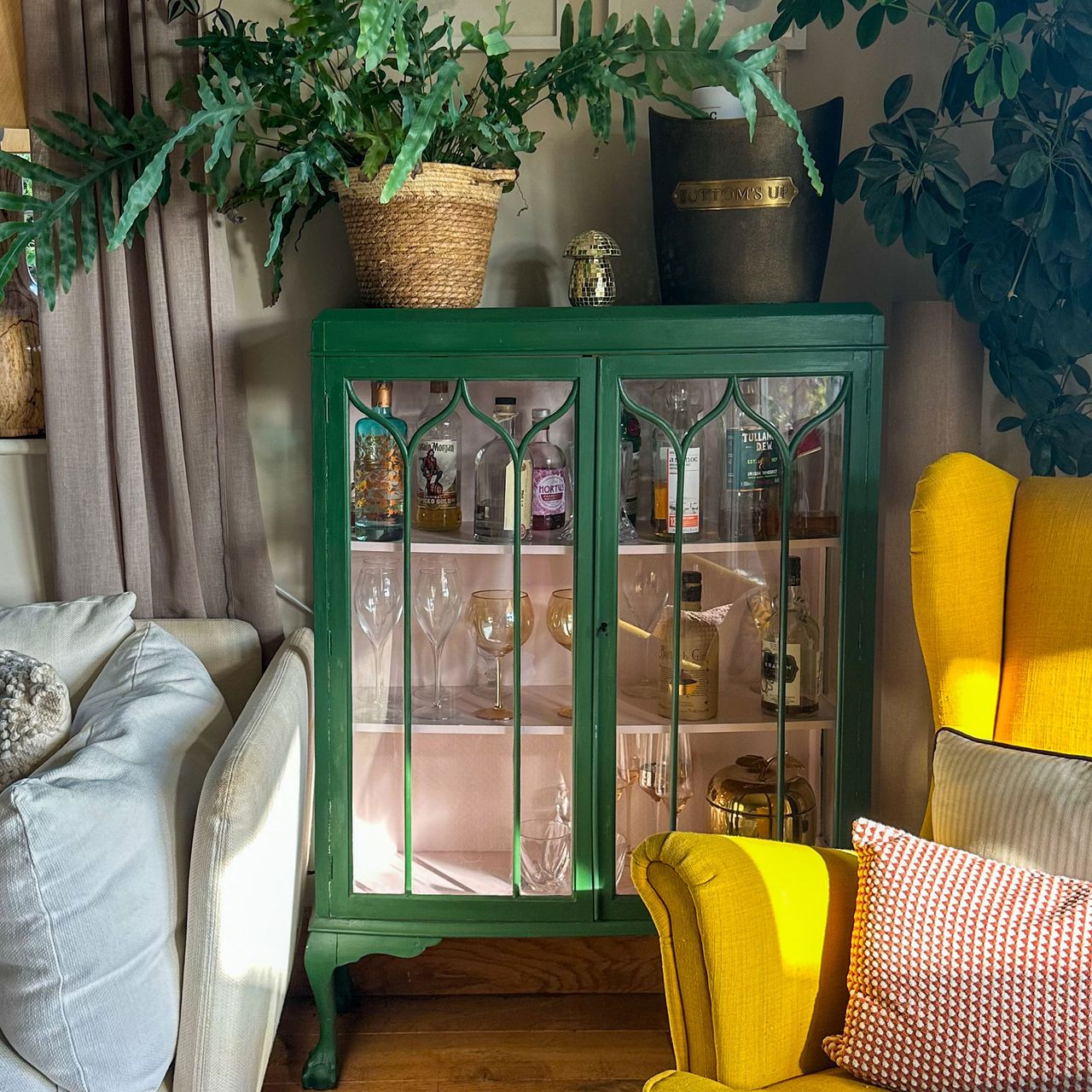
3. Sometimes you just need to paint it
Of course, sometimes stripping furniture reveals wood that really isn’t worth saving. That’s when paint becomes your best friend.
I actually think second-hand furniture is the perfect excuse to be brave with colour because it feels far less scary than painting something brand new and expensive. A coat of paint can completely change the feel of a piece. I’ve painted old dark cabinets in soft muted shades and suddenly they feel charming instead of heavy.
And honestly, if it cost £20, I’m much more relaxed about experimenting.
4. Fabric fixes almost everything
Fabric is one of my favourite ways to make thrifted pieces feel softer and more personal. Found a gorgeous lamp base but hate the shade? Recover it. Found a beautiful glass cabinet? Add little fabric curtains.
I’ve done simple no-sew cabinet curtains before and they instantly made the piece feel more relaxed and cottage-y. Even a small bit of fabric can completely change how something feels in a room.
5. Stop using things the “right” way
This is probably the biggest thing I’ve learned with thrifting: stop thinking so literally.
Some of my favourite things in our home are pieces being used completely differently than intended. A vintage drinks cabinet now lives on our kitchen counter for storage. Old baskets hang on the laundry room wall. Wooden ladders work brilliantly as towel rails. I’ve framed tea towels and scarves before, and even used leftover tiles as coasters.
Once you stop asking “what is this meant to be?” you start seeing possibilities everywhere. I think that’s why thrifted homes feel so special. They don’t feel copied or overly perfect – they feel collected, personal and full of real life.