
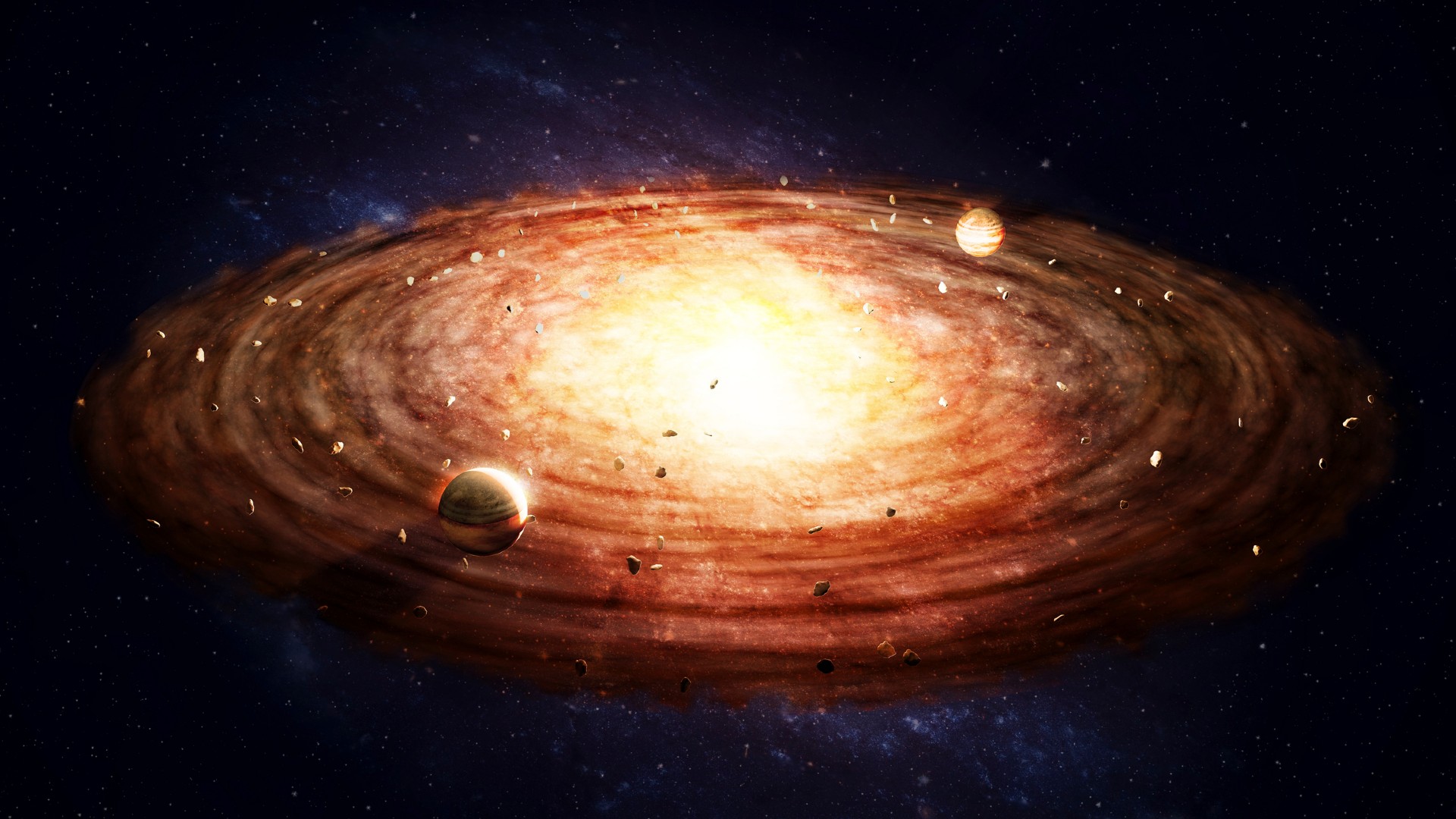
Planet formation around low-mass stars may be suffering from Peter Pan syndrome. While previous observations and models have suggested that a disk of planetary building blocks should be 'fully grown' - having burned through its world-making material - in about 10 million years, a new kid on the block is proving them wrong, weighing in at roughly 30 million years.
Using the Atacama Large Millimeter/submillimeter Array (ALMA), astronomers have probed one of the previously-identified Peter Pan disks around a low-mass star. But instead of seeing a disk that had transitioned out of planet formation, they found a disk rich in hydrocarbons, with chemical signatures never seen before in such a dated disk. This extended lifetime could have important implications for planet formation, at least around low-mass stars.