
Get all your news in one place.
100's of premium titles.
One app.
Start reading
Space
Space
Science
Paul Sutter

Some black holes have a 'heartbeat' — and astronomers may finally know why

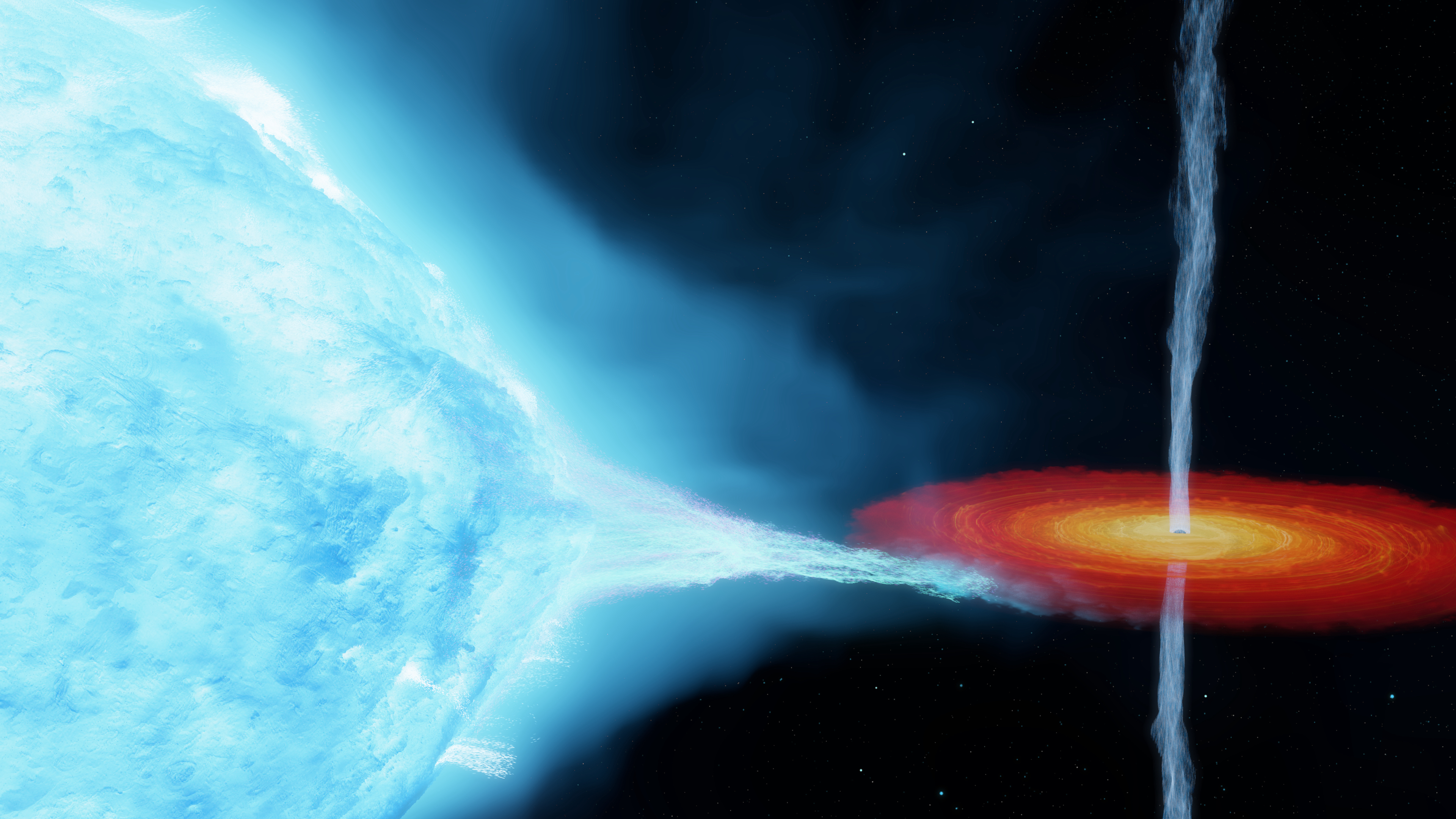
On the left is a large blue star with a long stream of material stretching out from the star into the disk around the black hole on the right. .

Black holes aren't alive, but it turns out that they can have a heartbeat — if they're consuming enormous amounts of gas. And new research has discovered just how that heartbeat works.

When black holes exist in a binary system — sharing an orbit with another star — they can pull in gas from a stellar companion. When this happens, the gas compresses and heats up to incredibly high temperatures, emitting copious amounts of X-ray radiation in the process. It's through this process that astronomers first identified black holes with the famous case of Cygnus X-1, one of the brightest sources of X-rays in our sky.

Sign up to read this article
Read news from 100's of titles, curated specifically for you.
Already a member? Sign in here
Related Stories
Top stories on inkl right now
One subscription that gives you access to news from hundreds of sites
Already a member? Sign in here
Our Picks
Fourteen days free
Download the app
One app. One membership.
100+ trusted global sources.