
Get all your news in one place.
100's of premium titles.
One app.
Start reading
Space
Space
Science
Marco Ajello

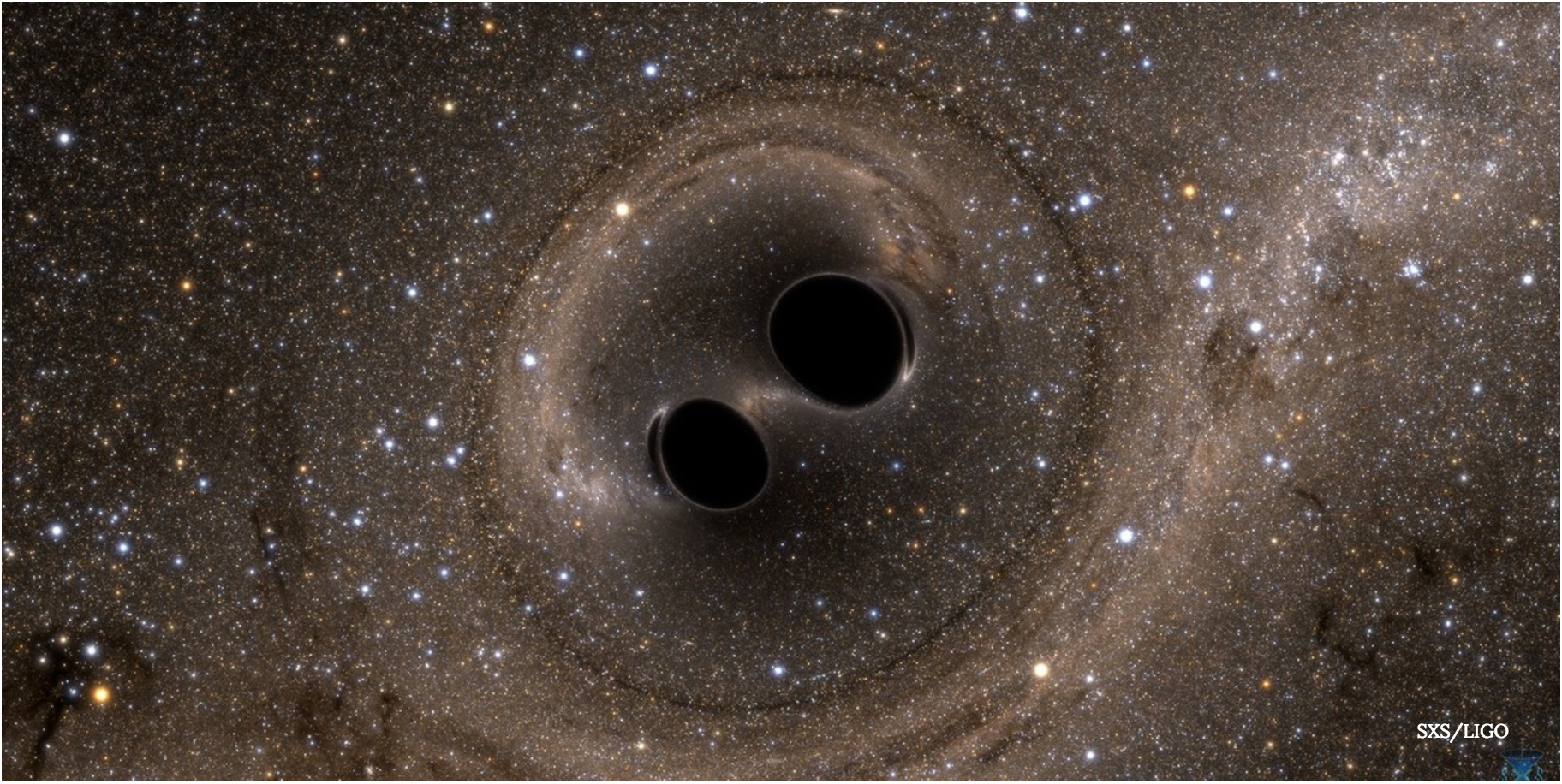
Some black holes at the centers of galaxies have a buddy − but detecting these binary pairs isn’t easy

Colliding black holes create space-time ripples that can be seen by the Laser Interferometer Gravitational-Wave Observatory (LIGO).

This article was originally published at The Conversation. The publication contributed the article to Space.com's Expert Voices: Op-Ed & Insights. Marco Ajello is a professor of physics and astronomy at Clemson University in South Carolina, and where Jonathan Zrake is an assistant professor of physics.

Every galaxy has a supermassive black hole at its center, much like every egg has a yolk. But sometimes, hens lay eggs with two yolks. In a similar way, astrophysicists like us who study supermassive black holes expect to find binary systems – two supermassive black holes orbiting each other – at the hearts of some galaxies.

Sign up to read this article
Read news from 100's of titles, curated specifically for you.
Already a member? Sign in here
Related Stories
Top stories on inkl right now
One subscription that gives you access to news from hundreds of sites
Already a member? Sign in here
Our Picks
Fourteen days free
Download the app
One app. One membership.
100+ trusted global sources.