
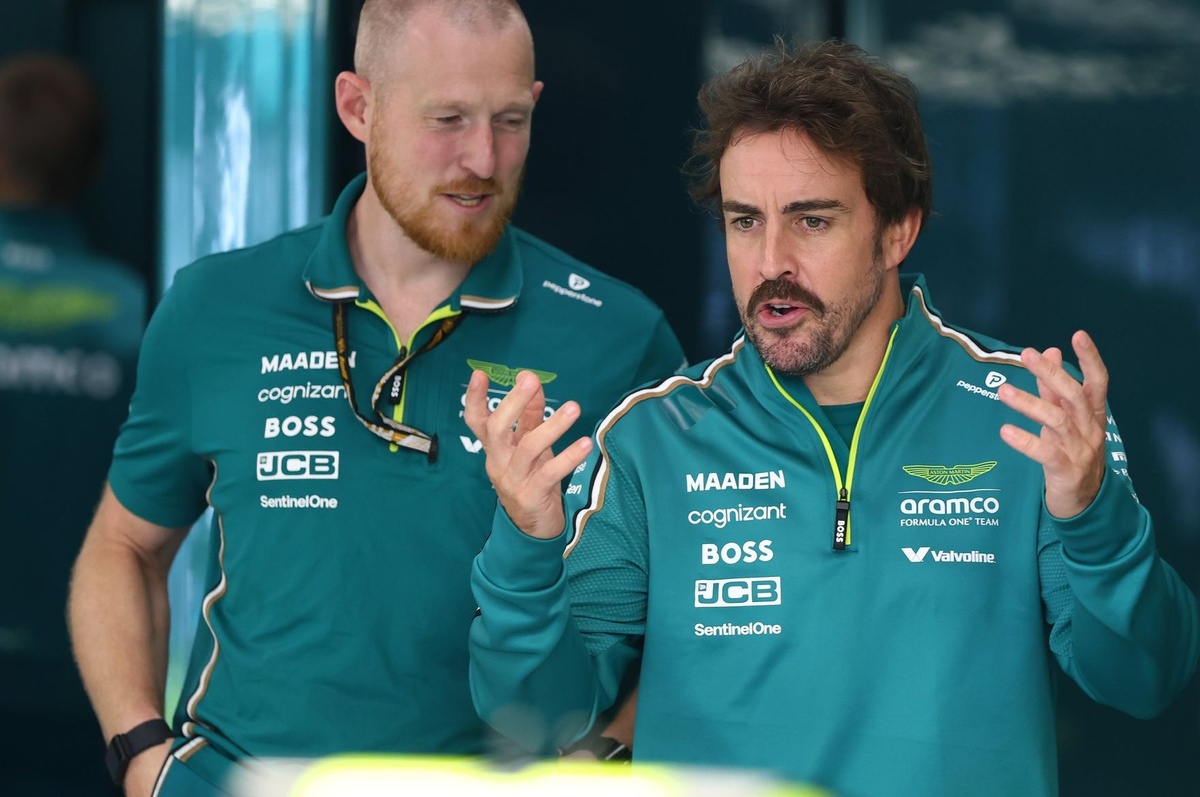
Performance gains have become harder to find as F1’s second ground-effect aerodynamics era matures, but for some, the process has been more challenging for others. Aston Martin has noticeably struggled to unlock more relative pace from its cars ever since making a strong start to the 2023 season.
This has not been for want of trying since the Silverstone-based team has been among the most industrious in bringing new components to the track. The problem has been that many of them have had to come straight off again, having failed to behave as predicted in simulation.
New managing technical partner Adrian Newey has been frank in his assessment of the team’s R&D tools - particularly the driver-in-loop simulator.
“You learn from mistakes and you learn from the things that didn't work,” Alonso said when asked by Motorsport how useful the experience of sub-optimal upgrades can be in terms of assessing new ideas.
“But I don't think that it was a great thing to bring upgrades that didn't deliver what we were expecting. So there were some kind of mistakes in the process of designing something, producing something and believing that it will make the car faster.
“And when those parts are not making the car faster, you need to undo some of the steps and know where the mistake was made. And as I said, even if we learn from that, it should never have happened.