
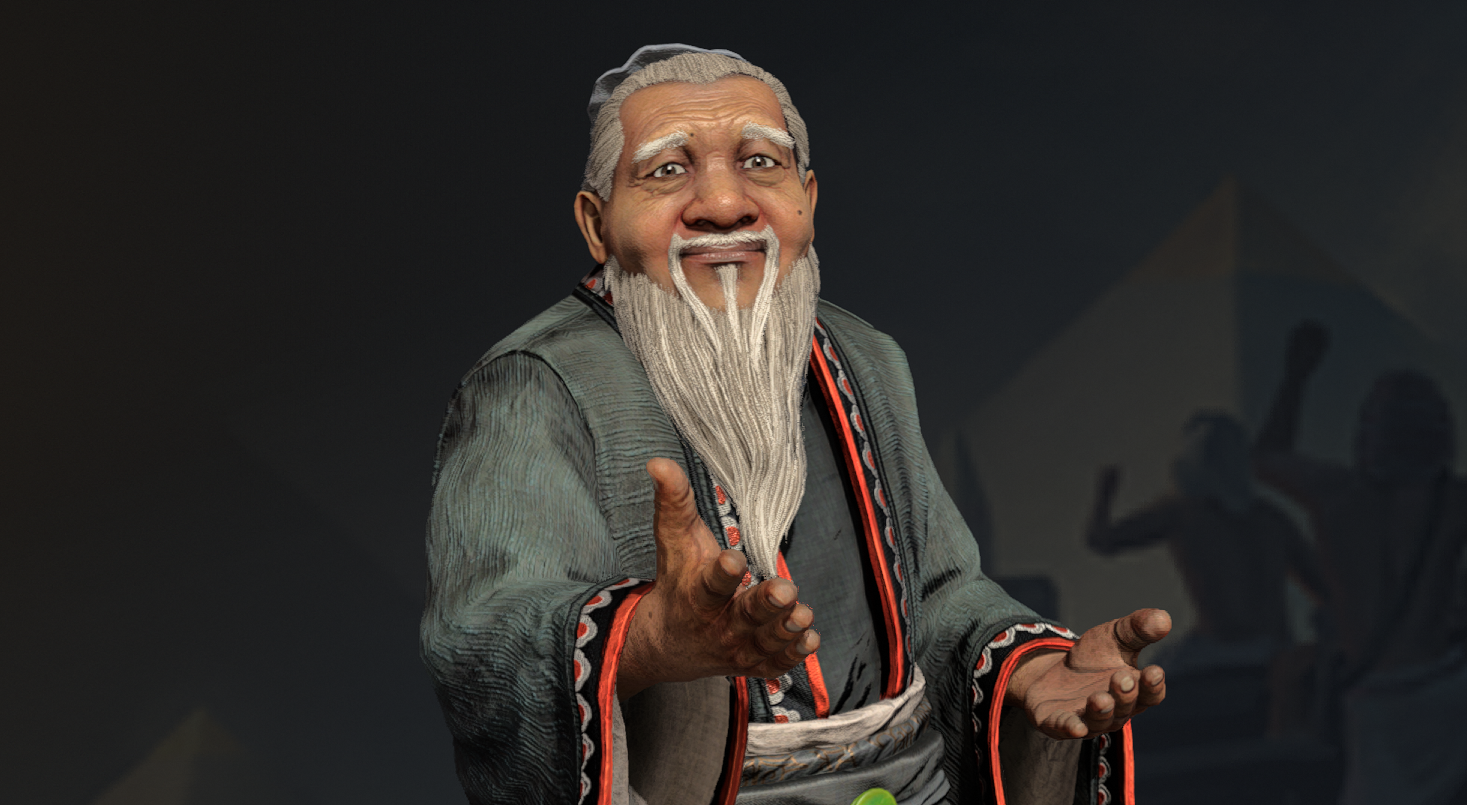
It's judgement day for Charlemagne of the Roman Empire (not 'Holy' Roman Empire, I hasten to add, as leaders are no longer attached to their historical civilisations in Civilization 7). I'm playing the grand strategy game for PC Gamer's forthcoming review—it's out February 11—and after several millennia of strained diplomacy with Charlemagne, throughout which I'd graciously accept his Open Borders proposals while he'd dismiss my own and slowly grow to dislike me due to our agendas not aligning, I march on his empire, his capital still hidden somewhere beneath the cold stone hexes that make up the fog of war.
There's a dramatic end-of-days quality to the conflict that ensues. This is the end of the Age of Antiquity. The march of progress through this era, which is amassed collectively by the cultural, economic, military, and scientific achievements of all civilisations in the game, is almost at an end; the building of glorious wonders and other milestones of progress has been replaced by a continental plague—one of several 'Crisis' scenarios that automatically ensue towards the end of an era—and a war that's somehow pulled in every civilisation and city-state on the land (clearly, I wasn't the only one who had enough of Charlemagne's Byzantine bullshit).