
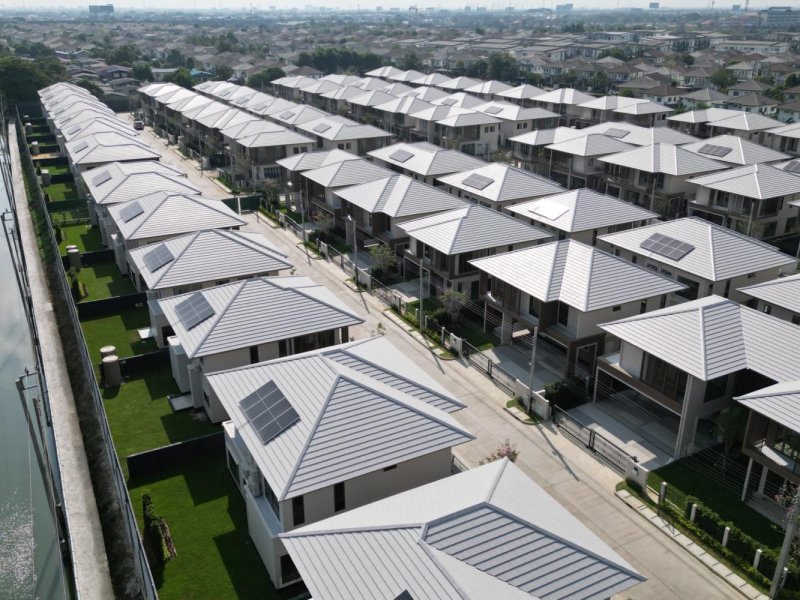
Thailand's household debt reached 86.7% of GDP at the end of 2025, among the highest ratios in Asia. The Bank of Thailand's own data shows that debt for consumption is rising; debt based on income-generating assets such as property or housing loans is contracting. The data reflects bread-and-butter issues and the rising cost of living.
The International Energy Agency (IEA) identifies energy as the third-largest household expense globally after food and housing. When residential energy and transport costs are combined, the poorest households spend over 20% of their income on energy. In Southeast Asia, poorer communities face a high risk from energy price spikes, as energy can account for a large share of overall spending. Indeed, residential electricity is the most exposed to price volatility. In Thailand's case, this volatility is a structural problem. The fuel tariff (Ft), recalculated every four months based on international gas prices, means bills can rise sharply with no warning. When they do, households with no buffer absorb the increase through additional borrowing.












