
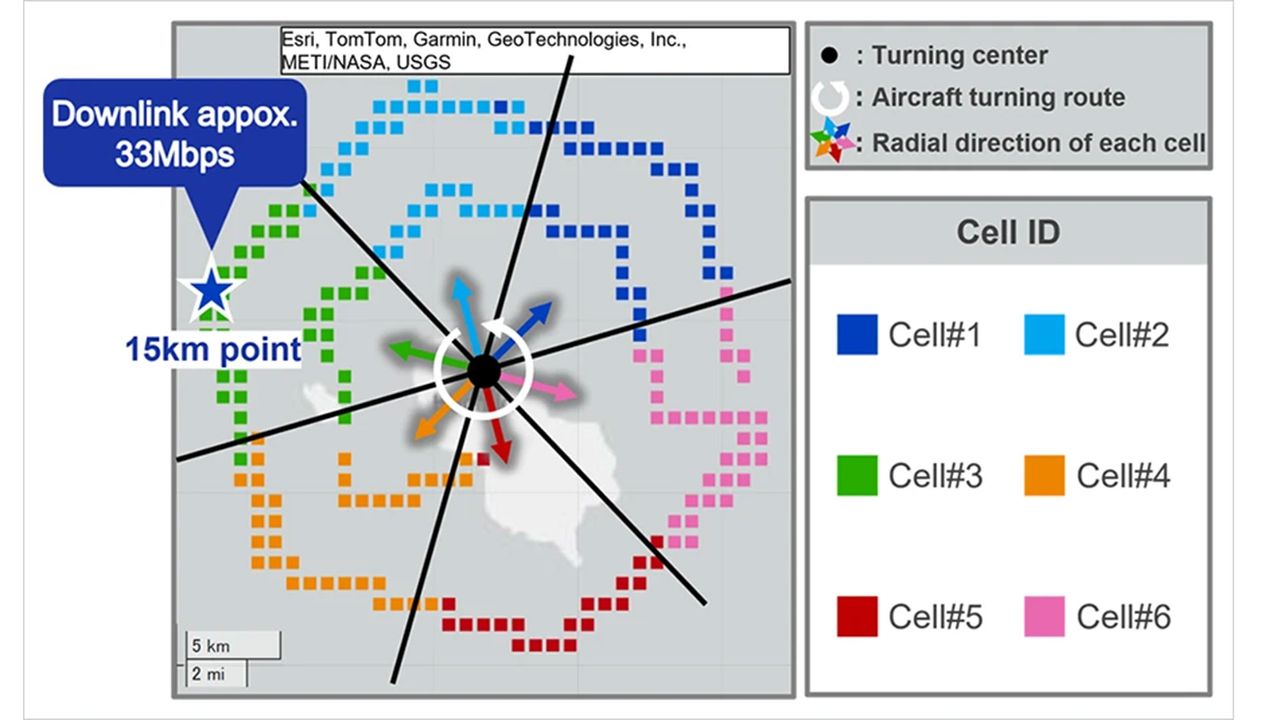
SoftBank successfully delivered end-to-end 5G connectivity to standard smartphones using an airborne base station, in a live field trial conducted in June, above Hachijō Island, Japan. The company used a light aircraft flying at 3,000 meters to simulate a high-altitude platform, linking ground infrastructure to devices via a 26 GHz feeder connection and a 1.7 GHz service link.
Unlike most “direct-to-device” projects that rely on satellites in low Earth orbit, SoftBank’s approach uses High-Altitude Platform Stations (HAPS) that hover in the stratosphere, about 20 kilometers up. That altitude brings big advantages like lower latency and fewer of the power and Doppler challenges that present challenges to orbital links. According to SoftBank, the service link in the trial operated on the 1.7 GHz band, which is already supported by most 5G phones sold around the world.