
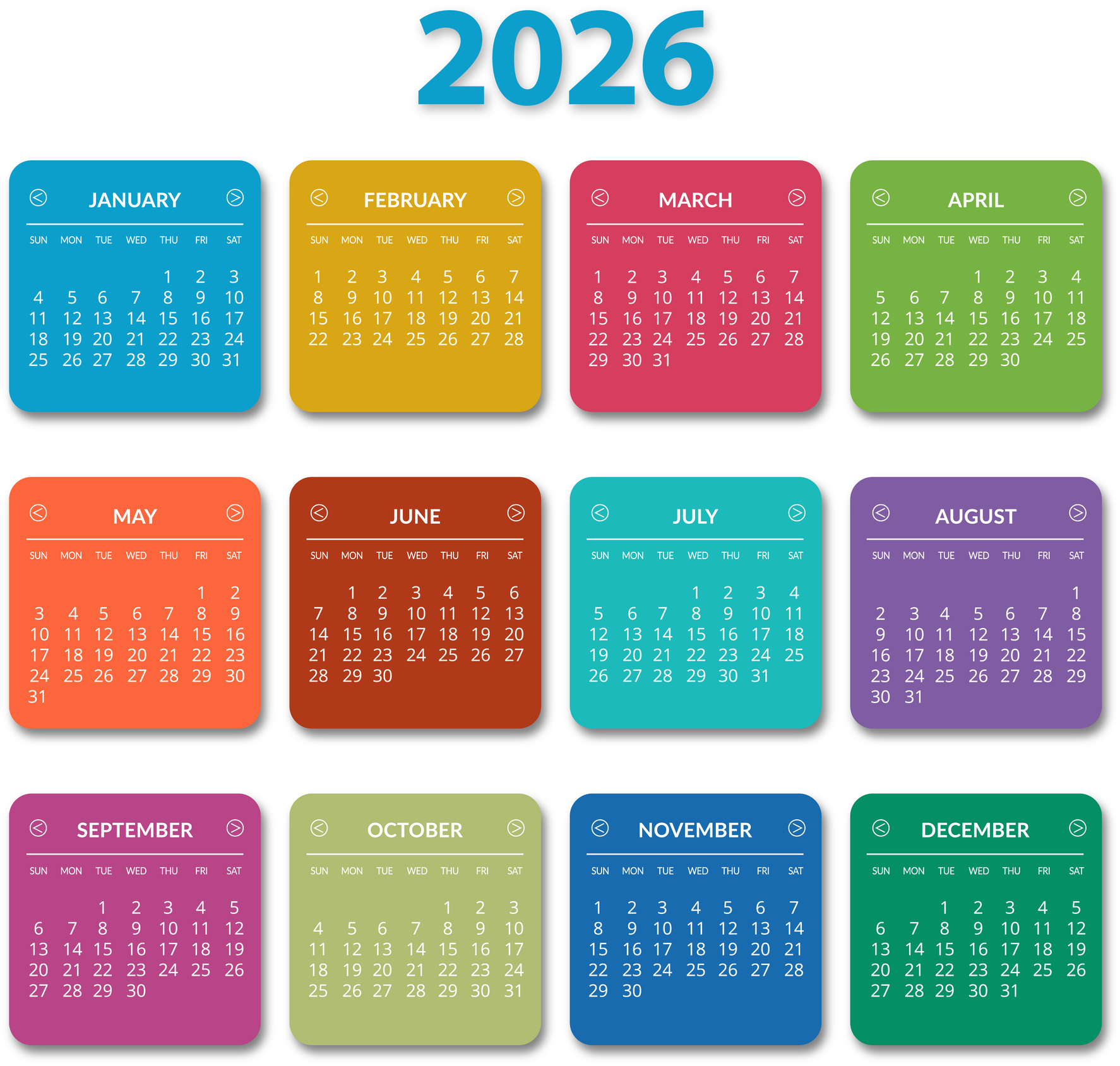
Understanding when your Social Security benefits will arrive each month is essential for budgeting and financial planning. The Social Security Administration (SSA) operates on a fixed calendar, but certain holidays can shift payment dates.
This year, beneficiaries will also see their checks reflect the 2026 2.8% Cost-of-Living Adjustment (COLA), matching the estimate provided by David Payne, staff economist for the Kiplinger Letter. According to the Social Security Administration (SSA), the 2.8% increase will translate to an additional $56 for the average retiree, resulting in an average monthly check of $2,071.
Here, we break down the full 2026 Social Security payment schedule, clarifying the key dates based on your birthday and benefit type. Read on to find out exactly when to expect your payments throughout the year, and learn about the important exceptions and rules that apply to your benefits.

Schedule of Social Security benefit payments in 2026
The general rule for Social Security payments is that the date you receive your benefit check is primarily determined by your birth date and the type of benefit you receive.
Supplemental Security Income (SSI) payments always arrive on the first of the month or the preceding business day if the first is a weekend or holiday.
For most other Social Security retirement, survivor and disability beneficiaries who began receiving payments after May 1997, checks are distributed on the second, third or fourth Wednesday of the month, corresponding to your birth date. However, those who started receiving benefits before May 1997, or who receive both Social Security and SSI, will receive their Social Security benefit on the third of the month.
A crucial exception for all schedules is that if a payment date falls on a Saturday, Sunday or federal holiday, the payment is issued on the immediately preceding weekday to ensure timely access to funds.
Here are all the confirmed payment dates for retirees based on the Social Security payment schedule for 2026. Just find the day of the month you were born on the left side of the table. Then, look under each month for the specific payment date.
Month/Birth date |
1st – 10th |
11th – 20th |
21st – 31st |
|---|---|---|---|
January |
Wednesday, 14th |
Wednesday, 21st |
Wednesday, 28th |
February |
Wednesday, 11th |
Wednesday, 18th |
Wednesday, 25th |
March |
Wednesday, 11th |
Wednesday, 18th |
Wednesday, 25th |
April |
Wednesday, 8th |
Wednesday, 15th |
Wednesday, 22nd |
May |
Wednesday, 13th |
Wednesday, 20th |
Wednesday, 27th |
June |
Wednesday, 10th |
Wednesday, 17th |
Wednesday, 24th |
July |
Wednesday, 8th |
Wednesday, 15th |
Wednesday, 22nd |
August |
Wednesday, 12th |
Wednesday, 19th |
Wednesday, 26th |
September |
Wednesday, 9th |
Wednesday, 16th |
Wednesday, 23rd |
October |
Wednesday, 14th |
Wednesday, 21th |
Wednesday, 28th |
November |
Tuesday, 10th |
Wednesday, 18th |
Wednesday, 25th |
December |
Wednesday, 9th |
Wednesday, 16th |
Wednesday, 23rd |
The average monthly Social Security check
In October 2025, which is the latest information available, the average Social Security monthly check for retirement workers was $2,012.30, according to the Social Security Administration's Monthly Snapshot (SSA). If you are interested in knowing more about SS benefit payments and how your check measures up to peers, take a look at what the average Social Security check is by age.
Why you should have a 'my Social Security' account
You should definitely have a "my Social Security" account, which is the online account managed by the administration. The account can help you manage tasks such as requesting a replacement Social Security card, receiving updates about the COLA, updating your direct deposit information, and getting your Social Security 1099 form.
And, if you are concerned about mail theft or travel often, you can opt out of mailed notices for those available online.