Get all your news in one place.
100’s of premium titles.
One app.
Start reading
International Business Times UK
Tanmay Puri

Social Media Panic Grows Over Claims of 'Brain-Eating' Amoebas in Water

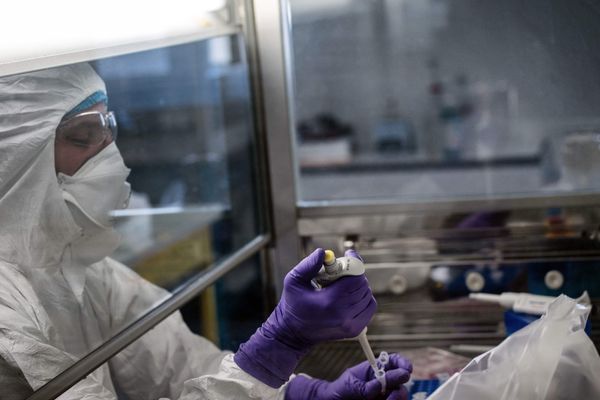
Fact Check: Are brain-eating amoebae invading drinking water worldwide? (Credit: Pixabay)

Most people still have not recovered from the trauma of the COVID 19 pandemic that not only spread rapidly but also resulted in millions of deaths. Now, social media is claiming that 'brain-eating' amoebae are invading the water systems throughout the world.

A viral tweet argues that microscopic organisms such as Naegleria fowleri are colonising drinking water networks and recreational waters, leading to possibly a terrifying public health threat. The post references a study published in the journal Biocontaminant, stating that free-living amoebae are more resilient than assumed and may act as vehicles for other pathogens.

This post has now gotten tens of thousands of views, which might cause public anxiety on the safety of water supplies. But in between these worries, it is important to distinguish actual scientific warnings from possible exaggerated panic, and to understand what evidence exists about N. fowleri and similar amoebae.

What We Know About the 'Brain Eating' Amoeba

The main support of the viral theory comes from a perspective article titled 'The rising threat of amoebae: a global public health challenge' published online in Biocontaminant in December 2025.

According to reports, authors of the said article claim free living amoebae such as Naegleria fowleri and species in the genus Acanthamoeba are present in both natural and engineered water environments and can withstand conditions that would kill many other microbes. They added that these organisms can tolerate elevated temperatures, high pH levels, and huge concentrations of chlorine, implying potential resistance to some standard disinfection methods.

Moreover, they describes amoebae as 'Trojan horses' for other pathogens, which means they are capable of sheltering bacteria and viruses within their cells and thus helping them survive treatment processes. The researchers argued this may lead to the spread of other harmful microbes and antibiotic resistance genes.

The authors attached the problem to other environmental changes, such as climate warming and ageing water infrastructure, which may increase human exposure. So, with rising temperatures, heat-loving species like Naegleria fowleri could expand their geographic range into areas previously too cool to sustain them. The paper calls for a coordinated one health approach, integrating environmental monitoring, public health surveillance, and updated water treatment technologies to mitigate future risks effectively.

This perspective is based on actual scientific worries. The Naegleria fowleri is indeed a real organism that can cause primary amoebic meningoencephalitis (PAM), a fast-progressing and usually fatal brain infection when contaminated water enters the nasal passages. The condition has a mortality rate exceeding 95% as per reports, and symptoms develop within a matter of days of exposure.

Also, research shows that N. fowleri can adapt to different environmental conditions. It undergoes morphological changes to cope with environmental stressors and is able to form resistant cysts, enhancing its survival in adverse conditions.

Read More: Teleportation Via Internet? - Researchers Perform Unbelievable Science Experiment

Read More: What Happened When 3I/Atlas Was Scanned For Aliens? - Results Are Finally Here

Fact-checking the Panic: What is Real and What is Misleading

Despite the scientific basis for the worry, a good look at the evidence clearly shows that the 'brain-eating amoeba invading water systems worldwide' theory going viral online is at best overstated. For most people, the chances of encountering Naegleria fowleri in a way that leads to infection are extremely low. Drinking or using contaminated water without it entering the nose does not cause PAM, because the amoeba must reach the olfactory nerve pathways to cause infection.

Importantly, while N. fowleri has been detected in natural and even treated water systems, actual cases of infection from treated tap water are very rare. One documented instance in the United States involved N. fowleri cultured from a public drinking water system, but such cases remain exceptions rather than a common occurrence, as per reports.

Global case records are extremely low, with fewer than 10 cases documented annually in the United States and a total of under 500 reported worldwide between 1962 and 2023. However, those numbers may be underestimates due to diagnostic challenges. Most cases are linked to recreational freshwater exposure during warm months. So, while there is no need to panic, a strategy against this amoeba should be developed.

Sign up to read this article
Read news from 100’s of titles, curated specifically for you.
Already a member? Sign in here
Related Stories
Top stories on inkl right now
One subscription that gives you access to news from hundreds of sites
Already a member? Sign in here
Our Picks
Fourteen days free
Download the app
One app. One membership.
100+ trusted global sources.