
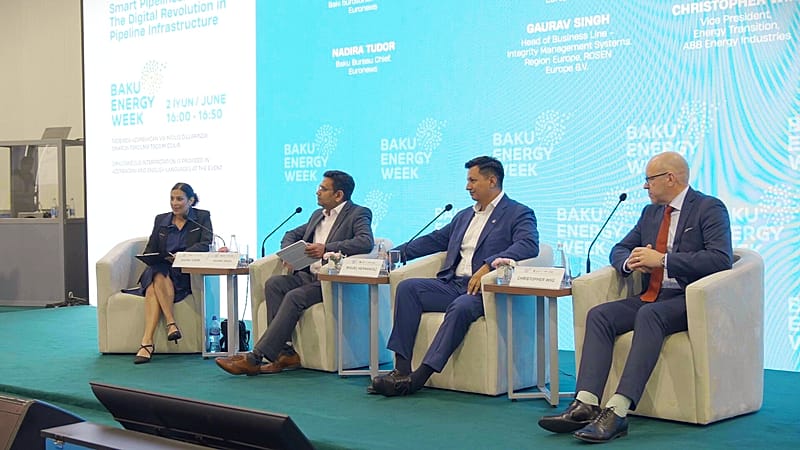
Around 500,000 kilometres of oil and gas pipelines worldwide need to be renovated, rebuilt or upgraded, while leaks, ruptures and incidents already cost the sector more than $7 billion (€6bn) a year — and roughly 40% of failures go undetected in the first 24 hours, according to industry experts speaking at the Baku Energy Forum.
The scale of the problem is driving rapid adoption of sensors, machine-learning and real-time monitoring systems designed to shift pipeline management from responding to failures to anticipating them.