Get all your news in one place.
100's of premium titles.
One app.
Start reading
The Economic Times
The Economic Times

Slumdogs no more: Can tycoons take the Mumbai Model to other cities?

Some of India's biggest businessmen, including Adani and Ambani, are making an unusual bet. Instead of chasing fresh land on city outskirts, companies linked to Reliance Industries, Adani Group, JSW Group, Shapoorji Pallonji Group and Lodha Developers are now competing for ageing housing colonies, slum clusters and urban renewal projects in the heart of Mumbai. ET reported today that the country's largest business houses are increasingly treating redevelopment opportunities as prized assets as greenfield land becomes scarce and expensive.

Also Read: Corporate giants turn to urban regeneration as redevelopment race intensifies

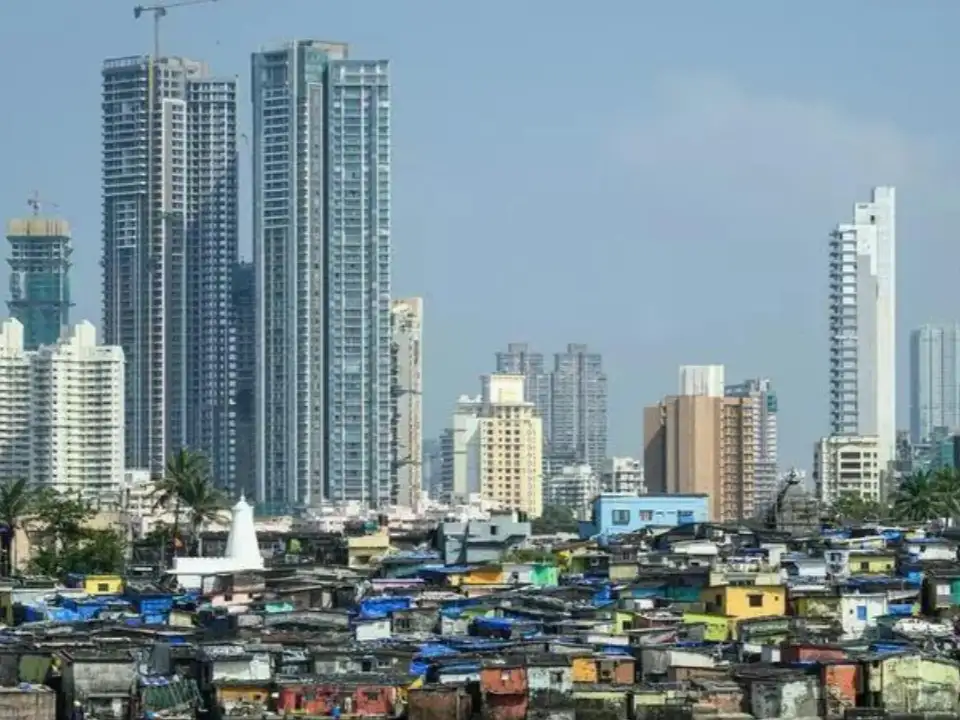
The shift is already visible in projects stretching from Worli and Bandra to large slum rehabilitation schemes across the city. If this trend gathers momentum, it could end up doing far more than creating new real estate inventory. It could offer a template for transforming some of the most decayed and overcrowded urban pockets across India.

Mumbai has become India's redevelopment laboratory

The corporate rush into redevelopment is happening in Mumbai because the city has run out of easy growth options. Large greenfield parcels are scarce, expensive and often unavailable in locations where people actually want to live and work. That has forced developers to look inward rather than outward. As per the ET report, redevelopment projects are increasingly being viewed as prized assets because they offer access to established urban neighbourhoods where acquiring fresh land is no longer feasible. Industry executives say this is turning redevelopment into the preferred growth avenue for well-capitalised groups that can handle the complexity and long timelines involved.

The opportunity is enormous. Large parts of Mumbai's housing stock are ageing. Many neighbourhoods consist of decades-old buildings with poor infrastructure and limited scope for expansion. Alongside them sit some of the country's largest informal settlements occupying strategically located urban land. For planners, redevelopment is no longer merely a real estate activity. It has become a tool for reshaping the city itself. Agencies such as MHADA and the Slum Rehabilitation Authority have accelerated efforts to unlock these sites through large cluster redevelopment models rather than piecemeal projects.

What distinguishes the current phase from earlier redevelopment cycles is scale. For years, Mumbai's redevelopment market revolved around individual housing societies. Developers would demolish old buildings, construct taller towers and use the additional saleable area to finance the project. That model continues, but attention is now shifting to entire neighbourhoods and urban districts.

MHADA has put together one of the largest urban renewal pipelines in the country. Its redevelopment programme covers 925 acres spread across 11 projects and is expected to attract investments of around Rs 4 lakh crore. The plan aims to create roughly 75,000 rehabilitation homes and another 30,000 housing units while upgrading ageing colonies and civic infrastructure. Major developers including Adani and Reliance have already shown interest.

The competition for these projects illustrates how redevelopment has become a strategic priority for India's biggest business groups. Companies linked to Reliance Industries, Adani Group, JSW Group, Shapoorji Pallonji Group and Lodha Developers have all aggressively pursued major opportunities over the past few months. Adani Properties recently emerged as the highest bidder for MHADA's 34.33-acre Adarsh Nagar project in Worli and the 98.27-acre Bandra Reclamation cluster redevelopment scheme.

Reliance has entered the sector through the redevelopment of the 101-acre Juhu Galli slum cluster in Andheri, where more than 28,000 rehabilitation homes are planned. The project drew bids from several large developers and is widely seen as a sign that India's largest corporate houses now view slum redevelopment as a mainstream business opportunity rather than a niche segment.

Dharavi no longer an isolated experiment

For years, discussions about slum redevelopment in India revolved almost entirely around Dharavi. That is no longer the case. The Dharavi project remains the most ambitious example of urban regeneration in the country. Long portrayed internationally as a symbol of India's urban poverty, the settlement is now being mapped using drones, LiDAR surveys and digital twin technology to create a detailed database of residents and structures. The objective is to replace one of Asia's largest slums with a modern urban district while rehabilitating eligible residents. The process is complex and politically sensitive, but it has established a framework for handling projects at a scale that few cities have attempted before.

More importantly, the model is now spreading across Mumbai. The Slum Rehabilitation Authority has identified several giant clusters for redevelopment. These include Antop Hill in Wadala covering 450 acres, Majaswadi in Jogeshwari East spread across 260 acres and Behrampada in Bandra East covering 140 acres. Together, they represent a new generation of neighbourhood-scale transformation projects that go far beyond replacing individual buildings.

What is emerging is a citywide redevelopment strategy. Instead of treating slums and ageing colonies as isolated problems, planners are beginning to see them as opportunities to reorganise urban land, improve infrastructure and create formal housing stock.

Why big corporates are suddenly interested

The arrival of conglomerates marks a significant shift in the character of Indian real estate. Historically, redevelopment projects were dominated by local developers with deep neighbourhood connections. Today's projects are often too large and financially demanding for that model alone. They involve thousands of families, extensive rehabilitation commitments, transit housing costs and long construction periods. Only companies with substantial balance sheets can comfortably absorb such risks.

Industry leaders quoted in ET report argue that the sector is becoming more transparent, better regulated and increasingly institutionalised. According to Naredco chairman Niranjan Hiranandani, Indian real estate is moving away from a fragmented promoter-driven structure towards a governance-oriented industry that can attract long-term capital. That evolution is making redevelopment more attractive to large business groups looking for stable project pipelines.

The attraction is not difficult to understand. Redevelopment gives developers access to prime urban locations where assembling comparable land parcels would be nearly impossible. For cities, it offers a way to modernise infrastructure without relying entirely on public funding. For residents, it can provide larger homes and better civic amenities.

Can the Mumbai model travel across India?

The significance of what is happening in Mumbai extends far beyond the city. Almost every major Indian metropolis contains slums or ageing urban districts that have outlived their original planning assumptions. Delhi has large informal settlements and ageing colonies. Kolkata has decaying neighbourhoods and obsolete housing stock. Chennai, Hyderabad and Bengaluru contain low-rise areas occupying increasingly valuable urban land close to business districts and transit corridors.

Many of these areas suffer from the same problems visible in parts of Mumbai -- inadequate infrastructure, poor sanitation, overcrowding and buildings that are reaching the end of their structural life. Yet governments often lack the financial resources needed for wholesale renewal.

Mumbai is demonstrating a different approach. Instead of treating redevelopment as a public expenditure programme, it is being structured as a partnership between government agencies, private capital and existing residents. The underlying idea is that the value embedded in urban land can finance much of the transformation. If the model succeeds, it could reshape how India deals with urban decay.

Replacing the slum narrative

For decades, images of sprawling slums have shaped international perceptions of Indian cities. Photographs of corrugated roofs packed tightly together continue to circulate on social media whenever discussions turn to urban India. Popular culture has reinforced the image, most famously through the movie 'Slumdog Millionaire', which introduced global audiences to the visual reality of Dharavi. These settlements often occupy some of the most valuable land in Indian cities. Their residents contribute to the urban economy, work in nearby commercial districts and sustain local businesses. The challenge is not their location but the absence of adequate housing and infrastructure.

Redevelopment offers a chance to change that equation. Instead of pushing residents to distant outskirts, cities can rebuild neighbourhoods where communities already live and work. The process is difficult and requires safeguards for residents. But the alternative is allowing large parts of urban India to continue deteriorating while cities expand endlessly at the edges.

Mumbai's current redevelopment wave suggests another path. If large corporate groups, backed by transparent rules and strong public institutions, can successfully transform ageing colonies and slum clusters into modern neighbourhoods, the impact will extend far beyond the city's skyline. It could provide a blueprint for tackling some of the most visible symbols of urban decay across India and help rewrite the story of how Indian cities evolve in the decades ahead.

Sign up to read this article
Read news from 100's of titles, curated specifically for you.
Already a member? Sign in here
Related Stories
Top stories on inkl right now
One subscription that gives you access to news from hundreds of sites
Already a member? Sign in here
Our Picks
Fourteen days free
Download the app
One app. One membership.
100+ trusted global sources.