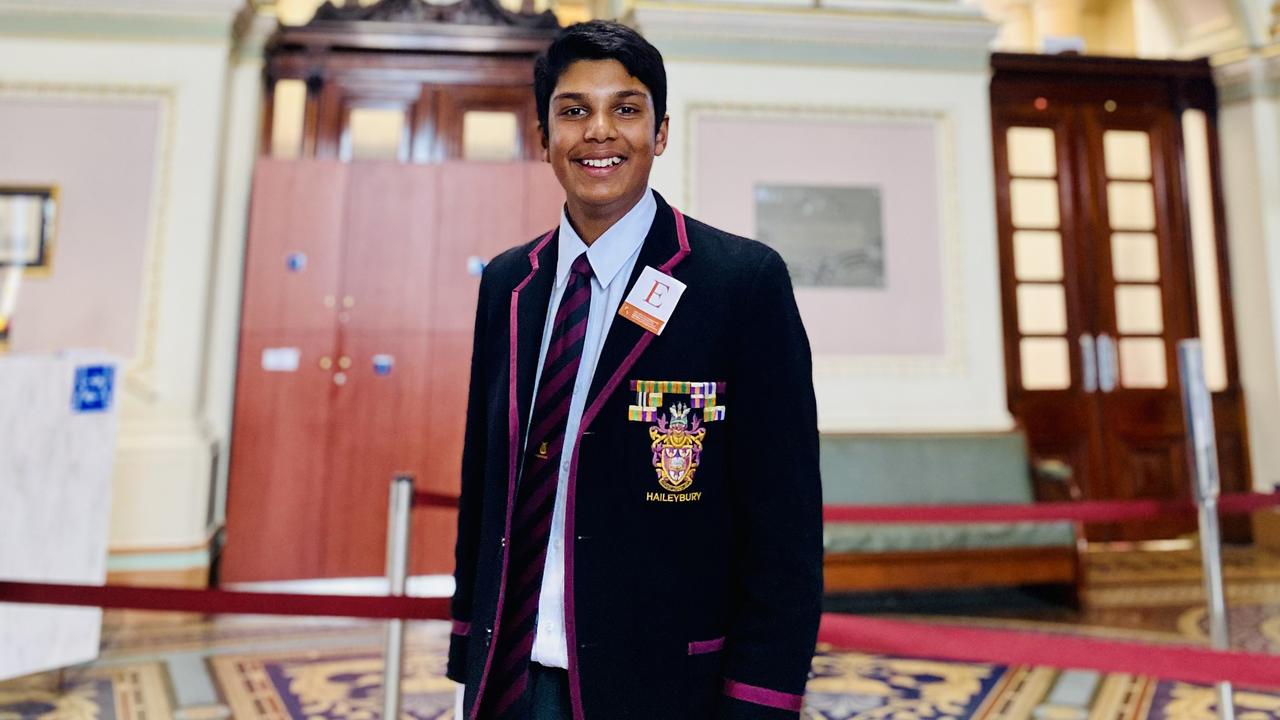
High school student Anay Ashwin has been busy.
At 13, he was designing lunar rovers and a year later presented to the International Astronautical Congress in Milan, Italy.
Anay then went to the 2025 International Conference on Environmental Systems in Prague, at the same time as experimenting with a space station simulator in Poland.
Most kids want to be an astronaut at some point, but the 16-year-old has not stopped striving to make those dreams a reality.
Countdown to-lift off for the year 11 Haileybury school student began with writing a short story.
"I imagined that travelling to the moon might one day sort of feel like going on a holiday, and where people could live in lava tubes on the lunar surface," the Melbourne student told AAP.
Anay's goal now is to become a flight surgeon, which is not rocket science or brain surgery - it's both.
"Space flight places the human body under some extreme stresses," he said.
"Microgravity, disrupted sleep, isolation ... so (astronaut's) health needs to be constantly and carefully monitored."
He knows these stresses better than most.
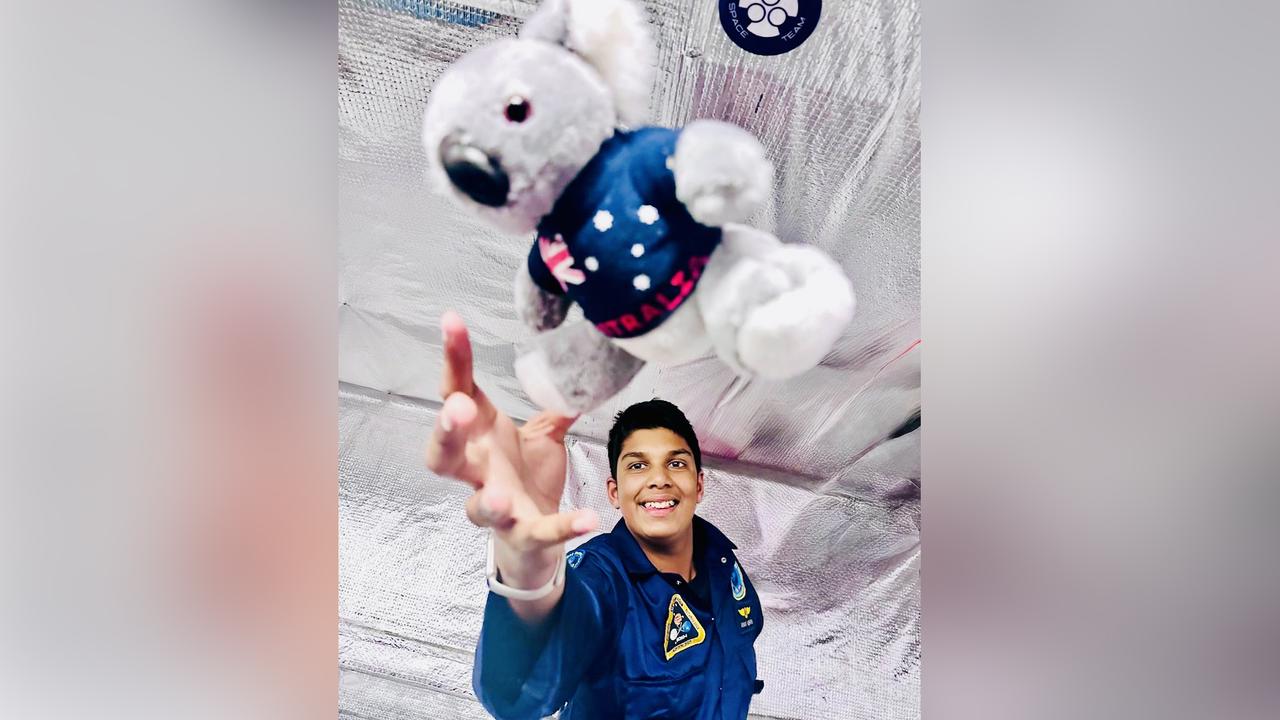
In 2025, he and five other crew members became "analogue astronauts", boarding a space station simulator in Poland designed to mimic a real space flight, except for the weightlessness.
The cramped quarters, devoid of natural light, became their home for eight days, two of which they lived in a complete blackout to imitate the impact of solar flares.
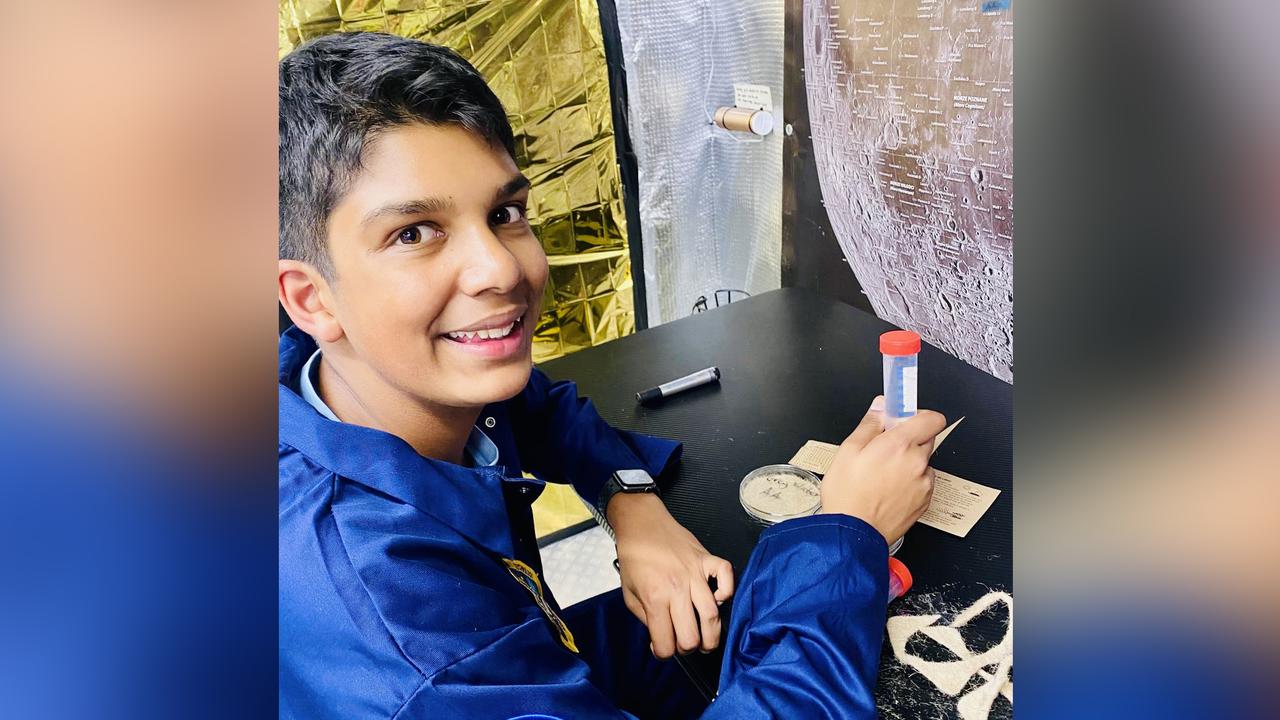
Anay described the period as "almost like camping" but that didn't stop him from investigating the impact of carbon dioxide on sleeping astronauts.
Spacecraft are poorly ventilated by design, meaning a large and busy crew can huff, puff, and inhale a lot of CO2.
Breathing in too much of that can cause hypercapnia, which leads to drowsiness, headaches, dizziness and loss of consciousness in severe cases.
Anay analysed sleep quality in the simulator's high-CO2 environment, mostly with a smart watch.
He will soon showcase his findings in the US at the International Science and Engineering Fair in Phoenix, Arizona, where he will go up against other students for a share in a $US9 million prize pool, which is $A12.66 million.
Should he win, Anay said he wanted to conduct his research on a larger scale.
As for climbing aboard a rocket himself, Anay said he is open to "wherever the journey takes me".