
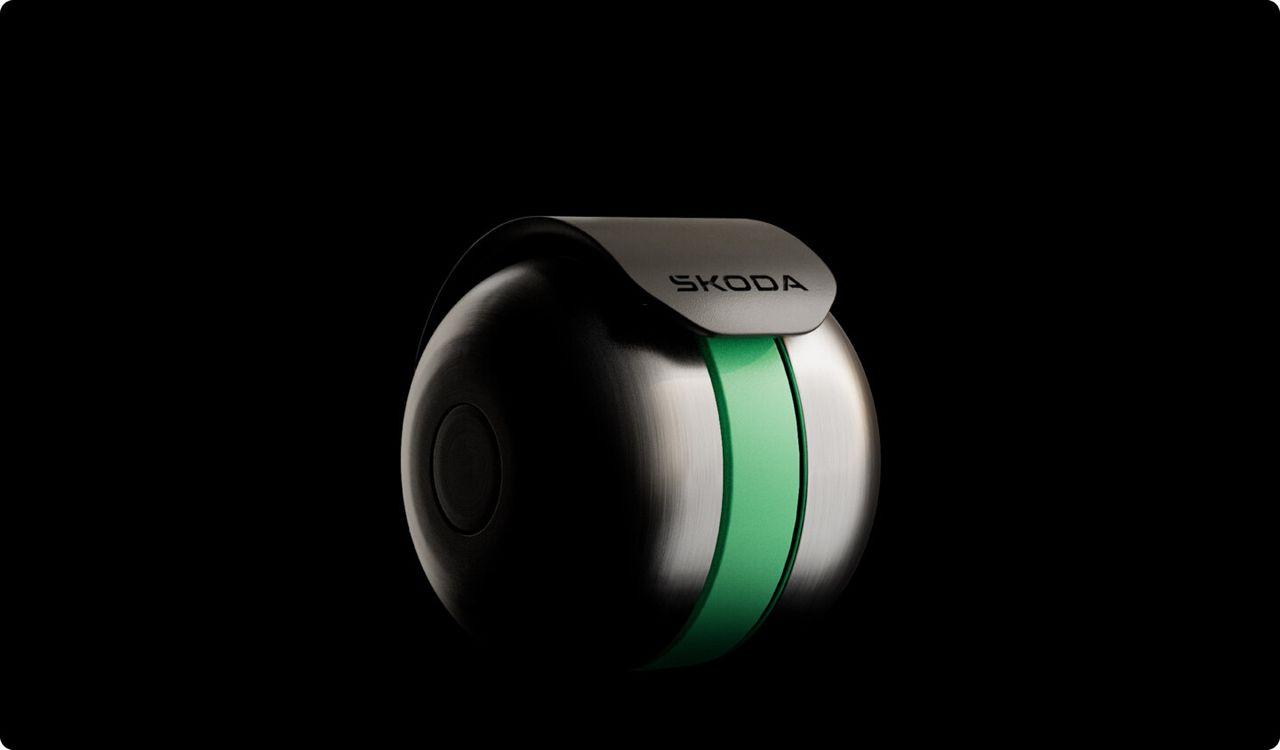
When you think about new, exciting and innovative tech on bikes, I bet you don't think about bike bells.
But today, that's about to change, as I genuinely think this is one of the coolest and smartest innovations I've seen all year.

Forget 32inch wheels, 1x drivetrains, 42mm road tyres and 3D-printed saddles, this is the big one.
It's called the DuoBell, and it comes from car brand Škoda, in conjunction with the University of Salford. And what's even more incredible, the brand has decided not to gatekeep the tech but instead give it away to the world for free, to make our world a safer place.
Perhaps ironically, despite Škoda being a car brand, and driving and cycling often being at odds with each other, the problem this bell solves isn't one related to cars, but pedestrians.
Škoda says pedestrian accidents have gone up by 30% in recent years, and attributes some of that increase to noise-cancelling headphones.
Over recent years, noise-cancelling headphones have become prevalent, and it's not uncommon for pedestrians to wear noise-cancelling headphones while walking on shared-use paths, crossing the road, or in many other walks of life.
Among the noises cancelled by said headphones is the ding of a traditional bike bell, the polite "excuse me, on your right", or perhaps the buzz of your noisy freehub as you coast up behind the newly oblivious jogger.
Inside each pair of noise-cancelling headphones is a microphone and a computer chip with a clever algorithm. The microphone listens to ambient noise, and the algorithm flips the soundwave upside down, playing it back to you to effectively cancel out the soundwave when it reaches your eardrum.
Škoda's DuoBell exploits a weakness in said bell with a short, sharp sound that is the perfect frequency – 750 hertz – to bypass over-ear headphones' foam padding, and is short enough that the algorithm isn't able to process it and flip it before it's over. They then added in a second frequency at 2000Hz, which people actually recognise as a bike bell, and DuoBell was born.
In testing, the brand found that the DuoBell was consistently audible from 50 feet (15.24m) further away than traditional bells when wearing noise-cancelling headphones.
What I love about this story the most, though, is that Škoda isn't gatekeeping the technology for its own profit. It is instead just giving the science away to the world for free via an open-source whitepaper, in a bid to make our cities safer. Excellent stuff.
That does mean you'll have to wait a while until you see noise-cancelling bells in our best bike bells buying guide, though.