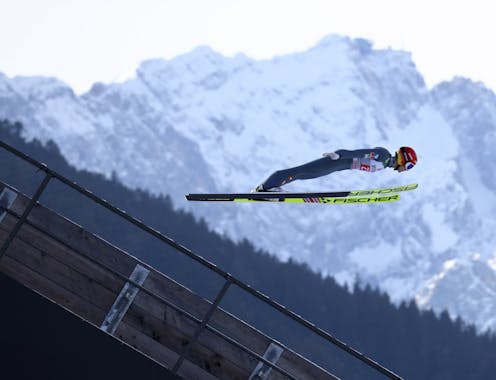
If you or I jump in the air as high as possible, we can stay off the ground for about half a second. Michael Jordan could stay aloft for almost one second. While there are many events at the Winter Olympics that feature athletes performing feats of athleticism and strength while high in the air, none blur the line between jumping and flying quite as much as the ski jump.
I teach students about the physics of sports. The ski jump is perhaps one of the most intriguing events in the Winter Games to showcase physics in action. The winner is the athlete who travels the farthest and who flies and lands with the best style. By turning their skis and bodies into what is essentially a wing, ski jumpers are able to fight gravity and stay airborne for five to seven seconds as they travel about the length of a football field through the air. So how do they do this?