Get all your news in one place.
100’s of premium titles.
One app.
Start reading
The Independent UK
The Independent UK
National
Vishwam Sankaran

Single ‘murder hornet’ queen may have led insect’s aggressive invasion of Europe

Washington State Department of Agriculture

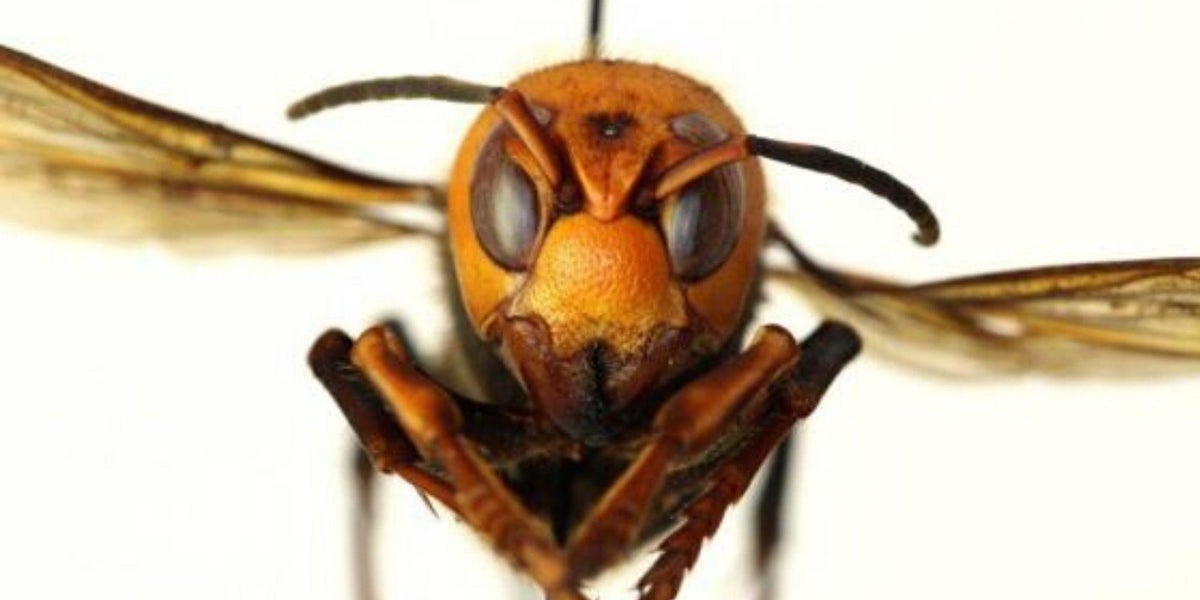
So-called “murder hornets” in Europe probably descended from a single mated queen hornet that somehow arrived in France in 2004, according to a new study.

The Asian or yellow-legged hornet (Vespa velutina) is an invasive species in Europe and a known predator of other insects such as honeybees, hoverflies, and other wasps, posing risks to apiculture and biodiversity.

Although the insect is not aggressive in nature, it measures up to 4cm and can deliver a painful sting, earning it the “murder hornet” nickname.

Previous studies suggest the hornets, native to Asia, were first introduced from China into Europe in 2004, and in the subsequent years the insect has spread aggressively across the continent.

The new study, published recently in the Journal of Hymenoptera Research, assessed and compared genetic analysis data of murder hornet specimens from several locations across Europe.

Researchers, including those from the University College Cork in Ireland, found that Asian hornets in Europe are not only of a single pedigree but are also likely descended from a single mated queen hornet that somehow arrived in France in 2004.

“Our results, along with those of other groups, suggest that the entire population of V. velutina in Europe, now potentially numbering many millions of individuals, are descended from a single mated queen arriving from China some 15–20 years ago,” scientists wrote in the study.

Scientists say the findings are both “bad news” and “good news” for the control of the invasive species in Europe.

On the one hand, the results indicate that there is a significant potential for alien insects from across continents to become invasive pests via accidental imports of only very few, or single, individuals.

“Our research has revealed the remarkable potential for population expansion of eusocial insects in invaded areas, even when original genetic diversity is extremely low,” study co-author Simon Harrison said in a statement.

However, the findings also suggest that there is a potential for biological control mechanisms due to the very low genetic diversity inherent in such populations introduced from alien individuals.

“Nonetheless, climate change is likely to increase the threat of a successful invasion in the future, so vigilance against this species must be maintained,” scientists concluded in the study.

Sign up to read this article
Read news from 100’s of titles, curated specifically for you.
Already a member? Sign in here
Related Stories
Top stories on inkl right now
One subscription that gives you access to news from hundreds of sites
Already a member? Sign in here
Our Picks
Fourteen days free
Download the app
One app. One membership.
100+ trusted global sources.