Get all your news in one place.
100’s of premium titles.
One app.
Start reading
The Guardian - UK
The Guardian - UK
Business
Julia Kollewe

Silver and other precious metals hit new peaks before falling back; oil price rises after Trump-Zelenskyy meeting – as it happened

Silver mines of Potosi Bolivia.
Silver mines of Potosi Bolivia. Photograph: cicloco/Getty Images/iStockphoto

Closing summary

The rally in precious metals prices is taking a breather. Silver, platinum and palladium all hit all-time highs early in today’s trading session but have fallen since, as investors take profits.

Silver jumped above $80 an ounce for the first time this morning, but is now down 8% at $72.8 an ounce in volatile trading. Gold has lost 3.5% to $4,373 an ounce, after repeatedly hitting record highs this year.

Charu Chanana, chief investment strategist at Saxo Bank, said precious metals have been lifted this year by US interest rate cut hopes, and hedging against geopolitical and fiscal uncertainty. She added:

The big picture, however, for precious metals still looks structurally supportive with easier rates ahead, persistent fiscal and geopolitical unease, and ongoing diversification demand. That means any pullbacks may be seen as opportunities for long-term investors to rebuild exposure — though timing could still be bumpy after such a strong run.

Wall Street stocks have drifted lower as the technology rally that pushed the S&P 500 to new highs last week faltered. UK and European shares are up slightly.

Investors were hoping for a “Santa Claus rally,” where the S&P 500 posts gains in the last five trading days of the year and the first two in January, according to Stock Trader’s Almanac.

Oil prices have jumped over 2%, amid rising Middle East tensions and the latest Ukraine peace talks which failed to deliver an agreement. Brent crude climbed 2.2% to $62 a barrel while New York light crude rose 2.45% to $58.13 a barrel. Unrest in the Middle East, including Saudi air strikes in Yemen and Iran’s declaration of a “full-scale war” with the US, Europe, and Israel at the weekend, has triggered concerns of supply disruptions.

Our main stories:

Thank you for reading. We’ll be back tomorrow. Bye! – JK

Updated

Copper price on track for biggest rise in 15 years amid global shortage fears

Copper, the metal that underpins the fast-growing renewable energy industry, is on course for its biggest annual price rise in more than 15 years as traders react to fears of global shortages.

As one of the main beneficiaries of the “electrification of everything”, copper has soared by more than 35% in value this year, spurred by US tariff uncertainty and concerns about mining disasters that could restrict supply.

Analysts said copper had also joined silver and gold as a safe haven asset for investors wanting to hedge against the falling value of the dollar.

Silver reached a record high on Monday, pushing the value of the Mexican mining company Fresnillo, which is listed on the London stock market, to a record high this month. The price of gold has jumped above $4,400 (£3,263) an ounce, up more than 70% since the beginning of January.

Kyle Rodda, a senior financial market analyst at the investment company Capital.com, said the rise of copper, gold and silver demonstrated “a world marked by greater scarcity and investors’ desire to get their hands on things with relatively limited supply”.
Stocks on Wall Street have opened lower.

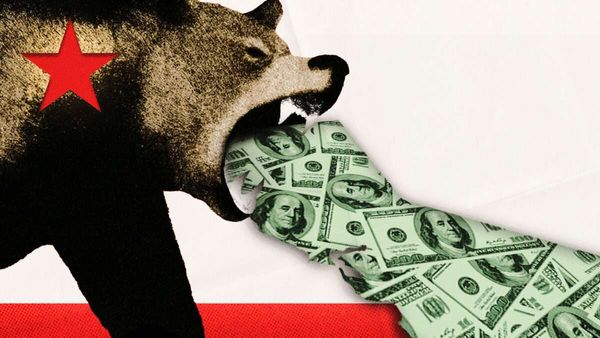
The S&P 500 index is down nearly 30 points, or 0.4%, at 6,899 while the Nasdaq opened 179 points lower at 23,413, a 0.8% drop, and the Dow Jones fell by 103 points, or 0.2%, to 48,607.

In London, the FTSE 100 index is still flat – up less than 5 points at 9,875. Germany’s Dax is also flat at 24,349 while France’s CAC is 0.3% ahead at 8,127 and Italy’s FTSEE MiB has lost 0.3%% to 44,481, and Spain’s Ibex rose by nearly 0.2% to 17,203.

Help UK ceramics industry or ‘lose piece of national identity’, government told

Britain will lose a piece of its national identity if the country’s ceramics industry is allowed to descend further into crisis without state assistance, the government has been warned.

Ceramics producers including the struggling potteries of Staffordshire have come under huge pressure owing to factors such as the UK’s sky-high energy costs, leading to job losses.

In a report, unions and the Green Alliance thinktank urged the government to step in to support the centuries-old sector.

“Tens of thousands of working-class jobs rely on the ceramics sector so we cannot afford to leave its future to chance. But so far we aren’t seeing enough action from a government grappling with the unique challenges the sector faces,” said Chris Hoofe of the GMB union.

DIY chains enjoy bumper year as UK property market slows

Retailers of home improvement products are having a glittering year on the London stock market, as cash-strapped UK consumers turn to DIY projects after being priced out of moving home or undertaking expensive renovations.

Publicly listed retailers including the B&Q owner, Kingfisher, as well as Topps Tiles, Wickes and the sofa seller DFS are on track for double-digit percentage share price increases of as much as 56% this year.

Kingfisher and Topps Tiles have posted share price increases of 26.5% and 13% respectively, their best annual gains since the pandemic, while a 23% year-to-date rise at DFS is its strongest year since 2019.

Kingfisher, which also operates in France and Poland, has issued two profit upgrades since September on the back of the company’s strong performance in the UK.

The biggest winner is Wickes, a leading retailer of paint, whose shares have risen 56% in its best year since listing on the London Stock Exchange in 2021.

Retailers in the home improvement sector have been aided by the closure of their rival Homebase, which collapsed into administration in November last year.

Gambling firms spent nearly £5m to advertise on TfL since London mayor’s ban pledge

Gambling companies have spent nearly £5m to advertise on the London transport network since Sadiq Khan pledged to stop them from doing so, amid a prolonged impasse between the mayor’s office and the government.

Khan said during his 2021 mayoral election campaign that he would order Transport for London (TfL) to extend a ban on junk food ads to cover online casinos and bookmakers as well, citing the “devastating” impact of addiction.

Yet the mayor’s office has yet to make good on the manifesto promise, blaming a lack of guidance from central government on the links between gambling adverts and harm.

In the meantime, the number of gambling ads has increased, including a campaign for the online casino 888 that had to be withdrawn amid an outcry about its flippant tone.

Influx of cheap Chinese imports could drive down UK inflation, economists say

The UK is poised for an influx of cheap Chinese imports that could bring down inflation amid the fallout from Donald Trump’s global trade war, leading economists have said.

After figures showed China’s trade surplus surpassed $1tn (£750bn) despite Washington’s tariff policies hitting exports to the US, the Bank of England said the UK was among the nations emerging as alternative destinations for the goods.

Stephen Millard, a deputy director at the National Institute of Economic and Social Research, said:

There is an expectation that given the high tariffs the US are imposing on China, that China will divert its trade elsewhere and one of those places will be the UK.

This month Catherine Mann, an external member of the Bank’s rate setting monetary policy committee, told MPs on the Treasury committee there were early signs of trade diversion affecting UK inflation.

Import prices have started to moderate on the back of sterling appreciation and some of the spillover of the diversion of Chinese products from the US tariff burdens to other places, including to our docks. Not a lot. Actually less than I would’ve thought. But it’s there.

Official figures released by Beijing this month show China’s trade surplus reached more than $1tn in the year to November for the first time, as manufacturers shipped more to non-US markets to sidestep Trump’s tariffs.

Prime property price falls ease post budget; Scotland strongest prime market

While prices for luxury properties are still falling, the declines have slowed across the UK since the 26 November budget, according to research from Savills, as changes to the taxation of high-value homes were not as bad as feared.

The capital’s more domestic prime housing markets (beyond central London) saw values fall by 0.2% in the fourth quarter, compared with a drop of 0.7% in the previous quarter, while prime regional locations saw values dip by 0.6% (vs -1.4% in the third quarter).

Price falls for luxury pads in central London have also eased, with values down 0.9% between October and December, compared with falls of 1.8% three months earlier.

Prices in the capital’s most traditional prime neighbourhoods remain 24.5% below their peak, meaning that properties in these locations have now lost a quarter of their value since 2014.

Properties in Chiswick showed the strongest growth in the fourth quarter, with prices up 1.3%. This market, which is synonymous with £2m-plus family homes, reported a backlog of buyers bouncing back into action when it emerged that the new high value council tax surcharge would have a more limited impact.

In prime central London, the more domestic neighbourhoods of Marylebone (prices flat), Bayswater (-0.2%) and Notting Hill (0.2%) held up strongest on the quarter, and the year.

Scotland has been the strongest performing prime market in 2025, and is the only part of the UK where values have held steady.

Frances McDonald, director of research at Savills, said:

Our latest survey of prime buyers and sellers following the budget shows a shift in confidence, with a net 12% more people now committed to moving over the next two years. The biggest lift has been among buyers in the £2m-plus market who had put plans on hold as they braced for the worst.

Agents, particularly in outer prime London neighbourhoods, are reporting a pick-up in viewings and exchanges since the Budget announcement. But despite tax changes being ‘better than feared’, demand remains thin on the ground in more rarefied prime central London postcodes, with the pool of buyers already much shallower since the end of the non-dom regime.

Much of the budget’s impact on prices had effectively already been built in after rumours started circulating late summer. But it will take some time for the market to fully absorb the changes, with moderate falls expected to continue in the New Year.

Everyman boss quits weeks after profit warning

The boss of the upmarket cinema chain Everyman has stepped down, weeks after a profit warning.

Everyman Media Group said Alex Scrimgeour has quit as chief executive with immediate effect. Non-executive director Farah Golant will assume the CEO role on an interim basis until a permanent success or is found. The company has begun an external search process.

Everyman shares were flat, but have lost nearly 50% of their value so far this year.

Philip Jacobson, the chairman, thanked Scrimgeour for his commitment to Everyman, saying he had “played a pivotal role in the team that successfully led the business through its recovery from Covid, more than doubling revenue and delivering significant Ebitda growth,” and built a strong and capable operational team.

Farah has extensive experience across the global creative, entertainment, and media industries, and a track record of accelerating growth and cultivating high performance, results-oriented organisations. Working alongside our leadership group, she will continue to deliver exceptional customer experiences, focus on driving sustainable growth, and create long-term value for shareholders.

Dan Coatsworth, head of markets at the stockbroker AJ Bell, said:

The curtains have fallen on Alex Scrimgeour’s time as CEO of cinema group Everyman. He had to deal with a succession of crises from day one, and it proved to be Mission: Impossible. The share price fell by 76% during his tenure and time had run out. Everyman’s board now needs to find a new leading actor and reboot the company.

Scrimgeour started in January 2021 with the immediate task of nursing the cinema chain back to health post-pandemic. He then had to contend with the impact of a cost-of-living crisis causing people to shut their wallets. All the while, Everyman was fighting a structural shift in the market with people increasingly waiting for films to come onto streaming rather than watching them on the big screen.

While the cinema industry did manage to regain some of its sparkle post-pandemic, Everyman lost its edge in the market.

Once a unique proposition, offering posh seats and fancy food to lure in the punters, Everyman’s rivals have since copied many of its winning elements and left it for dust. The leading chains Vue and Odeon have installed reclining seats, bringing comfort to the mass market, while they also rolled out bars inside their cinemas.

2025 wasn’t a golden year for new film releases, making matters worse for Everyman. Its recent profit warning was blamed on a weak fourth-quarter film state, and the release schedule for the next few months doesn’t instil much optimism, Coatsworth said.

Everyman has now lost both its chief executive and its finance director over the past fortnight after the latter resigned on 15 December. Coatsworth added:

That’s unfortunate timing and means the pressure is on to find a new leadership team fast.

Blue Coast Private Equity owns 29.2% of Everyman and might have played a role in pushing out the CEO, potentially frustrated with the lack of strategic and share price progress. It will be interesting to see if Blue Coast tries to take the company out on the cheap, opting to remove it from the public spotlight to enact a turnaround programme.

One stumbling block to such a move would be asset manager Gresham House who owns nearly 10% of Everyman and wouldn’t let the business be gobbled up for anything less than fair value. Gresham House deploys a private equity investment style in public markets, and it might be called upon to suggest candidates for the CEO and FD roles.

Updated

Global stocks to end 2025 on a high on Fed rate cut bets

Global stocks are on course to end the year at all-time highs, while the dollar is trading close to a three-month low, as markets are expecting further interest rate cuts from the US Federal Reserve next year.

The MSCI’s world equity index is flat, leaving the global stock benchmark with a near-21% gain so far this year, after Wall Street hit record highs at the end of last week – dubbed a Santa rally.

European shares on the Stoxx 600 index briefly touched an all-time intra-day peak this morning. The FTSE 100 index in London is broadly flat (up 3 points at 9,873), with the world’s leading silver miner Fresnillo leading gains, up 2.6%, while defence shares are down on Ukraine peace hopes.

MSCI’s broadest index of Asia-Pacific shares rose by 0.4%. Most Asian markets have notched up double-digit gains this year despite Donald Trump’s global trade tariffs. South Korea’s Kospi rose by 2.2% and is on track for its best year since 1999, and Taiwanese stocks are 25% higher so far in 2025.

Becky Qin, multi-asset portfolio manager at Fidelity International, told Reuters:

We’re not seeing runaway inflation risk as a base case so we’re still thinking the Fed has room to cut. So you can still build a case for a reasonably strong backdrop for risk assets.

America’s central bank cut its main funds rate to a range of 3.5% to 3.75% this month and markets are pricing in two further quarter-point cuts by September. Minutes of the last meeting are due to be released tomorrow. Trump, who has called for more rate cuts, has sparred with outgoing Fed chair Jay Powell over rates and said last week that “anybody that disagrees with me will never be the Fed chairman”.

A surge in AI stocks has raised fears of a bubble that could burst but so far investors are reluctant to sell those stocks, such as Nvidia. They have also hedged against geopolitical and other risks by buying gold, silver, platinum and palladium, whose prices have jumped to record highs.

Traders took some profits on precious metals, sending gold down 1.6% to $4,460 an ounce. It remains on track for its biggest annual gain since 1979 with an increase of more than 70%. Silver jumped above $80 an ounce for the first time before falling back 4.8% to $75.35 an ounce in volatile trading.

Copper prices have also risen, by more than a third this year, approaching $13,000 a tonne. Three-month copper on the London Metal Exchange is trading 3.3% higher at $12,560 a tonne, after setting a new record of $12,960 earlier today.

Oil prices have gained 2% after the weekend talks between Trump and Ukrainian president Volodymyr Zelenskyy in Florida, and amid tensions in the Middle East. The US president said a deal to end the war in Ukraine is “closer than ever” but has admitted that “thorny” questions over the future of the eastern Donbas region have yet to be resolved.

Brent crude jumped by 2% to $61.8 a barrel while New York crude also rose by 2%, to $57.88 a barrel.

Updated

Returning to the rally in precious metals such as silver, platinum and palladium (which have pulled back after hitting new peaks this morning), Charu Chanana, chief investment strategist at Saxo Bank, thinks the rally is set to continue in the long term, while prices are likely to be volatile.

She has sent us her thoughts.

Precious metals have been lifted this year by a powerful mix of rate-cut tailwinds, plus hedging against geopolitical and fiscal uncertainty. Add supply worries and the move has turned parabolic. But the late-year, near-vertical surge, especially in silver, also raises the risk of higher volatility.

Near-term, the risk is technical and positioning-led. Leverage is high, margins can be raised, and early-January rebalancing alongside year-end profit-taking can trigger sharp, sudden pullbacks.

Even with a bullish medium-term trend, prices can overshoot. At these levels, demand can cool at the margin and “hidden supply” can re-emerge as households and holders sell long-forgotten silver when the price makes it worth it — which challenges the idea of a clean, lasting supply deficit.

The big picture, however, for precious metals still looks structurally supportive with easier rates ahead, persistent fiscal and geopolitical unease, and ongoing diversification demand. That means any pullbacks may be seen as opportunities for long-term investors to rebuild exposure — though timing could still be bumpy after such a strong run.

German business groups expect job cuts in 2026 while confidence improves

In Germany, Europe’s largest economy which has been struggling, many business associations expect job cuts next year, with industry hit hardest by global tariffs and weak exports.

A survey by the German Economic Institute IW (Institut der deutschen Wirtschaft) showed that of 46 business groups, 22 expect workforce reductions next year. Only nine expect businesses to increase hiring, and 15 anticipate stable employment levels.

The automotive, paper and textile industries are among those predicting lower production, hurt by rising global protectionism and high domestic costs which have eroded Germany’s competitiveness and weighed on exports.

Michael Hüther, a German economist who serves as director of the IW, said

Those who hoped for a swift and comprehensive end to the economic crisis will also be disappointed in 2026.

He added that the economy is “stabilising at a lower level”.

Investment plans remain subdued, as just 11 associations expect increases while 14 predict cuts and 21 see investment stagnating at low levels.

However, there are some bright spots, such as aerospace and shipbuilding which are benefiting from increased defence spending across Europe. The services sector also reported improved conditions compared to last year.

Business confidence showed a small improvement, with 19 associations expecting higher production than in 2025 and nine anticipating declines – the first positive outlook balance in years.

UK accounting body to halt remote exams amid AI cheating

Away from the markets, the world’s largest accounting body is to stop students being allowed to take exams remotely to crack down on a rise in cheating on tests that underpin professional qualifications.

The Association of Chartered Certified Accountants (ACCA), which has almost 260,000 members, has said that from March it will stop allowing students to take online exams in all but exceptional circumstances.

“We’re seeing the sophistication of [cheating] systems outpacing what can be put in, [in] terms of safeguards,” Helen Brand, the chief executive of the ACCA, said in an interview with the Financial Times.

Remote testing was introduced during the Covid pandemic to allow students to continue to be able to qualify at a time when lockdowns prevented in-person exam assessment.

In 2022, the Financial Reporting Council (FRC), the UK’s accounting and auditing industry regulator, said that cheating in professional exams was a “live” issue at Britain’s biggest companies.

A number of multimillion-dollar fines have been issued to large auditing and accounting companies around the world over cheating scandals in tests.

The gains in silver, which surged above $80 an ounce for the first time on Monday before falling back, have catapulted the London-listed miner Fresnillo to the top of the FTSE 100.

Mexico’s Fresnillo is the world’s leading silver producer.

Victoria Scholar, head of investment at interactive investor, said:

With volumes predictably thin, the FTSE 100 has opened flat after closing modestly lower on Christmas Eve with defence stocks dragging. This morning Fresnillo is the top gainer while defence stocks like BAE Systems continue to underperform.

It has been an impressive year for the FTSE 100, gaining around 20%, outperforming Europe and the US and is on track for its fifth consecutive annual gain.

Gold is under pressure as investors look to lock in profits before year-end after a very strong run. Potential progress between Trump and Ukrainian president Zelenskyy have also dampened demand for precious metals. Silver has had a wild ride today, breaking above $80 earlier to hit a record high before pulling back. Silver’s gains have propelled Fresnillo shares to the top of the FTSE 100 this morning. The silver producer gained as much over 4%, hitting a new high.

Oil is staging gains, with WTI and Brent crude both up over 1% each, trading above $57 and $61 respectively supported by Middle East tensions and US-Ukraine talks.

Most Asian markets struggled overnight with the Nikkei under pressure. The Bank of Japan said it sees the case for further hikes in its Summary of Opinions from its December meeting. The Kospi however outperformed with a 2.2% gain.

US futures are pointing flat after the S&P 500 hit an intraday all-time high on Friday. After the Liberation Day sell-off in April, the major US indices have enjoyed a remarkable recovery, on track to log very strong gains for the year with the Nasdaq Composite leading the charge thanks to AI-fuelled gains. However concerns about overvaluations and an AI bubble look set to continue to dominate market chatter into next year.

Updated

European defence stocks have fallen after the meeting between Donald Trump and Volodymyr Zelenskyy in Florida.

The US president has claimed a deal to end the war in Ukraine is “closer than ever” although he admitted that “thorny” questions over the future of the eastern Donbas region have yet to be resolved. Trump said a draft agreement to end the war was nearly “95% done”.

However, he acknowledged there were “one or two tough” outstanding issues, over territory and how the war might end and expressed sympathy with Russia not wanting a ceasefire. “You have to understand the other side,” he said. Brent crude, the global oil benchmark, rose by 1.5% to $61.55 a barrel this morning.

Shares in Italy’s aerospace and defence company Leonardo tumbled more than 4% while Germany’s Rheinmetall lost 2.5% and Hensoldt fell by 3%. London-listed BAE Systems has fallen by 1.5%.

Updated

European stocks edge higher to new record

UK and European stocks have edged higher at the open, pushing the Stoxx 600 index to a new peak.

Europe’s Stoxx 600 index of leading shares rose by 0.1% to a fresh record intra-day high. Germany’s Dax and France’s CAC have both risen by 0.1% while Spain’s Ibex is flat and Italy’s FTSE MiB has slipped 0.17%.

There aren’t many signs of a Santa rally in London. The FTSE 100 index is up just 8 points, or 0.07%, at 9,878, close to the 10,000 mark.

Updated

Grenfell firms still receiving multimillion-pound public contracts, analysis finds

Survivors of the Grenfell Tower fire have called on the government to stop companies implicated in the disaster from receiving public contracts, after it was revealed several were still in receipt of multimillion-pound deals.

New analysis found at least 87 contracts across the public sector in the government’s own database involve companies criticised in the phase 2 report into the Grenfell fire, published in September 2024, though some contracts may have since expired.

The Labour MP Joe Powell, who produced the analysis, said:

Grenfell bereaved, survivors and our community are still fighting for justice eight and a half years after this entirely preventable tragedy, and it’s extraordinary that public money is continuing to be spent with companies who were cited in the public inquiry.

Air passengers warned of higher fares as regional airports face bigger tax bills

Air passengers are being warned to brace for ticket rises as regional airports across the UK face “unprecedented” rises in property tax next year.

Analysis of government data for the Press Association has revealed regional airports are among those facing the steepest increases in business rates of any sector in the UK amid an overhaul of property valuations underpinning the tax.

While London’s Heathrow and Gatwick are also being hit with huge increases in their business rates bills, the figures show that the most extreme cases are focused outside London, with regional airports poised to suffer.

Global tax firm Ryan’s calculation of Valuation Office Agency data found that the rateable values have jumped more than six-fold in some cases in the latest property revaluation, sending tax bills soaring higher.

Even with transitional relief, which limits increases to 30% next year, regional airports will still endure some of the largest cash increases in the country.

And most airports face their bills more than doubling over the next three years.

My colleagues Aisha Down and Dan Milmo have taken a closer look at Nvidia.

Nvidia is, in crucial ways, nothing like Enron – the Houston energy giant that imploded through multibillion-dollar accounting fraud in 2001. Nor is it similar to companies such as Lucent or Worldcom that folded during the dotcom bubble.

But the fact that it needs to reiterate this to its investors is less than ideal.

Now worth more than $4tn (£3tn), Nvidia makes the specialised technology that powers the world’s AI surge: silicon chips and software packages that train and host systems such as ChatGPT. Its products fill datacentres from Norway to New Jersey.

This year has been an exceptional one for the company: it has struck at least $125bn in deals, ranging from a $5bn investment into Intel – to facilitate its access to the PC market – to $100bn invested in OpenAI, the startup behind ChatGPT.

Hargreaves Lansdown's shares to watch in 2026

“2025 has been a year of two halves for equity investors,” said Derren Nathan, head of equity research, Hargreaves Lansdown.

Overall, markets have held up well, but heading into 2026, global tensions and a mixed economic outlook mean there could be sharper share price swings next year.

The good news? Uncertain times can suit long‑term investors. Trying to call every short‑term turn rarely works. A better plan is to spread money across regions, sectors and asset types, rather than relying on one theme or one market.

For investors looking to diversify and strengthen their portfolios for the years ahead, we’ve shared three of our five shares to watch for 2026 and beyond, each with a unique thematic investment case.

Marks & Spencer goes into 2026 looking to rebuild after a tough year. A cyber‑attack hit online sales, mainly in Fashion, Home & Beauty, but bosses expect systems to be back to normal by spring. The Food division keeps winning customers, and if spending on digital and margins pays off, profits could bounce back.

Novo Nordisk had a rough 2025 as supply was tight, rivals pushed harder, and pricing came under pressure in diabetes and obesity care. Even so, demand is still huge. More factory capacity, stronger action against illegal copy drugs and the recent approval of its oral weight‑loss pill could lift confidence.

Nvidia remains a key name in the AI build‑out. Competition is rising, and some big buyers want more than one supplier, but the firm’s fast pace of new chips and strong position in advanced computing keep it central to big tech spending.

Introduction: Silver and other precious metals hit new peaks before falling back; oil price rises after Trump-Zelenskyy meeting

Good morning, and welcome to our rolling coverage of business, the financial markets and the world economy.

As the final trading week of the year gets under way, the rally in precious metals has continued – silver, platinum and palladium hit new all-time highs before falling back.

Asian stocks are mixed, while the dollar is hovering near a three-month low on expectations of more interest rate cuts from the US Federal Reserve next year.

Gold is down 1.3% this morning at $4,472 an ounce, but is on track for its biggest annual gain since 1979, with a rise of more than 70%.

Silver climbed above $80 an ounce for the first time on Monday, before falling back 3.3% to around $76 an ounce, amid profit-taking. It is up from $56 at the start of December, and just $29 an ounce at the start of 2025. The surge prompted a warning from Elon Musk that manufacturers could suffer the consequences.

Copper prices have also risen, by more than a third this year, and are near the record $13,000 a tonne level, as demand for the red metal rises.

Charu Chanana, chief investment strategist at Saxo Bank, said precious metals have been boosted this year by rate cut hopes and hedging against geopolitical and fiscal uncertainty. She told Reuters:

Add supply worries and the move has turned parabolic. But the late-year, near-vertical surge, especially in silver, also raises the risk of higher volatility.

In Asian stock markets, South Korea’s Kospi rose by 2.2% to a two-month peak and is on pace for its strongest annual gain since 1999, while the Taiwan exchange rose by 0.9%. Other markets fell slightly. MSCI’s broadest index of Asia-Pacific shares climbed by 0.2%. Most Asian markets have notched up double-digit gains this year despite Donald Trump’s global trade tariffs.

It remains to be seen whether the Santa rally, which pushed Wall Street stocks to record highs on Christmas Eve, reaches London in this shortened trading week. Markets are closed on Thursday for New Year’s Day. European futures point to a slightly higher open and trading volumes are likely to remain thin as the Christmas holiday period continues.

Oil prices have risen by 1% amid Middle East tensions and the latest Ukraine peace talks. Unrest in the Middle East, including Saudi air strikes in Yemen and Iran’s declaration of a “full-scale war” with the US, Europe, and Israel at the weekend, has triggered concerns of supply disruptions. Brent crude, the global benchmark, is trading 61 cents higher at $61.25 a barrel.

The US president said a deal to end the war in Ukraine is “closer than ever” but has admitted that “thorny” questions over the future of the eastern Donbas region have yet to be resolved, after a two-hour meeting on Sunday with Volodymyr Zelenskyy in Florida. Trump said a draft agreement to end the war was nearly “95% done”.

The Agenda

  • 3pm GMT: US Pending home sales for November

  • 3.30pm GMT: US EIA Crude oil stocks change

Updated

Sign up to read this article
Read news from 100’s of titles, curated specifically for you.
Already a member? Sign in here
Related Stories
Top stories on inkl right now
One subscription that gives you access to news from hundreds of sites
Already a member? Sign in here
Our Picks
Fourteen days free
Download the app
One app. One membership.
100+ trusted global sources.