
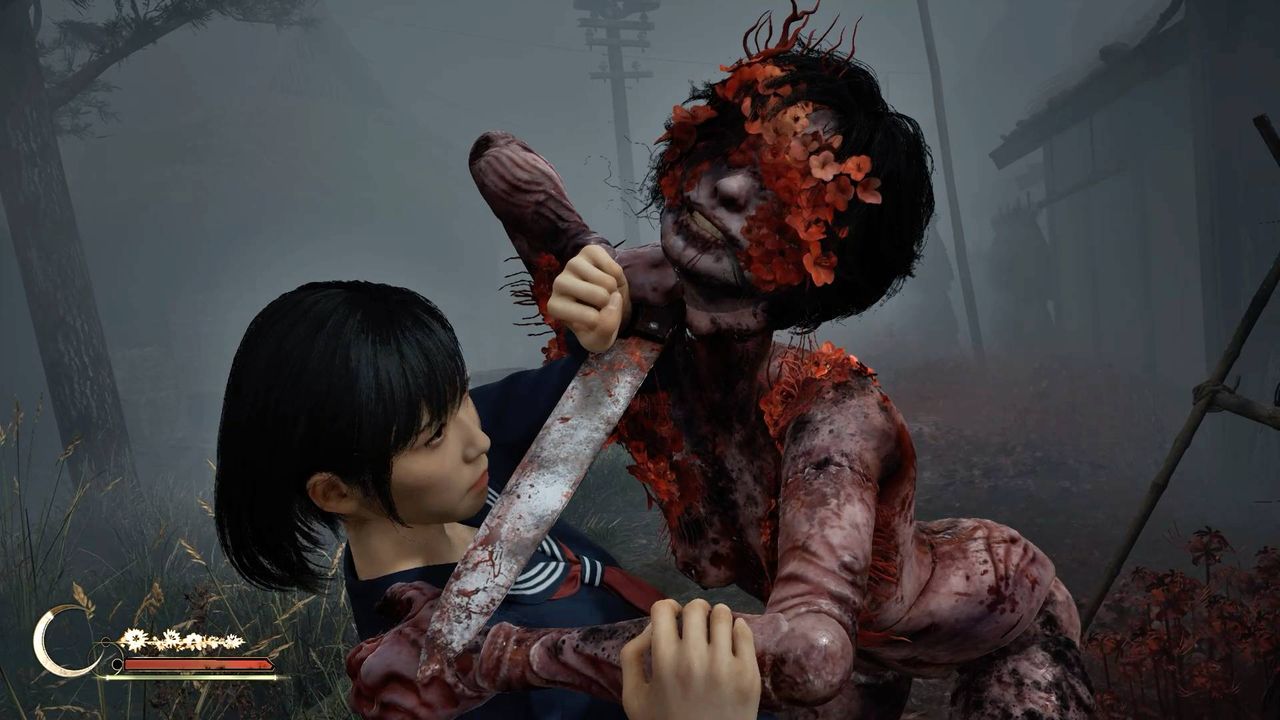
It takes me five attempts to defeat Silent Hill f's first big boss, and by the end of it, I am spitting with rage. Hinako's incredibly labored movements and slow reaction times are the bane of my existence. If watching her struggle beneath the awkward heft of a naginata twice her size wasn't sending my blood pressure sky high already, my plan of hoarding Faith to upgrade my Omamori slots has been left in tatters. I've been forced to beef up her health pool instead – it's the only way I can potentially tank my way through so many missed dodges – and the whole thing doesn't feel very "story mode" at all.
I totally get why. Silent Hill f's slow, rhythmic, sometimes over-conceptualized combat is metaphorical, mirroring the psychological and social pressures Hinako's struggles beneath in 1960s rural Japan. But there's no denying that the distinctly Dark Souls vibes – something our Games Editor picked up on in his initial Silent Hill f preview – are a risk in a series like this. I didn't realize how accurate he's been in calling Silent Hill f "Fog Souls" until I experienced it for myself.
Silent Hill f is a great game in spite of its combat – not because the combat is bad, but because it dominates every other aspect. It's a compelling experiment that, for Neobards' credit, really does fit Silent Hill f's standalone status as the first game in the franchise to venture away from the eponymous US town. But I really don't want other developers to get the wrong idea – that survival horror fans want or need the genre to comply with the expected "challenge for challenge's sake" structure that should really have stayed put in action-RPGs.