
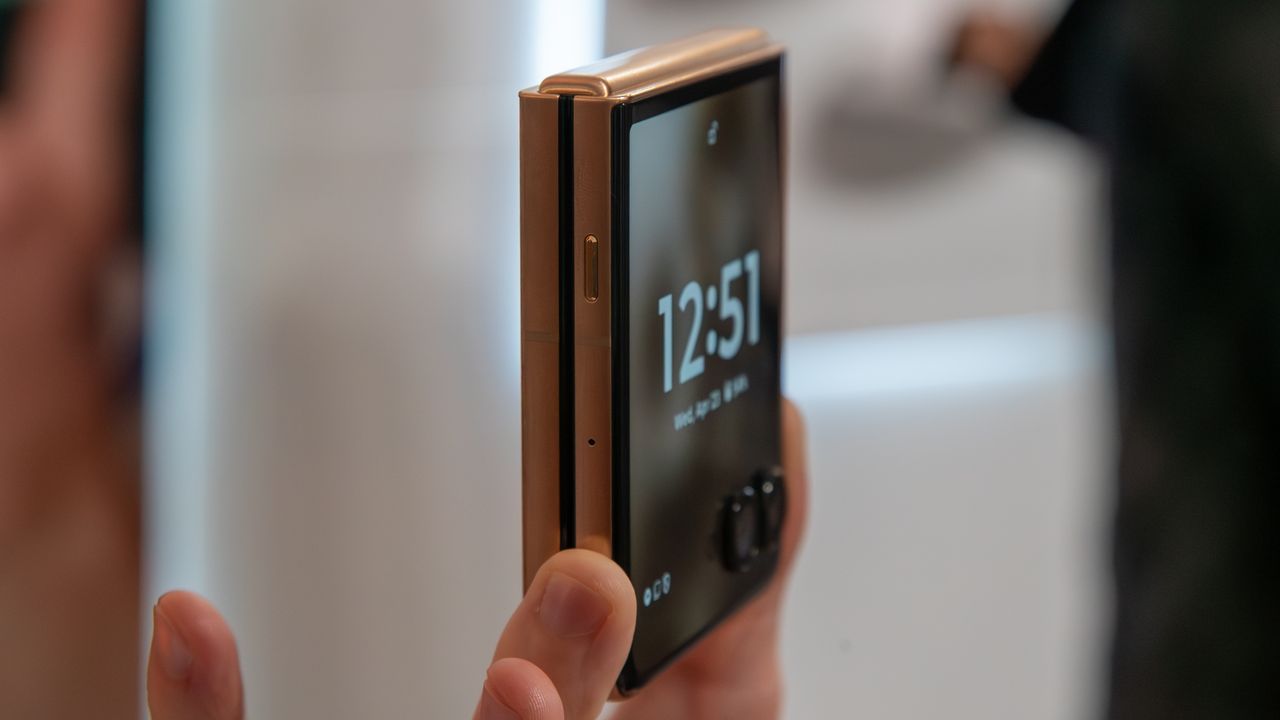
Motorola has been on a roll with its Razr series, which has helped the company achieve impressive foldable market share, both globally and in the United States. I've been using the Razr Ultra 2025 since it launched, and despite reviewing plenty of phones since then, I continue to come back to the Razr, and it seems I'm not the only one who has taken a liking to Motorola's flagship.
Last year's Razr series launched around April 2025, so we expect the Razr 2026 series to arrive around the same time. We haven't heard anything official from Motorola, but if it's following the same launch schedule, then it should be any day now. That said, should you wait for the Razr 2026 series? Should you just go with the Razr 2025 series instead?

As a new phone launch approaches, it's always a tricky thing to consider, but we're gonna go over reasons to wait and reasons you might wanna go with the current model.
Why you should wait for the Razr 2026
One of the biggest reasons to wait for the new Razr phones is the possibility of new chipsets. The chips on the Razr 2025 series were plenty capable, especially for the price point, but we hope expect Motorola will upgrade the new models to the latest SoCs. We don't know specifics on what Motorola could bring to the Razr 2026 series, but with the high-end Snapdragon 8 Gen 5 and premium-tier Snapdragon 8 Elite Gen 5 already in some of the latest Android phones, we have our fingers crossed that we'll see these new chips in the upcoming Razr models.
And with new chips comes new software and AI capabilities. Companies love to show off their latest software experiences when a new phone launches, and the Razr 2026 series will likely bring some goodies. AI automation could be in the cards, as Motorola has been working on this for a while, allowing AI to book ride shares or order food for you with just a voice prompt.
Fingers crossed this also arrives via Gemini screen automation, which is currently only available on the latest Pixel phones and the Galaxy S26.

Motorola has also teased its revamped AI suite called Qira. It looks like Motorola's version of Gemini, allowing for live conversations and even syncing across devices like Lenovo laptops. It could be a big deal on the upcoming Motorola phones, and I'm excited to see how Moto AI evolves.
We could also see Motorola improve its software update promise with the new phones. We've already seen the company give the upcoming Razr Fold a seven-year update promise, so it seems likely that Motorola will extend this to the Razr flip phones.

We may also see some changes in the camera setups. If you're someone who prefers telephoto sensors over ultrawide cameras, then there may be good news for you. The base Razr 2026 is rumored to come with 3x optical zoom, suggesting we may be getting a telephoto sensor, though this is unconfirmed.
This could also point to other improvements across Motorola's cameras, something the company has been consistent with over the past couple of years.

Finally, leaks have shown off the potential design and color options of the Razr series. The Razr 2026 and Razr Ultra 2026 will apparently adopt a similar design, which isn't necessarily a bad thing. Motorola is known to switch up its color options, and it looks like we could be in for some exciting colors and textures, such as a new wood option, a purple Alcantara, and potentially a classy white model.
The Razr Ultra 2026 may be a bit thicker, but it's rumored to pack an even bigger battery, which we love to see.
Why you shouldn't wait for the Razr 2026

I want to be excited about the Razr 2026 series, and I am, but at the same time, rumors are suggesting that the upcoming phones will be more of a half-step up, possibly refining what we already have.
For example, one rumor claims that the Razr Ultra 2026 may sport the same Snapdragon 8 Elite chipset as its predecessor, as opposed to the newer 8 Elite Gen 5. This is a curious move that may be the result of the ongoing RAM crisis and Motorola's efforts to keep prices from going too crazy. And it's not like the Snapdragon 8 Elite isn't a capable chipset, but it would be disappointing to get the same chip on a new phone, especially if Motorola keeps the price the same or even increases it.
And price is definitely a major consideration. We've seen companies raise prices on older devices, and the recent launch of the Moto G Stylus 2026, priced $100 higher than its predecessor, doesn't bode well for Motorola's upcoming launches. The Razr Ultra is already a pricey phone, matching the Galaxy S26 Ultra. It would be harder to justify spending more than $1,299 for a Motorola flip phone.

If Motorola is using the same chipset on its premium flip phone, it would have to work really hard to convince us why we need the new device. The same goes for the base model and the potential Razr Plus 2026, which we hope will get chip upgrades, even if it needs to bump the price up a bit since they're already quite a bit cheaper.
Either way, it's an interesting conundrum: would you prefer newer chips at a higher price, or the same chips at a lower (or identical) price?
With the Razr 2025 series heavily discounted right now, they're starting to look more and more appealing as we likely approach the launch of the Razr 2026 series. And even so, you can't go wrong with a Razr Ultra 2025 for $799, especially when Motorola is currently offering a free upgrade to the 1TB model.
About the Razr Fold...

The Razr Fold is shaping up to be a major contender against some of the best foldable phones on the market. Given the popularity of Motorola's Razr flip phones and the broader adoption of larger-screen foldables, Motorola seems well-poised to put up a decent fight against some of our favorites, such as the Galaxy Z Fold 7.
The Razr Fold may not have the most powerful chipset, but the Snapdragon 8 Gen 5 is plenty powerful, and you'll likely know the difference. The Razr Fold is also set to have a thin profile, a larger battery, and faster charging than Samsung's current foldable, which bodes well for the device. The company is also touting its camera prowess, with a triple 50MP camera setup on the rear that already has high marks from DXOMARK, which calls it the "#1 foldable camera system."

Another way the Razr Fold will be ahead of the competition is its support for an active stylus pen. Samsung removed S Pen support from the Galaxy Z Fold 7, to the dismay of many, so having it on the Razr Fold may appeal to those who really wanna take advantage of that big screen.

Of course, we don't know when the Razr Fold will arrive, though it increasingly looks like it'll arrive sometime in May, which is just around the corner. That said, the phone already looks quite expensive overseas, which doesn't bode well for North American pricing.
We'll have to wait and see if Motorola launches the Razr Fold alongside the rest of the Razr series, but so far this one looks worth the wait, even if you're on the fence about flip phones.