
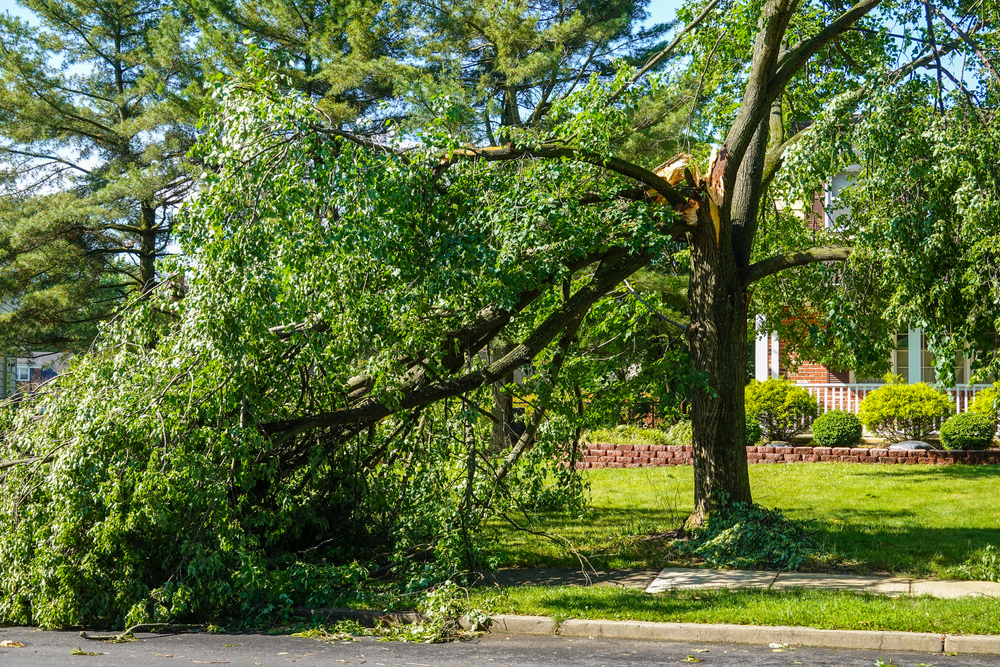
A storm leaves behind more than puddles and a few scattered leaves. Broken branches can hang overhead, shift suddenly, damage property, invite decay, and turn a peaceful backyard into a surprisingly dangerous obstacle course. So, should storm-damaged branches come down immediately? Sometimes, yes. Other times, grabbing a saw in a hurry creates a bigger problem than the storm did.
The smartest approach starts with one simple rule: deal with immediate hazards first, then prune carefully. A small broken twig and a huge limb caught in a tree require completely different responses. The tree may look like it needs a dramatic haircut, but storm recovery rarely calls for the chainsaw equivalent of panic buying.

Safety Comes Before the Saw
Before touching a broken branch, inspect the area from a safe distance. Look for downed or damaged power lines, leaning trees, large limbs hanging overhead, split trunks, and soil that has lifted around the roots. A tree that suddenly leans after a storm may have serious root damage, and a branch caught in tension can spring or fall when someone cuts it.
Power lines deserve special attention because even a line that appears dead can create a deadly hazard. Never cut a tree or branch that touches a utility line, and never assume a wire poses no danger because the neighborhood has lost power. Keep people and pets away from the area and contact the utility company. If the job requires a ladder, chainsaw, climbing, or work near anything that could fall, a qualified tree professional should handle it.
Small Broken Branches Usually Can Wait for a Careful Cleanup
A small branch dangling from a shrub or a low tree limb usually does not require a frantic midnight pruning session. Once the immediate danger has passed, inspect the break and determine where healthy wood begins. A clean cut just outside the branch collar, the slightly swollen area where a branch joins a larger limb or trunk, helps preserve the tree’s natural ability to close the wound. Do not leave a long stub, and do not cut flush against the trunk or parent branch.
A storm-damaged branch can also hide tension, especially when it bends sharply or partly splits but remains attached. That tension can release suddenly during pruning, sending wood in an unexpected direction. For a small branch that a gardener can safely control from the ground, careful pruning may solve the problem. For anything heavy enough that one hand cannot support it, the three-cut method helps prevent bark from tearing, but larger storm damage still deserves professional attention.
Large Hanging Limbs Need Immediate Attention, Not Improvisation
A large broken limb hanging over a walkway, driveway, roof, patio, or play area creates a genuine hazard. The danger does not disappear simply because the branch has stopped moving. Wind, rain, gravity, and the gradual failure of cracked wood can shift the limb later, sometimes long after the storm clouds leave. That makes a hanging branch a priority for professional assessment.
The same caution applies to trees with cracked trunks, broken main leaders, or major limbs that have split away from the trunk. Storm damage can leave wood under enormous stress, and an inexperienced cut can release that energy suddenly. Avoid the temptation to make one heroic chainsaw cut and hope for the best. A reputable arborist can evaluate the tree’s structure and decide whether selective pruning, support work, or removal makes the most sense.
Do Not Turn Storm Cleanup Into an Unplanned Tree Makeover
Storm damage often triggers a dangerous impulse: if one branch broke, perhaps the rest of the tree should come off too. That idea sounds tidy, but topping or aggressively cutting back a tree can create long-term structural problems. Removing large portions of the crown reduces the tree’s leaf area and can encourage weakly attached new growth, while large pruning wounds can create opportunities for decay.
The goal involves removing damaged wood, not redesigning the entire tree because the canopy looks uneven. A tree may look lopsided after losing a limb, yet selective pruning can often preserve its natural form. Resist the urge to paint every wound, too, because wound dressings usually offer little benefit and can interfere with the tree’s natural response. The exception involves specific disease situations, such as oak wilt management in certain regions and seasons, where local guidance matters.
Give the Tree a Second Look After the Cleanup
Storm recovery does not end when the broken branch hits the ground. Inspect the tree again after the initial cleanup, especially once leaves return and the canopy becomes easier to evaluate. Look for fresh cracks, hanging pieces, loose bark, new leaning, and branches that rub or sag. A tree can reveal damage gradually, particularly after a storm that combines strong wind with saturated soil.
Watering may help reduce stress when dry conditions follow storm damage, but avoid turning already saturated soil into a backyard swamp. Do not pile mulch against the trunk, and avoid unnecessary pruning that removes healthy wood. The best storm recovery plan usually looks less dramatic than people expect: remove dangerous or damaged material, protect the remaining structure, and give the tree time to recover.
The Best Storm Cleanup Move Might Be Putting the Saw Down
So, should storm-damaged branches come off immediately? Remove an obvious hazard as soon as it can happen safely, but do not confuse urgency with rushing. Small, low branches may need prompt pruning, while large, cracked, suspended, or tension-loaded limbs require a professional. Downed power lines and trees touching utility lines require the utility company, not a homeowner with a ladder and a burst of confidence.
A storm can make a tree look far worse than it actually is, and a rushed cleanup can turn recoverable damage into permanent injury. The best response combines a careful safety check, selective pruning, and patience when the situation does not pose an immediate danger. Before making that first cut, ask one practical question: is this branch truly safe to remove, or is the tree quietly telling you to call someone with the right training and equipment?
Has a storm ever damaged a tree in your yard, and did you handle the cleanup yourself or call a professional? Share what happened in the comments.
You May Also Like…
5 Crops That Recover Quickly After a Hailstorm
Stormwater Authorities Warn: Your Garden Could Be Causing Basement Mold
These Potted Fruit Trees Are Failing in Cold Weather — Experts Explain Why
9 Fast Ways to Protect Young Trees From Windburn
The post Should You Remove Storm-Damaged Branches Immediately? appeared first on Frugal Gardening.