Get all your news in one place.
100's of premium titles.
One app.
Start reading
The Independent UK
The Independent UK
Jeff Meyer

Should you charge your home battery from the grid in winter?

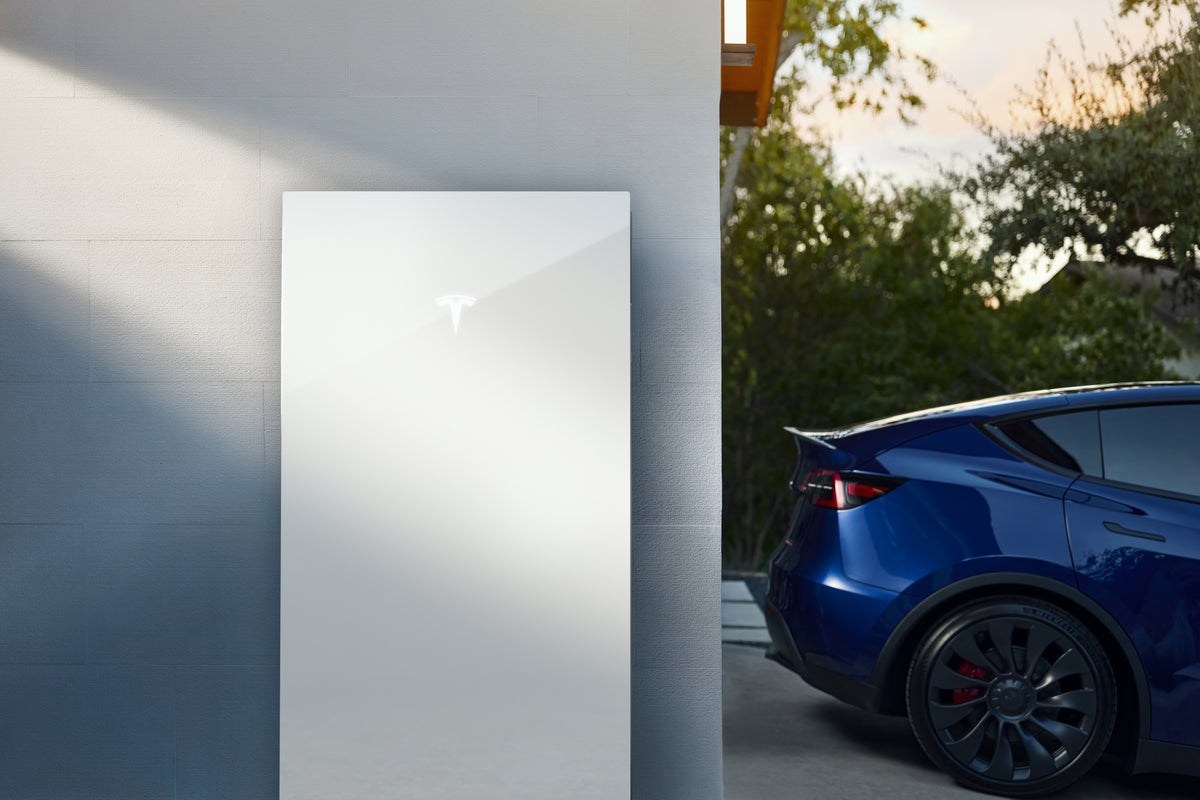
Charging a home battery from the grid during cheaper periods can help households avoid higher electricity rates later in the day - (Tesla)

If you have solar panels and a home battery, summer makes the relationship between the two technologies fairly straightforward. Your solar panels generate electricity during the day, the battery stores whatever you don’t use, and that stored energy can power your home once the sun goes down.

Winter is different. Shorter days and weaker sunlight mean your panels generate much less electricity, often when your household is using more. That can leave a battery sitting partly empty just when electricity from the grid is most valuable. The answer can be to charge your battery from the grid instead.

If you’re on the right tariff, filling your battery when electricity is cheap and using that energy later when rates are higher can reduce your winter electricity costs. But whether it makes financial sense depends on your tariff, your battery and how much electricity you actually use.

Why charging your battery from the grid can make sense in winter

Solar panels don’t stop working in winter, but their output falls substantially. Octopus Energy’s future technologies evangelist Phil Steele says panels can produce only around 10 to 15 per cent of their summer output during the darker months.

That means a battery that might routinely fill from solar during summer may not receive enough spare generation to charge fully in winter. With that in mind, Steele says he changes the way he uses his own 10kWh home battery accordingly.

“In the winter I’ll use either our Flux tariff or the Agile tariff and import when rates are low and charge the battery to then get me through, say, the peak period four till seven, or into the evening,” he says.

Rather than leaving unused battery capacity available in the hope of a sunny day, the idea is to take advantage of cheaper grid electricity and store it so it’s ready for the more expensive parts of the day.

How does charging a battery from the grid save money?

The principle is sometimes called energy arbitrage, but the idea itself is very simple. Buy electricity when it’s cheap and avoid buying it when it’s expensive.

Say, for example, your tariff offers a much cheaper rate overnight. You could programme your battery to charge during that period and then use the stored electricity to power your home during the evening, when your tariff charges more.

The greater the difference between those two rates, the greater the potential saving.

Octopus Flux, for example, currently has an off-peak period between 2am and 5am designed to let battery owners top up cheaply, with a more expensive peak period between 4pm and 7pm.

Dynamic tariffs can take the idea further. Agile Octopus changes its electricity price every half hour according to wholesale energy prices, so there can be opportunities to charge a battery when electricity is particularly cheap before using it later.

You don’t necessarily have to manage it yourself

How much work is involved depends on the tariff and battery system you use. If your tariff has the same cheap period every day, you may simply be able to schedule your battery to charge during those hours. A dynamic tariff, where prices change from day to day, requires more active management or software capable of responding to changing electricity prices.

There are also increasingly automated options. The Octopus Charge Pack, for example, can automatically optimise compatible batteries around a customer’s existing tariff, charging them when electricity is cheap and using the battery to power the home when the higher day rate applies. It can also charge or discharge batteries during sessions designed to help balance supply and demand on the grid.

That reflects a broader change in the role of a home battery. It’s no longer necessarily just someplace to keep surplus solar electricity until you need it.

How much of your winter electricity can a battery cover?

That depends heavily on the size of the battery and how much electricity your household uses.

A typical home battery might hold around 10kWh. Steele has a battery of roughly that size at home, where his household also uses a heat pump and electric cooking.

During winter, he estimates it can provide roughly a quarter of a day’s electricity in his relatively electricity-hungry home.

Other households could get considerably further. A home with gas heating, for instance, is likely to have a lower winter electricity demand than one using a heat pump.

The important consideration is therefore not simply whether you can fill the battery cheaply, but whether it contains enough usable energy to replace a meaningful amount of the expensive electricity you would otherwise import later.

Is it always worth charging a battery from the grid?

Not necessarily. The first thing to look at is the difference between your cheap and expensive electricity rates. If the gap is small, the saving from moving electricity between the two periods may also be small.

You’ll also need to consider how much of the stored electricity you are actually likely to use, as well as the fact that a small amount of energy is lost when electricity is charged into and discharged from a battery.

And if you have solar panels, the weather plays an important role. On a bright day you may want to leave some spare battery capacity to capture free solar generation rather than filling it completely from the grid beforehand.

Most importantly, don’t assume that today’s tariff rates will remain the same for the lifetime of your battery.

“You’ve always got to be mindful of the tariff because you might do your maths on today’s tariff and then discover that the tariffs change,” Steele says.

That’s particularly important if you're considering buying a battery primarily to take advantage of cheap and expensive grid rates. Tariffs change, and the gap between peak and off-peak prices can widen or narrow.

So, should you charge your battery from the grid in winter?

For many battery owners on a time-of-use tariff, it can make sense.

Solar generation is much lower during winter, so relying solely on your panels could leave valuable battery capacity unused. Charging with cheaper grid electricity can instead allow you to avoid importing electricity during more expensive parts of the day.

The key is to look at your own tariff and electricity use rather than simply setting the battery to charge every night.

If there is a healthy gap between your off-peak and peak rates, and you regularly use enough electricity during the expensive period to make use of the stored power, grid charging can turn your battery into a useful winter money-saving tool rather than something that only earns its keep when the sun is shining.

Sign up to read this article
Read news from 100's of titles, curated specifically for you.
Already a member? Sign in here
Related Stories
Top stories on inkl right now
One subscription that gives you access to news from hundreds of sites
Already a member? Sign in here
Our Picks
Fourteen days free
Download the app
One app. One membership.
100+ trusted global sources.