Get all your news in one place.
100's of premium titles.
One app.
Start reading
The Conversation
The Conversation
Science
Peter Vickers, Professor in Philosophy of Science, Durham University

Should we really believe scientific facts will last forever when history is full of revolutions in thinking?

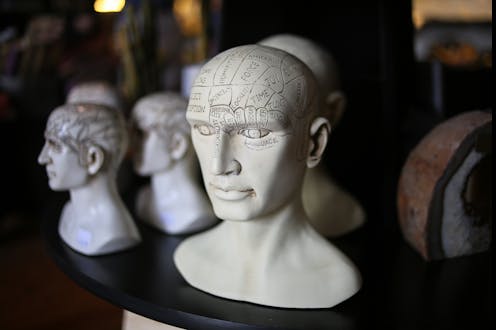
Phrenology has long since been overturned, but it was once very popular among scientists. Holly Anne Cromer/Shutterstock

Astronomers once believed the Sun revolved around the Earth. In the 19th century, scientists thought the shape of a person’s skull could reveal their mental strengths or weaknesses. And in the 20th century, many scientists fiercely opposed the idea that continents drift. All views that have since been completely overturned.

So can we trust the scientific truths of today? Is it possible to identify scientific ideas and claims that will last forever, and are not susceptible to future scientific revolutions? Some would say certainly not. But my new book, Identifying future-proof science, combines historical, philosophical and sociological enquiry to argue that it is often possible.

Sign up to read this article
Read news from 100's of titles, curated specifically for you.
Already a member? Sign in here
Related Stories
Top stories on inkl right now
One subscription that gives you access to news from hundreds of sites
Already a member? Sign in here
Our Picks
Fourteen days free
Download the app
One app. One membership.
100+ trusted global sources.