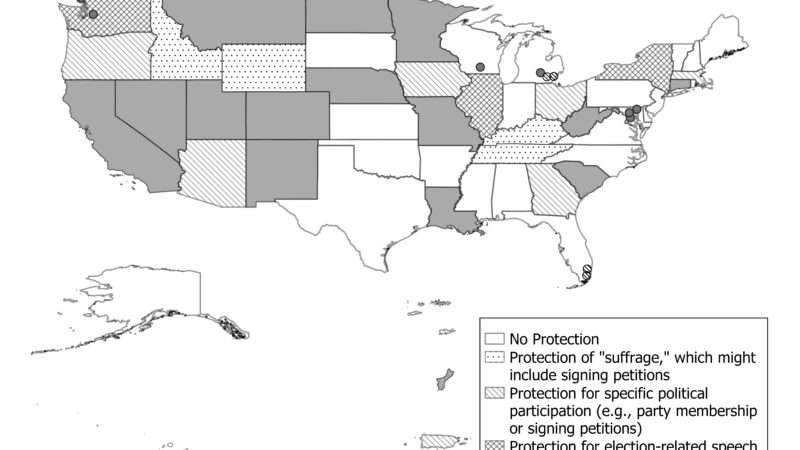
As I mentioned yesterday, ten years ago I wrote a descriptive and analytical law review article called Private Employees' Speech and Political Activity: Statutory Protection Against Employer Retaliation, which aimed to catalog these often-little-known statutes. This year, I'm returning to the subject, trying to analyze the strongest arguments for and against such statutes. The article (Should the Law Limit Private-Employer-Imposed Speech Restrictions?) will be published later this year in a Journal of Free Speech Law symposium issue, together with other articles that stemmed from an Arizona State symposium on Non-Governmental Restrictions on Free Speech; and this week and next I'd like to serialize it here.
Yesterday, I blogged the Introduction and the beginning of the argument in favor of such statutes, focused on the democratic self-government theory of the First Amendment; today, I add a discussion of the search for truth, self-expression, and autonomy theories, plus a bit on negative theories. Future posts will also of course cover the arguments against such statutes (and you can see the arguments right now, if you'd like, by looking at the PDF of the article).