Get all your news in one place.
100's of premium titles.
One app.
Start reading
The Conversation
The Conversation
Alemayehu Fentaw Weldemariam, Ph.D. Fellow, Center for Constitutional Democracy, Indiana University

Should Ethiopia limit how long its prime minister can serve? Why this won’t fix a deeper democracy problem

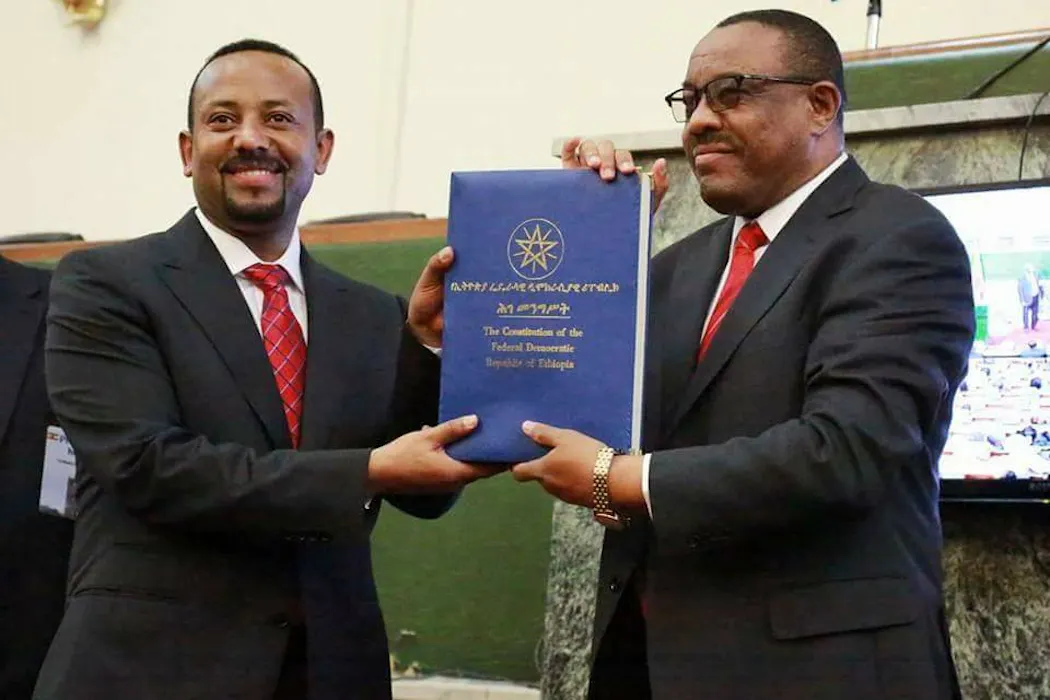
Outgoing prime minister Hailemariam Desalegn (right) hands a copy of the Ethiopian constitution to his successor Abiy Ahmed in 2018. Wikimedia Commons, CC BY

Ethiopian prime minister Abiy Ahmed has revived debate over whether the country should impose term limits on its head of government. Speaking before the National Dialogue Commission in May 2026 – just weeks before national elections – he said executive power should be “limited by law”. He suggested the issue could form part of wider constitutional reform that many Ethiopians have been calling for since 1995.

At first glance, the proposal seems straightforward. But Ethiopia operates under a parliamentary system, not a presidential one. Alemayehu Fentaw Weldemariam, who has studied Ethiopia’s constitutional design and law, explains why the real issue isn’t term limits, but the failure of the parliamentary mechanisms meant to constrain executive power.

Sign up to read this article
Read news from 100's of titles, curated specifically for you.
Already a member? Sign in here
Related Stories
Top stories on inkl right now
One subscription that gives you access to news from hundreds of sites
Already a member? Sign in here
Our Picks
Fourteen days free
Download the app
One app. One membership.
100+ trusted global sources.