A shipping firm paid Iran $2 million to secure the safe transit of one of its ships through the Strait of Hormuz, according to a report, as Tehran moves towards a “selective” blockade of the waterway.
Lloyd’s List said Tehran was considering allowing passage for some ships unaligned to the US or Israel, opening a potential rift between Washington and other countries.
Nations including India, Pakistan, Iraq, Malaysia and China - those who have been hit the hardest by the ongoing oil blockade - are understood to be in direct negotiations with the Islamic Republic to secure a de-facto safe transit of their tankers.
It is part of a new vetting and registration system run by the regime’s Islamic Revolutionary Guard Corps (IRGC).
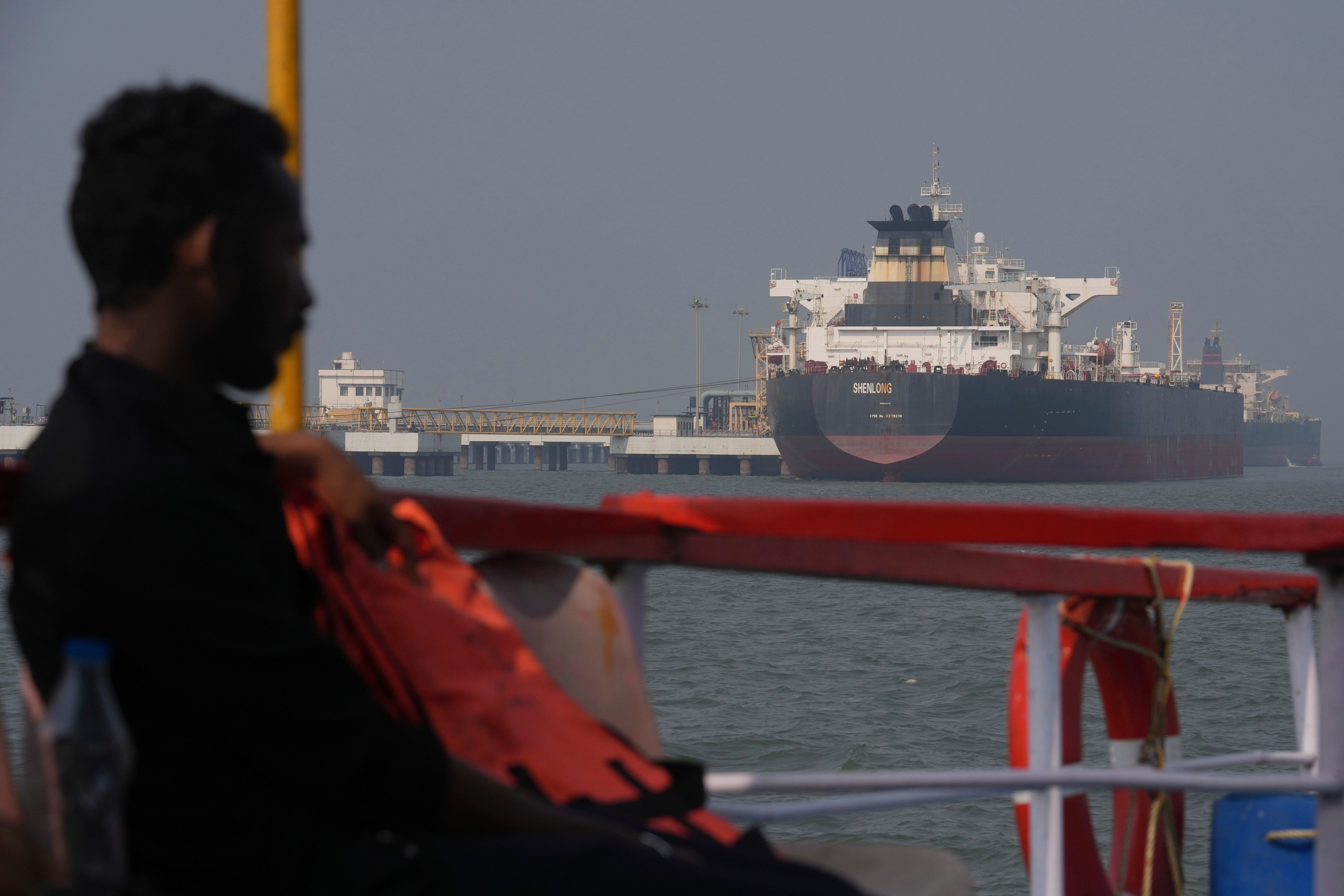
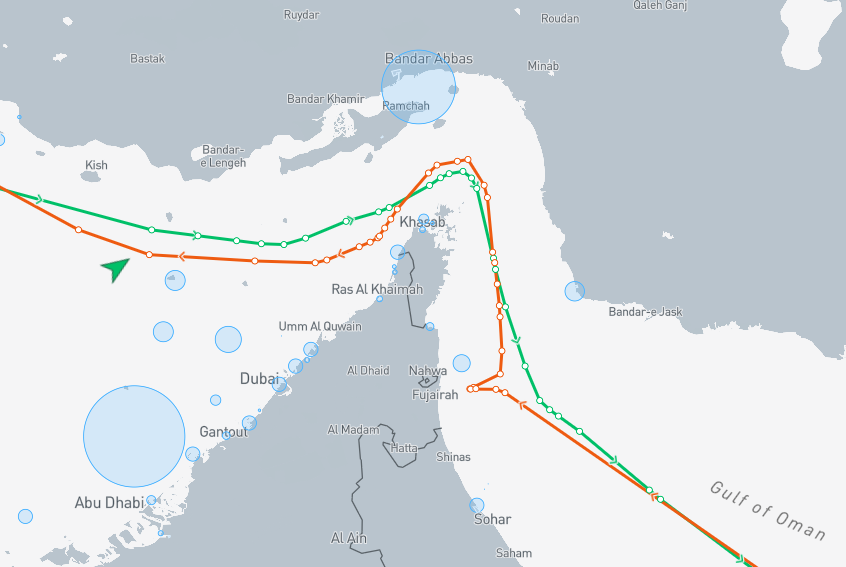
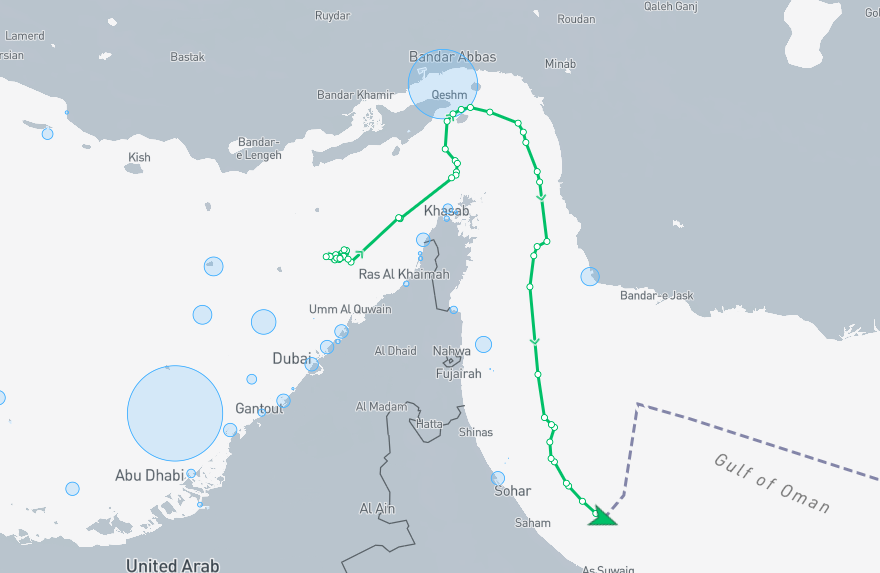
So far, at least nine vessels have passed through the Iranian territorial waters, according to the intelligence firm.
One of them is reported to have paid £1.5 million ($2 million) in exchange, but it remains unclear how the transaction was made given the extensive sanctions in place against Iran.
Before the start of the war on 28 February, vessels transited through the strait - the most strategic oil passageway in the world - but now, they appear to be rerouting to a narrow corridor near Iran’s Larak Island.
Dimitris Maniatis, chief executive of the shipping security provider and consultancy, Marisks, said: “There are efforts underway involving government and industry to establish a procedure under which there will be communication for vessels that are definitely not affiliated with Israel or the US to receive confirmation of safe passage through the Straits of Hormuz.
“Currently, this is still being considered on a case-by-case basis, where certain governments will communicate with the Iranian authorities, stating that this vessel is coming into the Middle East Gulf to seek approval for safe passage.”
Matthew Wright, a freight analyst from global trade firm Kpler, told The Independent earlier this week that this is Iran’s “widening strategy.”
“The amount of control Iran has over the waterway is significant,” he said. “And they’ve been able to move their own cargoes pretty comfortably over the last two weeks. Now they are selectively managing oil flows through that checkpoint. At the moment, it appears to be friendly Asian partners.
“But what’s significant is we don’t expect this to be a trend that they can expand more broadly without undermining the pressure that they’re able to keep on oil prices.”
Reports about a new safe passage come after Iran’s foreign minister Abbas Aragchi said on Monday that the strait was “open, but closed to our enemies.”
His warning follows multiple drone and missile attacks on commercial vessels off the Iranian coast.
Amid the intensifying violence, traffic through the shipping route has plunged 95 per cent in the past three weeks, leading to major repercussions for global energy markets.
About 20 per cent of the world’s oil is transited through the strait, which splits Iran on one side and Oman and the UAE on the other, and links the Persian Gulf to the Gulf of Oman and the Arabian Sea in the Indian Ocean.
The passageway is so vital to the economy that the Trump administration is reportedly mulling over plans to either occupy or blockade Iran’s Kharg Island to pressure the country to reopen it.
Such an operation would only be launched after the US military further degrades Iran’s military capacity, and potentially more troops in the region, Axios reported.
Iran threatens world tourism sites sparking fears of attacks beyond Middle East
France takes 'appropriate measures' after sailor's jogging app exposes aircraft carrier's location
Iran-US war live: Trump hits out at Nato ‘cowards’ amid bid to open Strait of Hormuz
GOP candidate tells Americans to ‘skip Starbucks’ to help support Iran war
French sailor gave away location of warship in Middle East by logging run on Strava
Iran’s feared Basij remains strong despite Israeli airstrikes