Get all your news in one place.
100's of premium titles.
One app.
Start reading
The Conversation
The Conversation
Holly Walters, Visiting Lecturer in Anthropology, Wellesley College

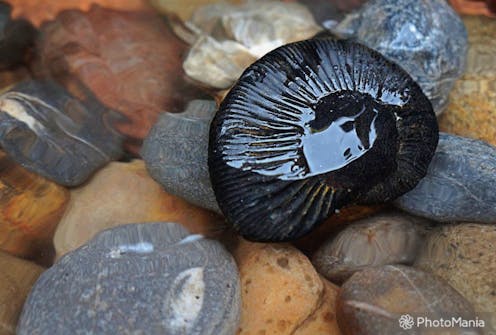
Shaligrams, the sacred fossils that have been worshipped by Hindus and Buddhists for over 2,000 years, are becoming rarer because of climate change

A Shaligram on top of a bed of small rocks. Holly Walters, CC BY-SA

For more than 2,000 years, Hinduism, Buddhism and the shamanic Himalayan religion of Bon have venerated Shaligrams – ancient fossils of ammonites, a class of extinct sea creatures related to modern squids.

Originating from a single remote region in northern Nepal – the Kali Gandaki River Valley of Mustang – Shaligram stones are viewed primarily as manifestations of the Hindu god Vishnu. Because they are not human-made, but created by the landscape, they are believed to have an intrinsic consciousness of their own. As a result, Shaligrams are kept in homes and in temples, where they are treated as both living gods and active community members.

Sign up to read this article
Read news from 100's of titles, curated specifically for you.
Already a member? Sign in here
Related Stories
Top stories on inkl right now
One subscription that gives you access to news from hundreds of sites
Already a member? Sign in here
Our Picks
Fourteen days free
Download the app
One app. One membership.
100+ trusted global sources.