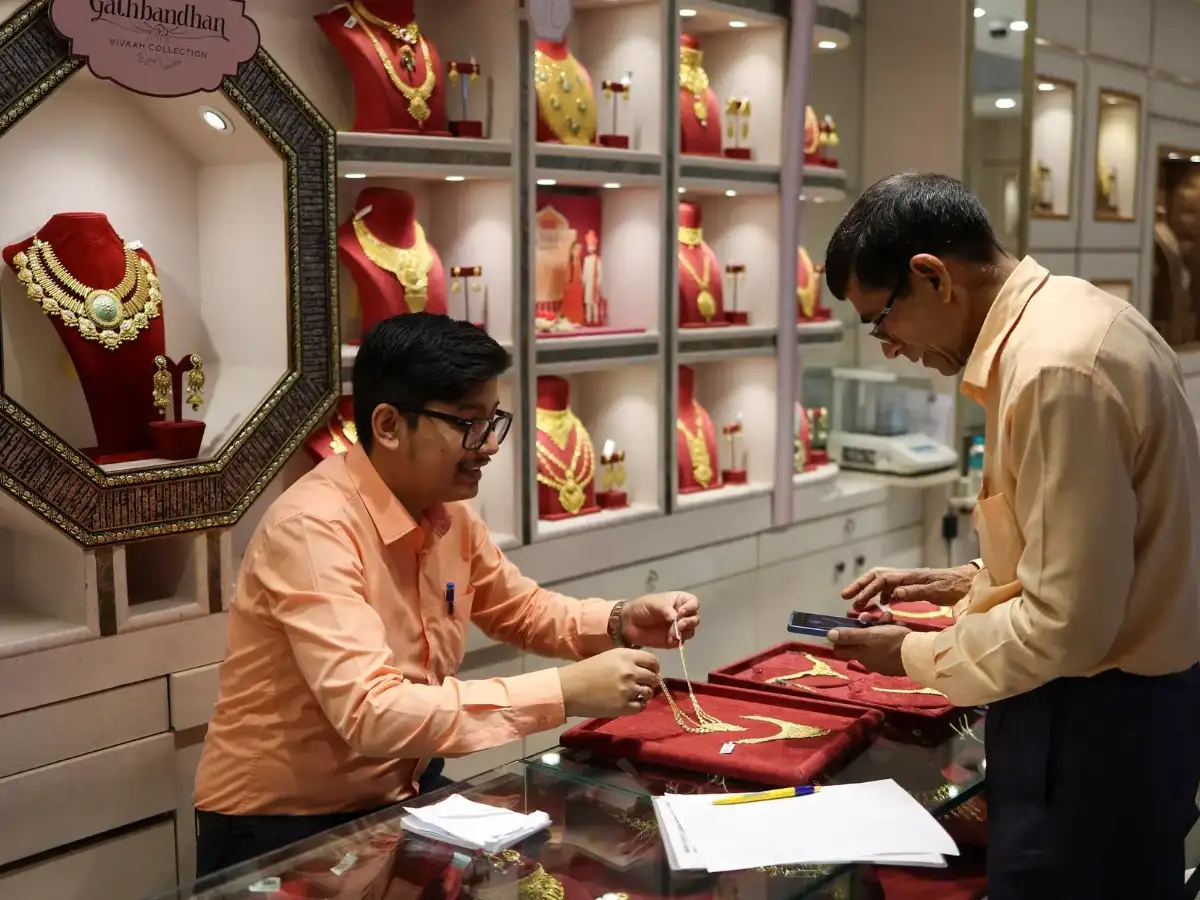
Senco Gold Limited reported a six per cent drop in gold volumes in financial year ending March 2026, while silver and diamond sales grew 35 per cent and 9 per cent respectively.
Citing high gold prices, Senco said, "Exceptional price rise led to a normalized 6% YoY reduction in gold volumes in FY26. Silver volumes surged by 35% YoY in FY26 as consumers prioritised long-term value. Similarly, diamond volumes also grew 9% YoY in FY26, clearly indicating demand for natural diamonds as a first choice."

In Q4 FY26, the company reported its highest-ever Q4 retail sales of Rs 1.731 crore, with a 35 per cent annual growth, majorly driven by wedding season, strong gifting demand for Valentine’s Day, and continued leveraging of Old Gold Exchange programme.
Also read: Modi wants Indians to press pause on gold. But the $5.2 trillion obsession runs deep
Shares of Senco Gold Limited were trading at Rs 342.20 per scrip as at 12:48 on Wednesday after witnessing a drop of Rs 7.45 (-2.13%).
Senci Gold has maintained around 40-50% hedging to manage price volatility risk and liquidity risk in uncertain markets.
"Despite this, consumer demand remained resilient in value, driven by a well-distributed wedding season spanning the full quarter," Suvankar Sen, Managing Director & CEO, said, highlighting the gradual shift towards lightweight jewellery or lower caratage. The brand is now looking to enhance the performance of lightweight jewellery for FY27.
Amidst high gold prices and low-caratage purchases, Senco Gold remains optimistic about FY27, driven by tailwinds of showroom network, brand popularity and growing customer base. The company is fully cognizant of global uncertainties, regulatory developments and elevated gold prices. It expects 20 per cent revenue growth in the current fiscal year, with an EBITDA guidance of 7.5-8.5 per cent.
"We are confidently marching toward FY27 targets of more than 20 per cent value growth while targeting EBITDA margins in the range of 7.5%–7.8%," Sanjay Banka, Group CFO at Senco Gold said. "Subject to global uncertainties and market dynamics, we expect to improve our blended borrowing cost, maintain a strong vigilance on our capital allocation, improve inventory days, performance of subsidiaries and performance of showrooms in new geographies to deliver a minimum sustainable PAT of 4-4.5%.”