
Get all your news in one place.
100’s of premium titles.
One app.
Start reading
Barchart
Barchart
Caleb Naysmith

‘Selling Fine Businesses on Scary News is Usually a Bad Decision’: Berkshire’s Warren Buffett Warns Panic Selling Will Usually Lose You Money

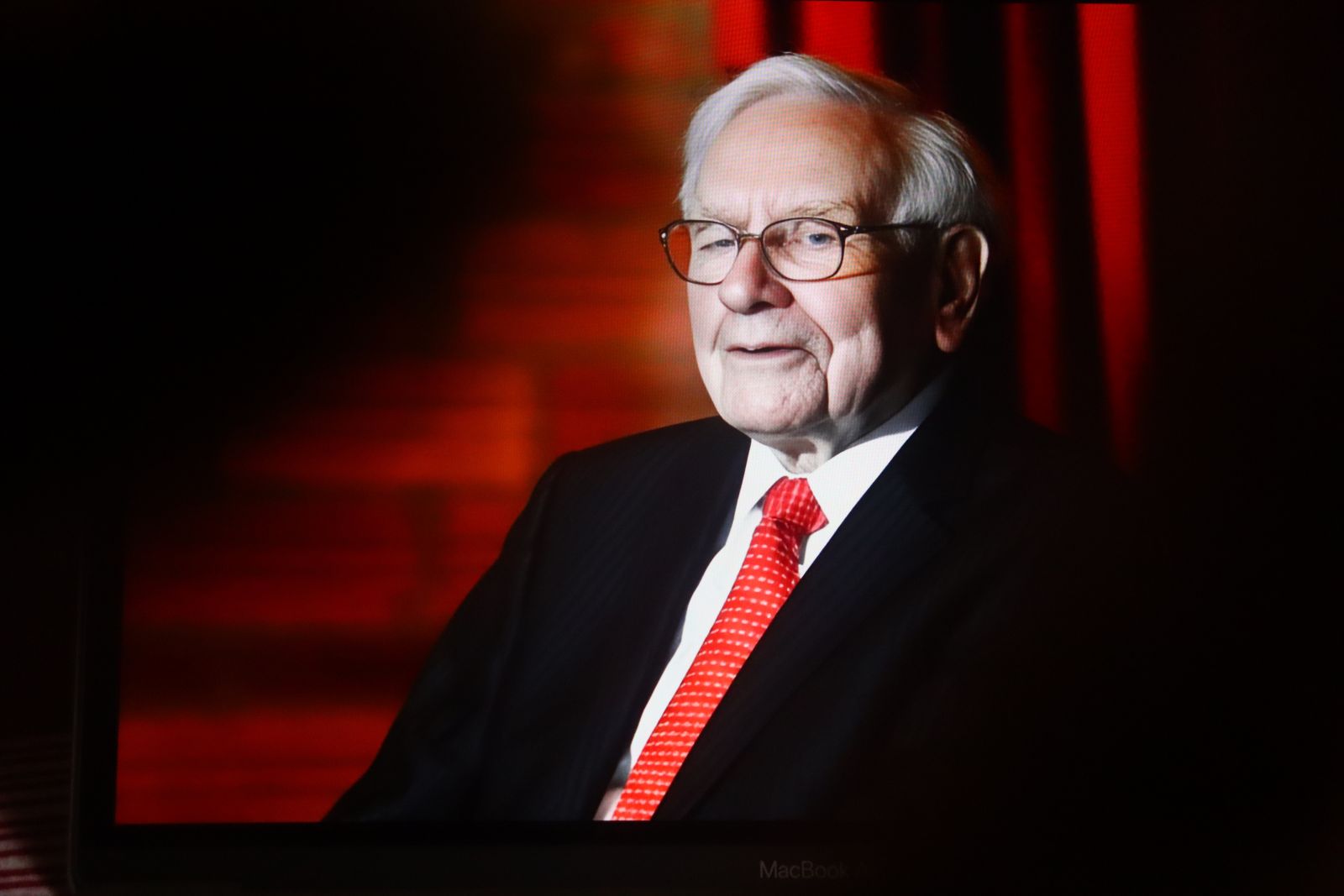
Warren Buffett, the chairman of Berkshire Hathaway (BRK.B) (BRK.A), learned early that fear is one of the most expensive forces in investing. Markets have a way of turning uncertainty into urgency, convincing investors that action is required precisely when patience is most valuable. That’s why Buffett has repeatedly warned over his decades-long career that active trading and high frequency strategies are often a losing game. Specifically, in his 1996 letter to shareholders, he warned that “Selling Fine Businesses on Scary News is Usually a Bad Decision.”

Buffett wasn’t dismissing risk. He was distinguishing between noise and impairment. Headlines can be frightening without being meaningful. Wars, recessions, political crises, interest-rate scares, and market crashes all feel existential in the moment. But most of them don’t permanently damage the earning power of great businesses. Prices fall long before fundamentals do.

 

As CEO of Berkshire Hathaway, Buffett saw this pattern repeat over decades. Investors sell when volatility spikes – and not because the business outlook has changed, but because their comfort level has. The act of selling provides emotional relief, even if it causes financial harm. The market, meanwhile, transfers ownership from the fearful to the patient.

The irony is that scary news often creates opportunity. When uncertainty peaks, prices tend to disconnect from intrinsic value. Buffett understood that fear compresses time horizons. People stop thinking in decades and start thinking in days. That’s exactly when long-term investors gain an edge.

This philosophy shaped how Berkshire Hathaway approached crises. Buffett never promised smooth results. He openly warned shareholders that earnings would be volatile and that bad years were inevitable. What mattered was not avoiding short-term pain, but avoiding permanent loss. As long as the business remained strong, temporary price declines were irrelevant.

Selling during panic also locks in a second mistake. The first is buying without conviction. The second is selling at the moment when future returns are often highest. Buffett believed most long-term investment failures weren’t caused by bad businesses, but by bad behavior around good ones.

In this sense, Buffett’s perspective was grounded in ownership, not trading. If you owned the entire business, would you sell it because the market was nervous this quarter? Or because the economy might slow next year? If the answer is no, then selling the stock version of that business makes little sense.

Buffett’s advice sounds simple, but it’s psychologically demanding. It requires separating price from value, emotion from analysis, and news from reality. Most investors know this in theory, but very few can execute it in practice.

Over time, those who can endure “scary” periods without flinching are rewarded. Those who can’t subsidize those who can. That quiet transfer of wealth is one of the market’s most consistent patterns — and one Buffett spent a lifetime trying to help his shareholders avoid.

Sign up to read this article
Read news from 100’s of titles, curated specifically for you.
Already a member? Sign in here
Related Stories
Top stories on inkl right now
One subscription that gives you access to news from hundreds of sites
Already a member? Sign in here
Our Picks
Fourteen days free
Download the app
One app. One membership.
100+ trusted global sources.