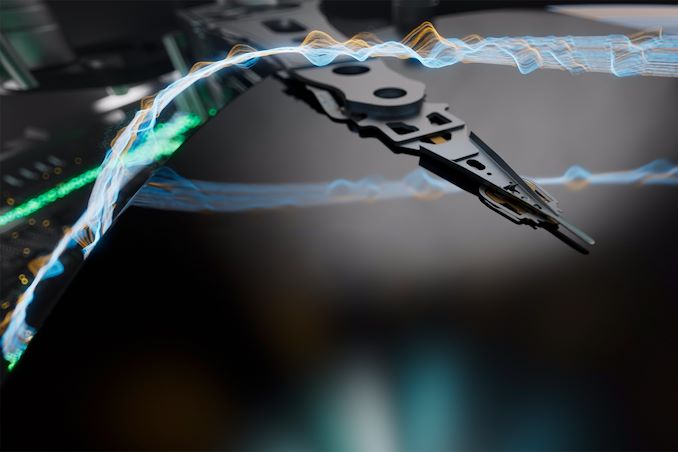
As Seagate ramps up shipments of its new heat assisted magnetic recording (HAMR)-based Mozaic 3+ hard drive platform, the company is both in the enviable position of shipping the first major new hard drive technology in a decade, and the much less enviable position of proving the reliability of the first major new hard drive technology in a decade. Due to HAMR's use of temporal heating with its platters, as well as all-new read/write heads, HAMR introduces multiple new changes at once that have raise questions about how reliable the technology will be. Looking to address these matters (and further promote their HAMR drives), Seagate has published a fresh blog post outlining the company's R&D efforts, and why the company expects their HAMR drives to last several years – as long or longer than current PMR hard drives.
According to the company, the reliability of Mozaic 3+ drives on par with traditional drives relying on perpendicular magnetic recording (PMR), the company says. In fact, components of HAMR HDDs have demonstrated a 50% increase in reliability over the past two years. Seagate says that Mozaic 3+ drives boast impressive durability metrics: their read/write heads have demonstrated capacity to handle over 3.2 petabytes of data transfer over 6,000 hours of operation, which exceeds data transfers of typical nearline hard drives by 20 times. Accordingly, Seagate is rating these drives for a mean time between failure (MTBF) 2.5 million hours, which is in-line with PMR-based drives.