
Get all your news in one place.
100's of premium titles.
One app.
Start reading
Salon
Salon
Science
Matthew Rozsa

Sea level rise causes local extinction

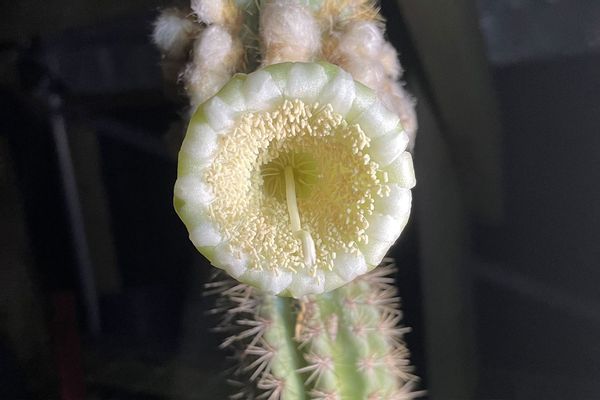
As out-of-control heat cooks our planet, shattering temperature records for the last 13 consecutive months, it melts polar ice and raises sea levels. Most people are familiar with how this works, but we typically only think of the consequences of sea level rise as threatening to drown Miami, for example. But extinction is also a factor, as evidenced by recent news that the United States has suffered its first-ever local extinction as a result of sea levels rising. The victim is the iconic 20-foot tall Key Largo tree cactus (Pilosocereus millspaughii).

The prickly behemoth — encased in light green skin and sporting cream-colored, garlic scented flowers — was first discovered in 1992, according to the study published in the Journal of the Botanical Research Institute of Texas. From an initial population of more than 150 stems in the Florida Keys, the once-thriving Key Largo tree cacti began dwindling due to salt water intrusion, soil depletion, intensified hurricanes and unusually high tides, all of which are either caused or exacerbated by global warming. As a result, the Key Largo tree cactus is now locally extinct from both the Florida Keys and the United States as a whole, though other related cacti are indigenous to Cuba and the Bahamas.

Sign up to read this article
Read news from 100's of titles, curated specifically for you.
Already a member? Sign in here
Related Stories
Top stories on inkl right now
One subscription that gives you access to news from hundreds of sites
Already a member? Sign in here
Our Picks
Fourteen days free
Download the app
One app. One membership.
100+ trusted global sources.