
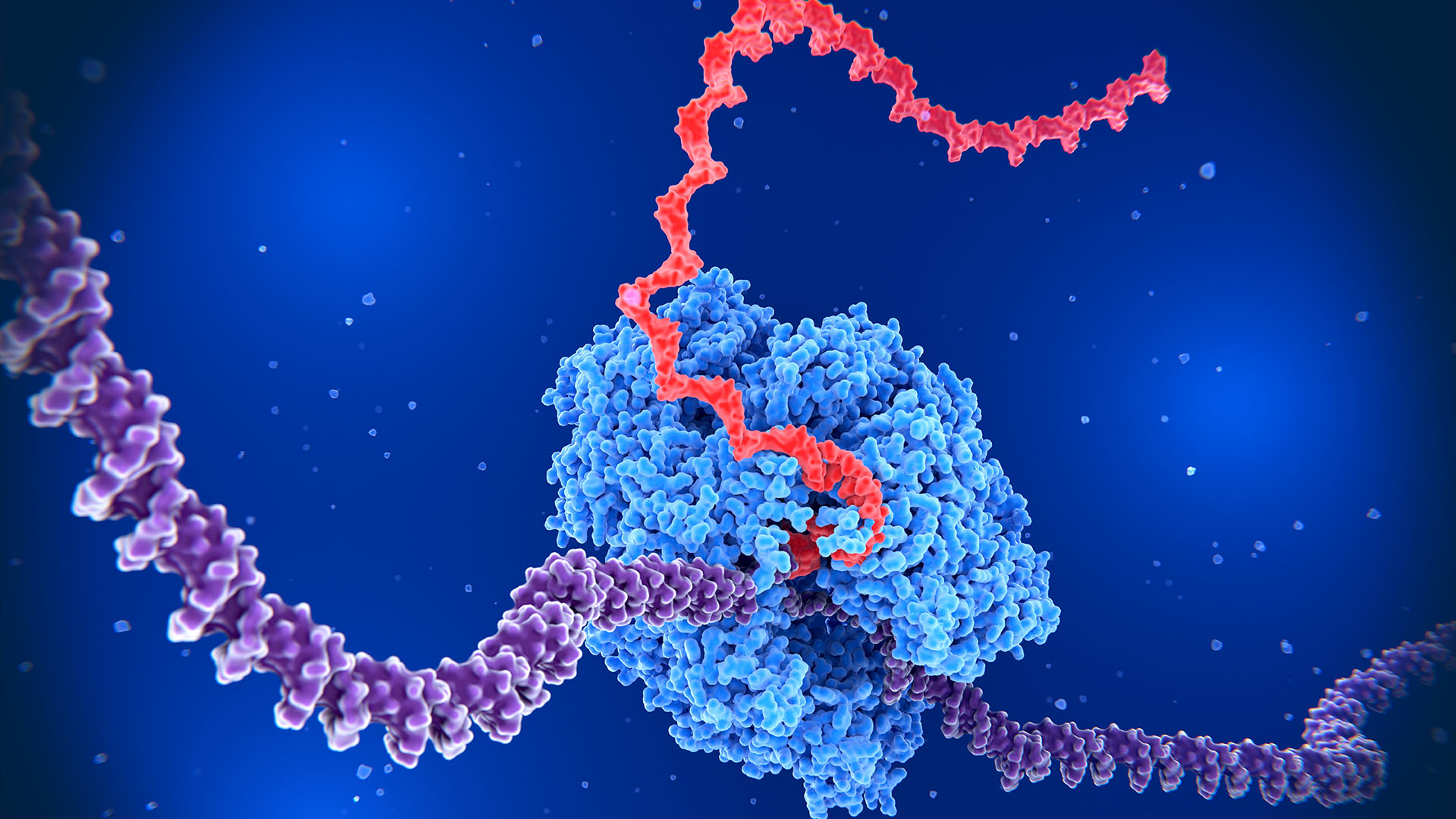
The human body's roughly 30 trillion cells don't need all of their genes switched on at once. Instead, cells tightly control the activity of their genes — and recently, scientists uncovered a previously unknown way they accomplish that feat.
Human DNA contains approximately 20,000 to 25,000 genes. For a cell to function properly, the genetic code in that DNA is copied down, or transcribed, by an enzyme called RNA polymerase to make a molecule called RNA. Often, the RNA is then translated into proteins, the building blocks of life. There are myriad factors that determine which genes need to be turned on, such as the type of cell and its stage of development.














