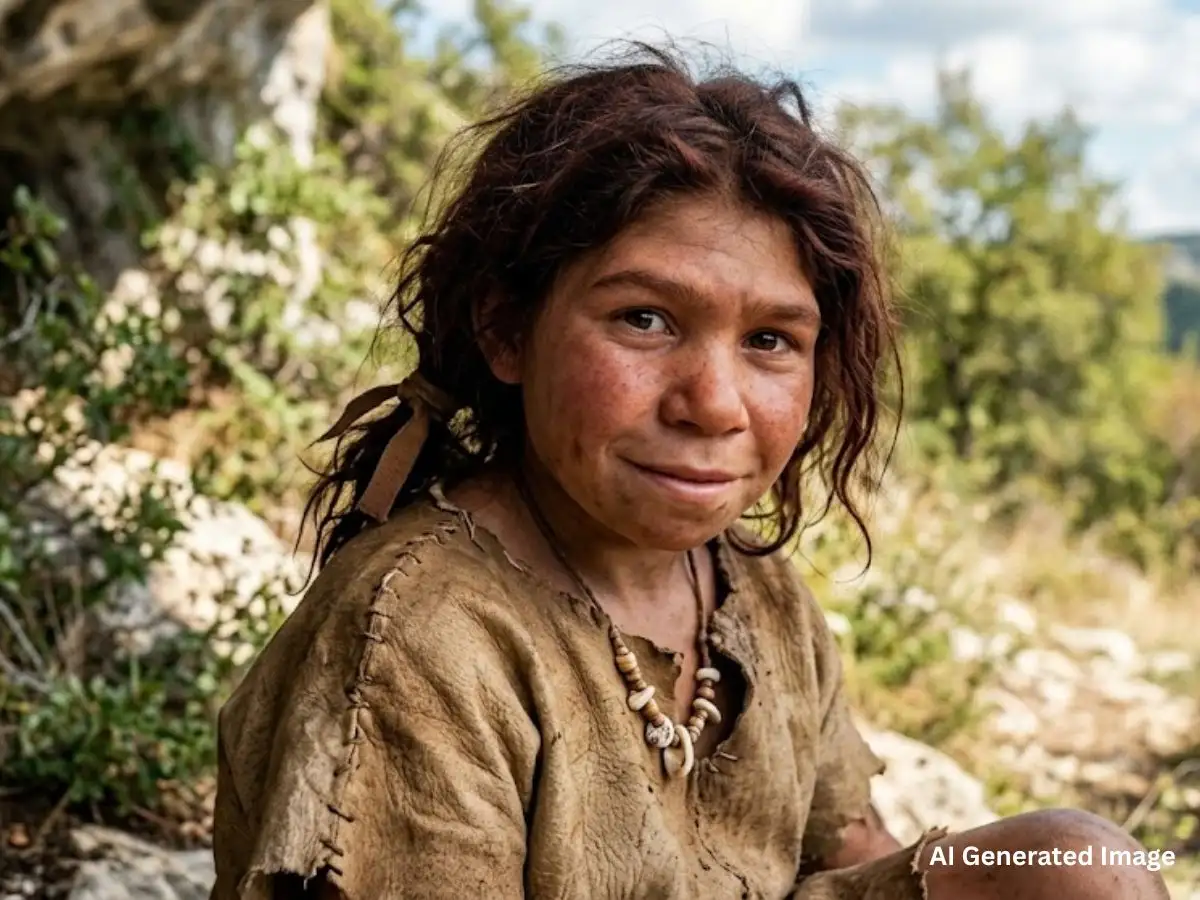
She was about eight years old when she died in what is now Belgium. More than 120,000 years later, the remains of the Neanderthal child have become an important source of information about the species’ genetics, population history and childhood development.
The child, now known as the Scladina child, was discovered in Grotte Scladina, a cave near the village of Sclayn in Belgium. Her remains, including parts of the jaw and teeth, were recovered during excavations that have continued for decades. The material has since allowed researchers to investigate questions ranging from how quickly Neanderthal children grew to how early European Neanderthal populations were related to those that came later.