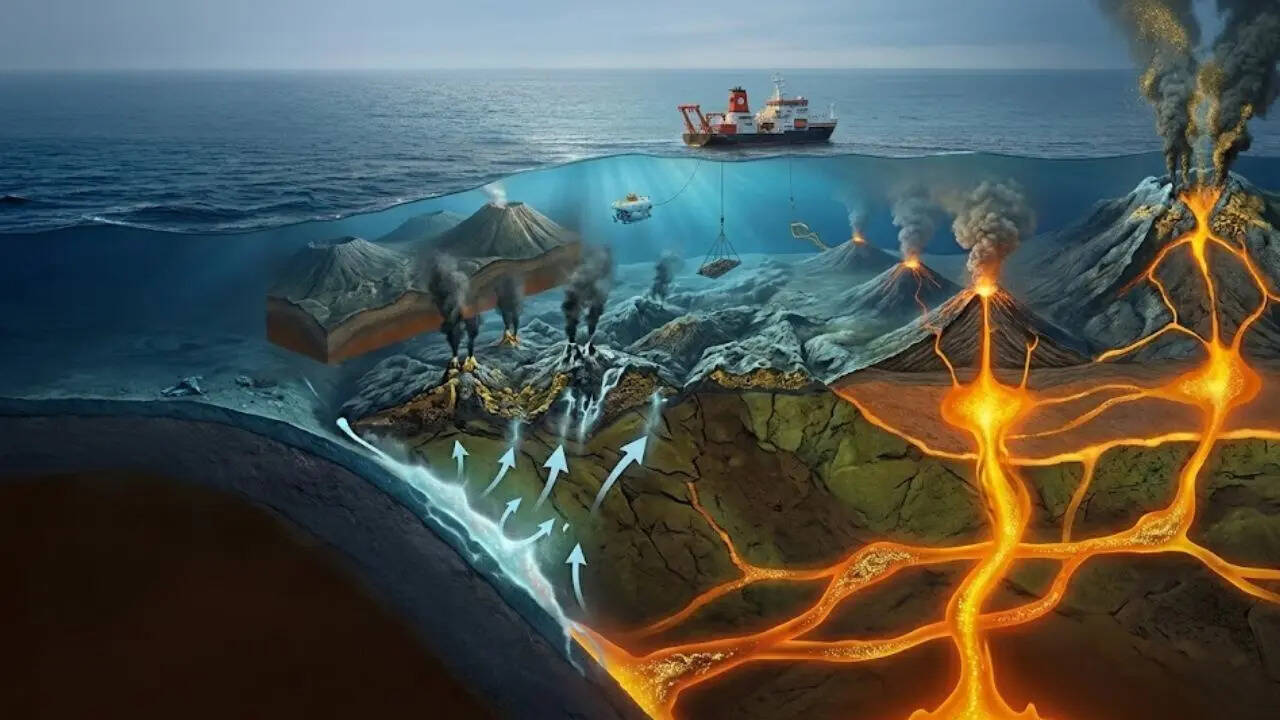
A profound geological mystery has been solved deep beneath the South Pacific, where researchers have identified the specific mechanisms that create Earth's richest gold deposits. A team led by Dr Christian Timm, a marine geologist at the GEOMAR Helmholtz Centre for Ocean Research Kiel, has uncovered the key mechanisms behind the formation of the Earth's largest gold deposits in the deep water-covered regions of the South Pacific as part of his recent study, published in Communications Earth & Environment. The study demonstrated that volcanic island arcs like the Kermadec Islands, New Zealand, act as ‘gold factories’.
The research that the growing concentration of gold in deposits is not coincidental, but results from a series of processes involving repeated melting of the Earth's mantle. The research team proved that the gold was distilled from the mantle and concentrated in the magma through a series of stages prior to arriving at the sea floor by studying volcanic glass. In addition, the research showed that the water released from the subducting tectonic plates acts as a flux that facilitates the enrichment and concentration of gold in the magma before reaching the ocean floor. This geological cycle explains why specific oceanic zones become disproportionately enriched, offering a strategic blueprint for locating future underwater resources.