
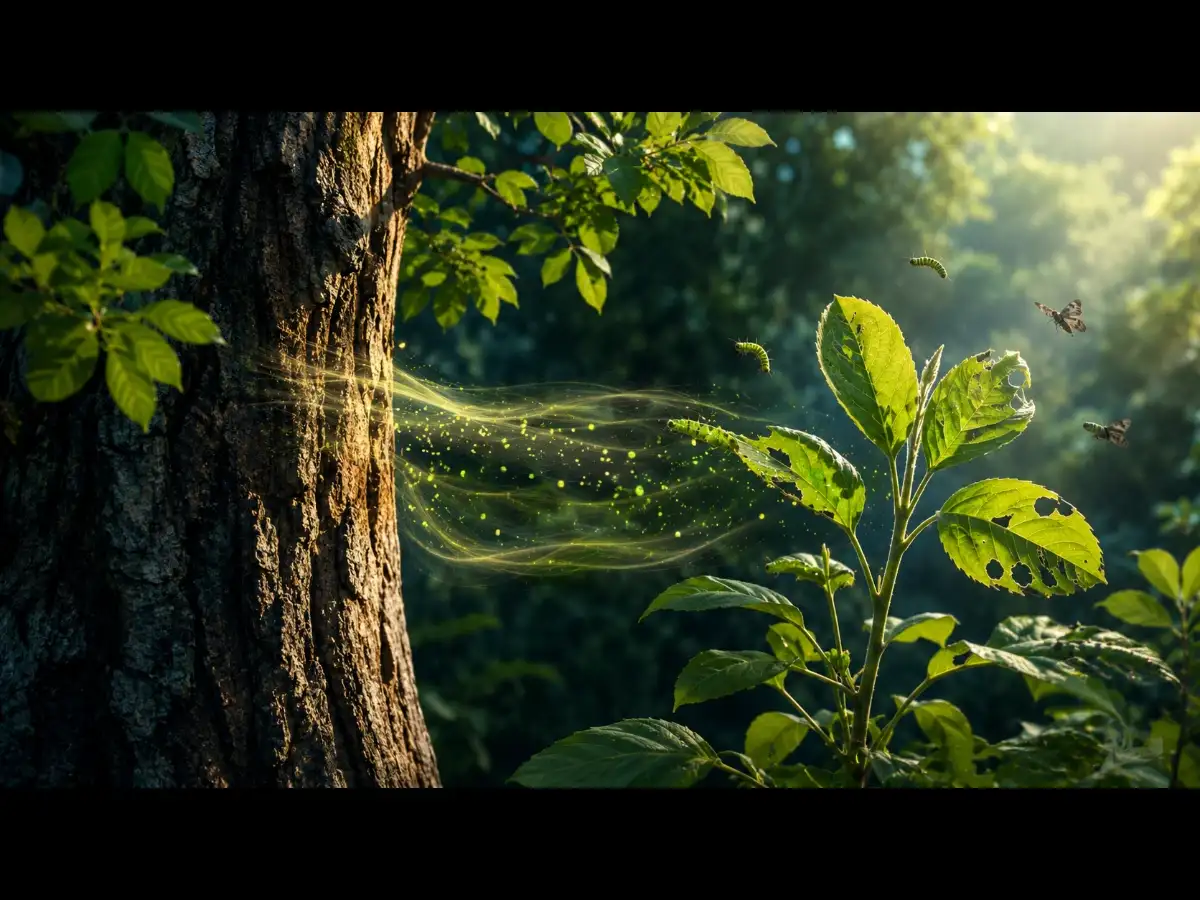
A tree being attacked by insects cannot run away. But that does not mean it is chemically helpless. When leaves are damaged by herbivores, pathogens or mechanical injury, plants can release volatile organic compounds (VOCs) into the surrounding air. Nearby plants may detect some of these airborne chemicals and alter their own defensive chemistry.
Scientists increasingly describe this phenomenon as plant chemical signalling, although it is more precise to say that plants release chemical cues that other organisms can perceive. The process does not involve a nervous system or a brain. Instead, it relies on molecular recognition, signalling pathways and changes in gene expression.














