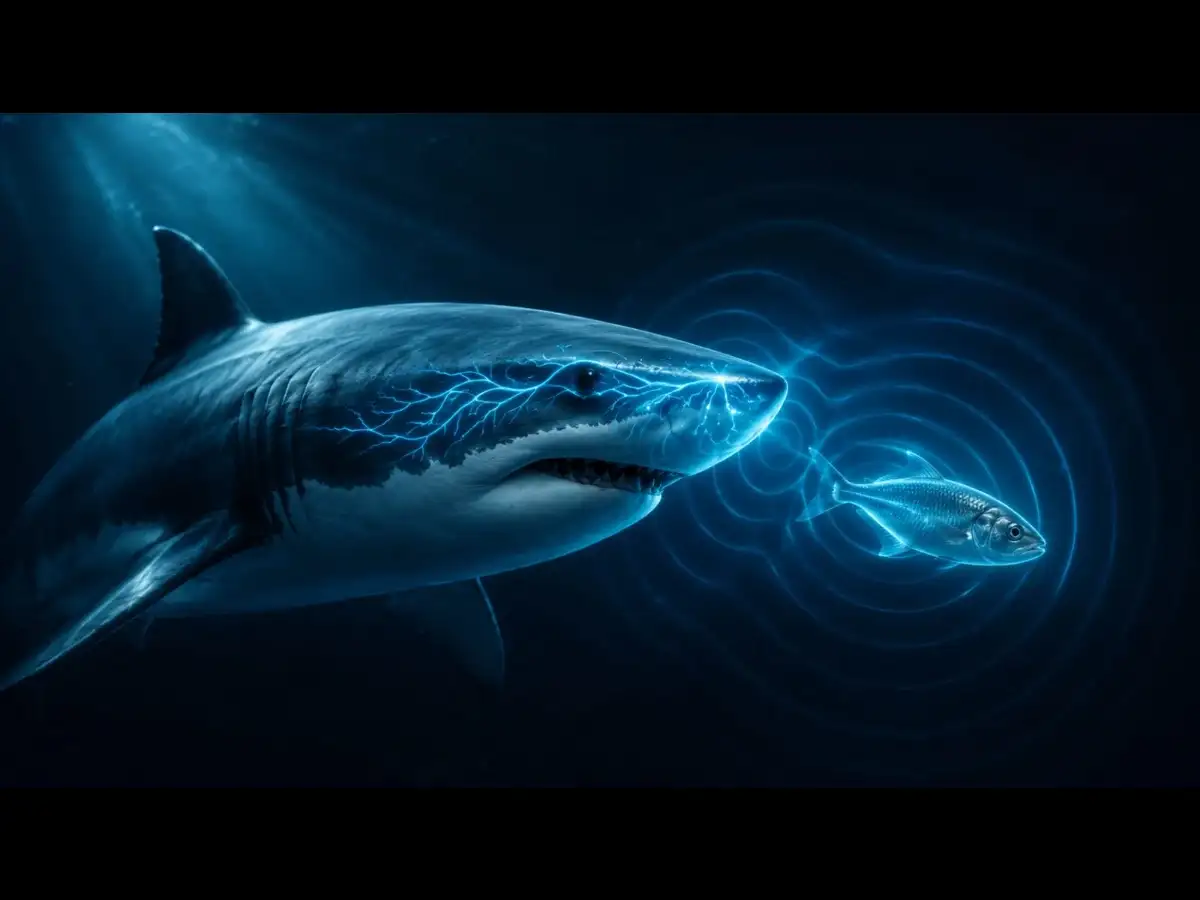
A shark does not need to see a fish to know that something alive is nearby. In murky water, beneath sand or during the final moments of an attack, it has another remarkable source of information: electricity.
Sharks possess specialized sensory organs called the ampullae of Lorenzini, tiny pore-and-canal structures concentrated around the head and snout. These organs allow sharks and other cartilaginous fishes to detect extremely weak electric fields in seawater. Scientists have demonstrated that this ability can help sharks locate prey, particularly at close range when vision becomes less useful.