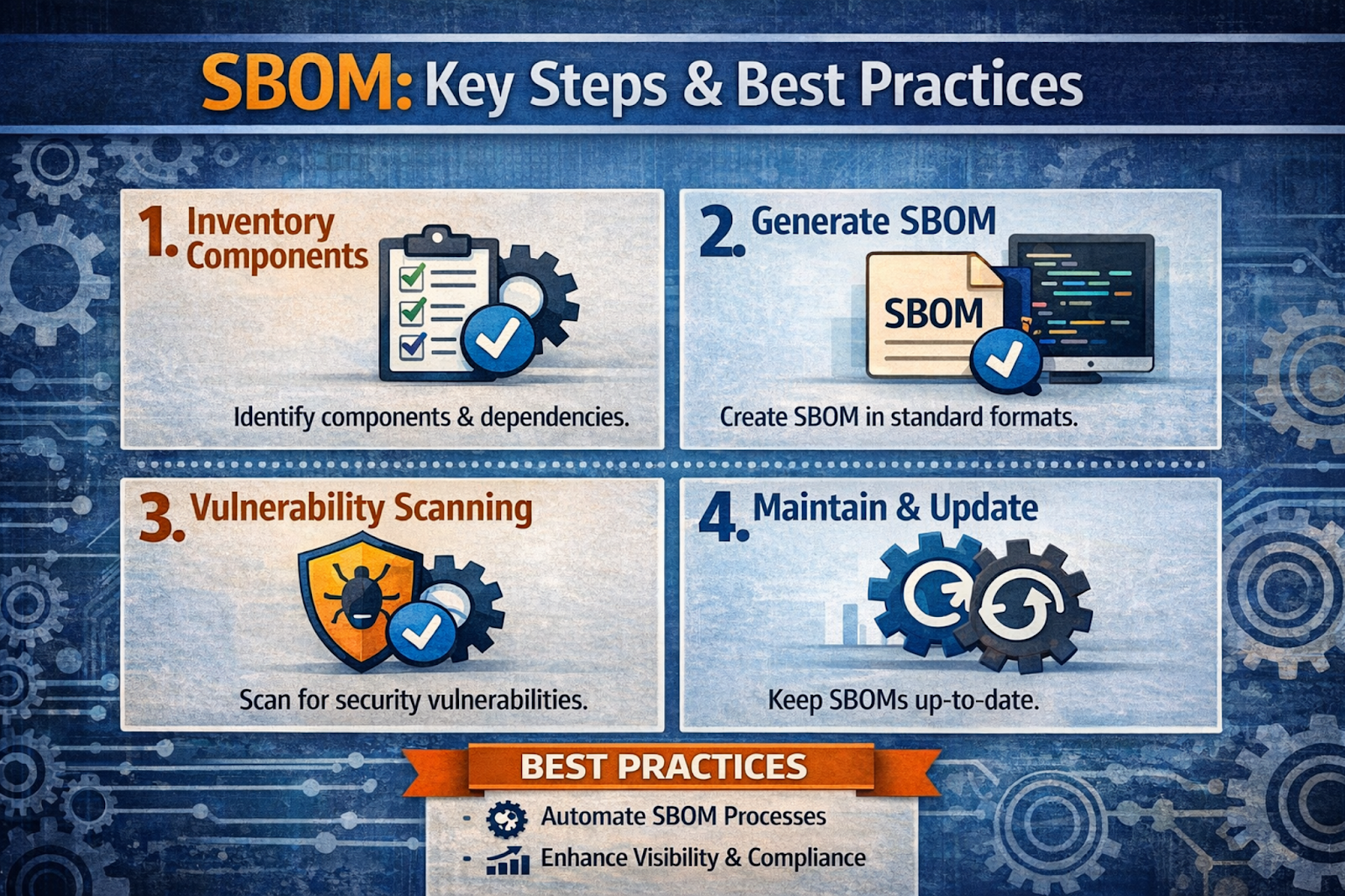
The risk of software supply chains has become one of the most difficult problems in modern cybersecurity. Today's apps are built from open-source libraries, third-party components and nested dependencies that change faster than most security programs can track. Because of this, many organisations have a hard time answering a simple but important question during vulnerability disclosures: Where are we exposed?
This problem has made people more interested in SBOMs. But even though a lot of companies now generate SBOMs, far fewer implement them effectively. SBOM files are often isolated from development workflows, vulnerability management and incident response. This gap between intent and execution is where most SBOM initiatives lose momentum.
Producing files for compliance is not what SBOM implementation is about. It's about building a capability that is repeatable and can deliver real, operational value. This guide talks about the key steps, common problems and best practices that determine if implementing SBOM actually strengthens security.
What SBOM Implementation Really Involves
It is the process of embedding visibility of software components into development, security and operations workflows. It goes beyond generating inventories and focuses on how SBOM data is maintained, analysed, and acted upon over time.
Here are some things that are important for a successful SBOM implementation:
- Continuous generation of SBOMs
- Accurate tracking of dependencies
- Integration with vulnerability intelligence
- Clear ownership and accountability
- Using SBOM data to make real security decisions
Without these elements, SBOMs are just static artifacts that have limited impact.
Step 1: Set Clear Goals for SBOM Implementation
Every successful SBOM project begins with a clear goal.
Before making SBOMs, businesses should first define:
- Why people are using SBOMs
- What risks they are supposed to address
- Who will use SBOM data and how
- How success looks like in terms of operations
Some common goals include faster vulnerability response or audit readiness. When there aren't clear goals, implementing it becomes unfocused and underutilised.
Step 2: Identify Scope and Ownership Early
One of the most common SBOM failures is unclear responsibility.
To have a strong SBOM implementation, you need to define:
- What apps and services are included in the scope
- Who owns SBOM accuracy for each application
- Who acts on SBOM-driven findings
- How updates are handled over time
It's important for both the development and security teams to share the ownership. If the ownership is unclear, SBOMs quickly become outdated and ignored.
Step 3: Automate SBOM Generation Within CI/CD Pipelines
Manual SBOM creation does not scale in modern environments.
Automation is a basic step in SBOM implementation because it ensures:
- SBOMs reflect the actual build output
- New dependencies are captured immediately
- Releases are not decoupled from visibility
- Developers don't have to deal with manual processes.
Automated SBOM generation aligns visibility with the pace of software delivery.
Step 4: Ensure Depth and Accuracy of SBOM Data
An incomplete SBOM can be more dangerous than not having one at all.
To make sure that SBOM works well, it should cover:
- Direct and transitive dependencies
- Accurate component versions
- Third-party and open-source libraries
- Build-time and runtime components
Shallow SBOMs create blind spots that delay response during important vulnerability events.
Step 5: Integrate SBOMs with Vulnerability Management
When paired with vulnerability intelligence, SBOMs deliver the most value.
Integration allows teams to:
- Correlate vulnerabilities with affected components
- Quickly identify the affected applications
- Prioritise remediation based on real exposure
- Reduce noise and false positives
Without this integration, SBOM stops at visibility rather than enabling action.
Step 6: Add Context to SBOM-Driven Findings
Every vulnerability component isn't equally dangerous.
A mature SBOM adds context by assessing:
- If the component is actually used
- Runtime exposure and reachability
- Business criticality of affected applications
- Availability of mitigations or fixes
This risk-based approach prevents teams from becoming overwhelmed by too much work and helps them focus on the most important tasks.
Common Challenges in SBOM Implementation
Even well-designed SBOM initiatives face real-world obstacles.
Some common challenges are:
- Keeping SBOMs updated as systems change
- Handling a lot of dependency data
- Aligning development and security priorities
- Dealing with SBOMs from third-party vendors
- Integrating SBOM data to existing tools
When you recognise these challenges early on, it allows you to plan realistically instead of abandoning SBOM implementation midway.
Best Practices That Separate Successful SBOM Programs
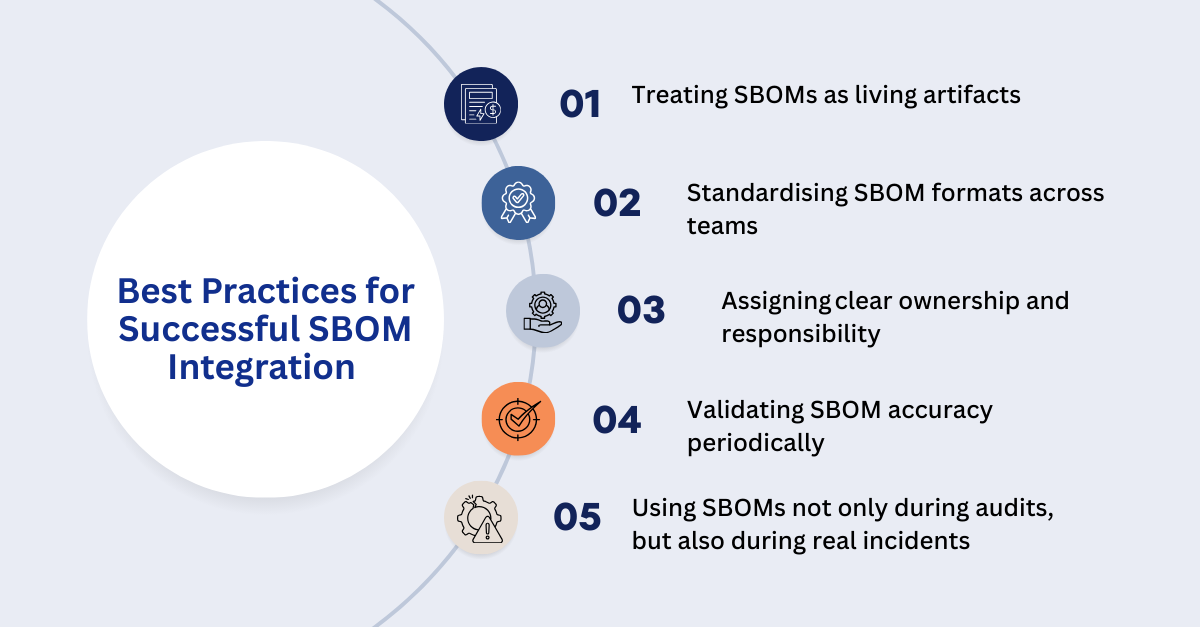
Organisations that succeed with implementing SBOM follow consistent patterns.
Key best practices are:
- Treating SBOMs as living artifacts
- Standardising SBOM formats across teams
- Assigning clear ownership and responsibility
- Validating SBOM accuracy periodically
- Using SBOMs not only during audits, but also during real incidents
These things make sure that SBOMs remain relevant and trusted.
SBOM Implementation and Third-Party Software Risk
Third-party components often pose the least visible risk.
A strong SBOM implementation includes:
- Requesting SBOMs from vendors
- Analysing third-party SBOMs consistently
- Tracking vendor component exposure
- Using SBOMs to support procurement decisions
This strategy makes the supply chain defence stronger than internally developed software.
Measuring the Success of SBOM Implementation
SBOM maturity should be measured through outcomes, not artifacts.
Useful indicators are:
- Time to figure out exposure after disclosures
- Lesser manual impact analysis
- Accuracy of vulnerability prioritisation
- Decrease in recurring vulnerable dependencies
- Adoption of SBOM data by developers and security teams
These metrics demonstrate whether SBOM is delivering real value.
When SBOM Implementation Becomes Critical
It is especially important when organisations:
- Develop or distribute software products
- Depend heavily on open-source ecosystems
- Operate in regulated industries
- Handle a lot of application portfolios
- Experience frequent vulnerability disclosures
In these situations, just manual dependency tracking doesn't work.
Next Steps
Companies considering SBOM should first look at how they currently keep track of software components and how vulnerability impact is determined during disclosures. This often reveals gaps in ownership, automation and integration.
You can use services of reliable cybersecurity firms for SBOM. For example, CyberNX is a trustworthy cybersecurity firm that provides an SBOM management tool called NXRadar. It helps operationalise SBOM management, turning policy into practice and compliance into competitive advantage.
Organisations can make their software supply chain much more resilient by making SBOM implementation a part of their daily development and security work.
Conclusion
SBOMs alone do not lower risk. SBOM implementation is what turns component visibility into meaningful security outcomes. When used correctly, SBOMs help with faster response, better prioritisation and stronger collaboration between security and development teams.
As software ecosystems continue to get more complicated, good SBOM is becoming an essential feature for modern cybersecurity programs. Organisations that invest in practical and well-governed SBOM implementation will be far better equipped to manage supply chain risk and respond confidently to rising threats.