Get all your news in one place.
100's of premium titles.
One app.
Start reading
Kiplinger
Kiplinger
Business
Kate Schubel

Tax Credits for Energy-Efficient Home Improvements

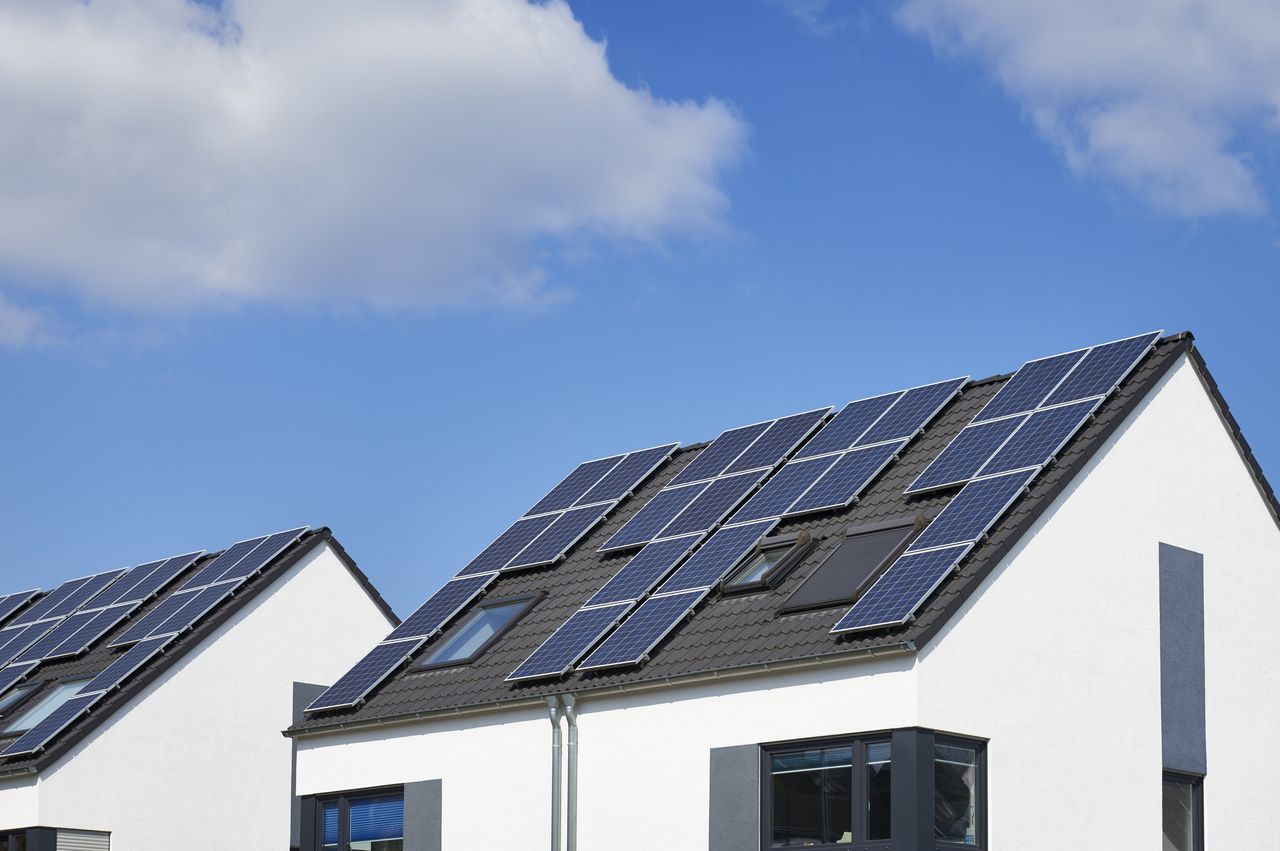
Image of a house rooftop with solar panels on it against a blue sky.

If you want to claim federal tax credits for home improvements that will boost the energy efficiency of your house, you might find your options significantly limited.

The 2025 Trump tax bill ended a slew of tax provisions for many "clean energy" tax incentives, including the popular $3,200 annual credit for energy-efficient home upgrades and the 30% solar equipment credit.

But if you installed home EV charging equipment before the June 30, 2026, cutoff, or if you apply for state-administered electric home rebates, you might still claim significant savings on your 2026 federal income tax return. Here's how.

Alternative fuel refueling property credit

The Alternative Fuel Refueling Property Credit (also known as the EV charger tax credit) is worth up to 30% of the costs of "qualified alternative fuel vehicle refueling property" installed in the home, up to $1,000. (This includes equipment used to recharge an electric vehicle.)

The credit also applies to the purchase of "bidirectional" charging equipment, which can charge an electric vehicle's battery and allow you to discharge electricity from the battery back into the electric grid.

This tax break expired for property placed in service after June 30, 2026. However, if you met that deadline, you have until the 2026 tax year (those returns typically filed in early 2027) to claim the credit.

Note: The credit also applies to equipment used to store or dispense alternative fuel (other than electricity) for motor vehicles.

Home electrification and appliances rebate

Although not a tax credit, the Home Electrification and Appliances Rebate (HEAR) program is also designed to help American families "go green."

The program provides rebates to low- and middle-income families who purchase energy-efficient electric appliances. To qualify for a rebate, your family's total annual income must be less than 150% of the median income where you live.

Qualifying homeowners might get rebates as high as:

  • $840 for a stove, cooktop, range, oven, or heat pump clothes dryer;
  • $1,750 for a heat pump water heater; and
  • $8,000 for a heat pump for space heating or cooling.

Rebates for nonappliance upgrades might be available up to the following amounts:

  • $1,600 for insulation, air sealing, and ventilation;
  • $2,500 for electric wiring; and
  • $4,000 for an electric load service center upgrade.

There are limits on the amount a household can receive, though. For families with annual incomes between 80% and 150% of their area's median income, a rebate can't exceed 50% of the qualified electrification project's total cost.

Furthermore, each qualifying family is limited to a lifetime cap of $14,000 in total rebates under the program.

Funding Timeline and Key 2026 Policy Shifts:

Originally launched with an $8.8 billion allocation distributed through state and tribal governments, HEAR is scheduled to remain available through September 30, 2031. However, the program's rules have shifted under the Trump administration.

In mid-2026, the U.S. Department of Energy (DOE) issued new guidance ending rebate allowances for "fuel-switching."

  • This means consumers can no longer use the program to swap out a fossil-fuel appliance (like a natural gas furnace) for an electric alternative (like a heat pump).
  • Rebates are now only for upgrading existing electric equipment to more efficient electric models, though specific implementation timelines may still vary by state.
  • Also, homeowners installing new HVAC upgrades must use rebates for insulation and air sealing at the same time (unless their home already meets the strict insulation standards) , per updated standards .

These restrictions align with broader administrative changes to federal efficiency programs. In early 2026, the DOE assumed sole administrative oversight of the Energy Star program — the standard used to determine whether a home upgrade qualifies for these rebates — following an agreement with the U.S. Environmental Protection Agency (EPA) to streamline appliance enforcement.

With the current administration rolling back climate-focused mandates and prioritizing traditional energy sectors, consumers may expect these existing programs to face tighter restrictions, and new federal energy-efficient tax breaks might be unlikely to return anytime soon.

More ways to save

If you're a homeowner looking for more ways to save with energy-efficient upgrades, check with your local electric or gas utility provider to see if they offer direct rebates for installing smart thermostats, heat pumps, or upgrading electrical panels.

Additionally, you can look into the Home Efficiency Rebates (HOMES) program — a sister initiative to the HEAR focused on overall home energy reduction. Although the program faced initial delays since its launch in 2024, states are now actively rolling out programs in phases.

Check with your state energy office to see if applications are officially open in your area and to review the latest federal rules regarding eligible upgrades.

Read More

Sign up to read this article
Read news from 100's of titles, curated specifically for you.
Already a member? Sign in here
Related Stories
Top stories on inkl right now
One subscription that gives you access to news from hundreds of sites
Already a member? Sign in here
Our Picks
Fourteen days free
Download the app
One app. One membership.
100+ trusted global sources.