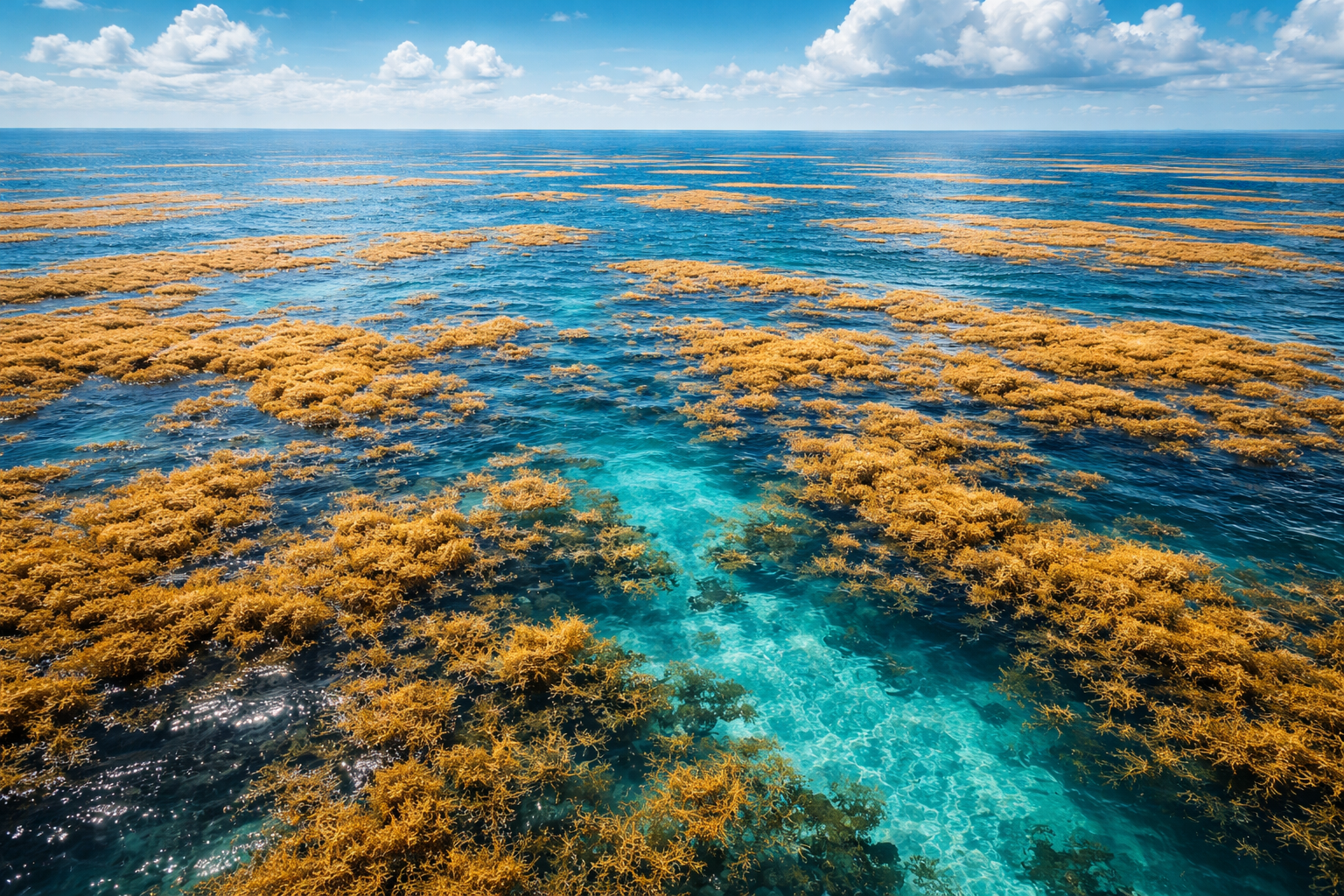
The idea of sailing endlessly across a seemingly infinite horizon of blue water with no sign of land in sight? No beaches of soft white sand or rocky cliffs and headlands to signal the edge. This is no sailor's worst nightmare; this is the Sargasso Sea, the only sea in the world without land boundaries because it has no shore. Located deep in the heart of the North Atlantic Ocean, this enigma of a sea has fascinated scientists and the world at large with its unique characteristics and its importance in the marine life cycle. With its depths of water so blue and exceptionally clear, with visibility often exceeding 50–60 metres, scientists have always been amazed by its unique characteristics. For centuries, explorers spoke of the sea as a haven for lost ships and sailors trapped in its seaweed-choked waters. Today, we know it as an important part of the world's oceans. As climate change stirs its waters, understanding the Sargasso Sea grows ever more urgent. So why is it Earth's most enigmatic sea? Because within its drifting mats of seaweed and still, circling currents lies a delicate ecosystem that holds clues to both our planet’s past and its uncertain future.