Get all your news in one place.
100's of premium titles.
One app.
Start reading
The Canberra Times
The Canberra Times
National
Dana Daniel

Sarah can't get out of the house by herself. She's anxious about Mark Butler's plan

Like many Australians, Sarah* never imagined she would end up with a life-altering disability.

Before becoming severely unwell with a degenerative condition that affects her spine, she was a social worker.


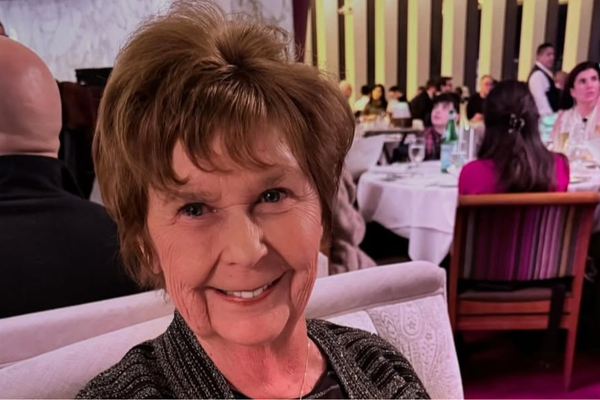
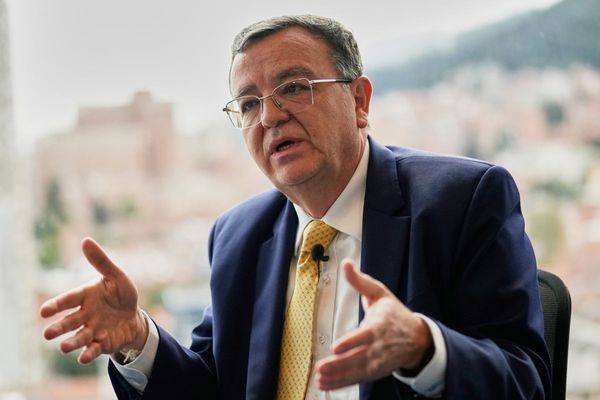
Health Minister Mark Butler's plan to cut billions from the NDIS has Sarah (in purple) worried. Pictures by Keegan Carroll, Karleen Minney

"I used to get Christmas cards saying 'you saved my life'," she tells The Canberra Times.

Now that she's the one who needs help, she relies on the National Disability Insurance Scheme.

"I've got a powered wheelchair, so I need support to go out of the house," she says. "I need someone to help me. I can't lift my own chair."

Sarah is one of 12,597 Canberrans on the NDIS, and she's anxious about the Albanese government's plan for dramatic cuts to save $35 billion over a decade.

Legislation to implement the changes, announced by Health Minister Mark Butler last month as "necessary" to prevent the scheme from ballooning to $70 billion a year by 2030, is before a Senate inquiry.

If passed, it will enable the government to cut $13.2 billion over four years from NDIS budgets for "community participation" supports.

This is the funding stream Sarah relies on to get out of the house and participate in community life.

"It's terrifying because you don't know what's going to come," she says.

"The whole disabled community is trying to scream at the top of its lungs, 'don't do this to us', but it feels like nobody is listening."

Funding for social and community participation enables NDIS participants to have carers accompany them on activities like going to the shops, getting a haircut, seeing a movie or going for a walk, but does not pay for the activity itself.

Mr Butler says cutting this stream back is needed to stop its cost from blowing out to $20 billion a year by the end of the decade, after it tripled in five years to more than $12 billion.

"This cannot continue on its current course," he told the National Press Club.

"This is about stabilising the costs of the scheme - and guaranteeing the essential services the NDIS provides."

He said a $200 million "inclusive communities fund" would help "rebuild capability among community organisations so people have new options to genuinely participate in their local community".

ACT independent senator David Pocock says many Canberrans and their carers have "deep concerns and huge uncertainty about the changes and how they will impact them".

Voices like Sarah's "deserve to be heard" when the government was pursuing "such significant changes," he says.

Sarah believes there is a misconception that community participation funding is being used "just to go out ... and have fun".

MORE HEALTH:

"We use that funding to go to the doctor, to go to hydrotherapy, to go and speak to the physio, to go to a specialist, to be taken to the hospital," she says.

"Actually going to see friends or going to see a movie is kind of the extra bits, if you're lucky."

In the earlier stages of her illness, Sarah started a business and worked from home, continuing until pain and fatigue made it impossible.

"I contributed to the world greatly when I was working," she says. "I still do".

Sarah says she uses NDIS funding to attend appointments. Picture by Karleen Minney

She wants people to understand that anyone can become disabled, and see the value in ensuring support is there.

Introducing the new laws last month, Mr Butler said they would "return the NDIS to its original intent - providing lifetime supports for Australians with permanent and significant disability".

"The measures in this bill will secure the future of the NDIS, so future generations can count on its promise for decades to come," the minister said.

On Monday, while expressing confidence he could secure the Coalition's support, the minister said any legislative delay would be costly for the taxpayer, with Treasury modelling showing a year's delay would cost "about $17 billion".

"We want to make changes pretty much immediately to deal ... with the cost blowouts," he said.

For Sarah, the outcome could dramatically affect her quality of life.

"People look at people like me and go, 'oh, that poor, sad lady in her powered wheelchair with no eyebrows and no eyelashes ... She must be really, really sick," she says.

"And I go, 'I get by, but yeah, I am, and I have support that helps me to live a life that is meaningful'."

*Name changed to protect her identity.

Sign up to read this article
Read news from 100's of titles, curated specifically for you.
Already a member? Sign in here
Related Stories
Top stories on inkl right now
One subscription that gives you access to news from hundreds of sites
Already a member? Sign in here
Our Picks
Fourteen days free
Download the app
One app. One membership.
100+ trusted global sources.