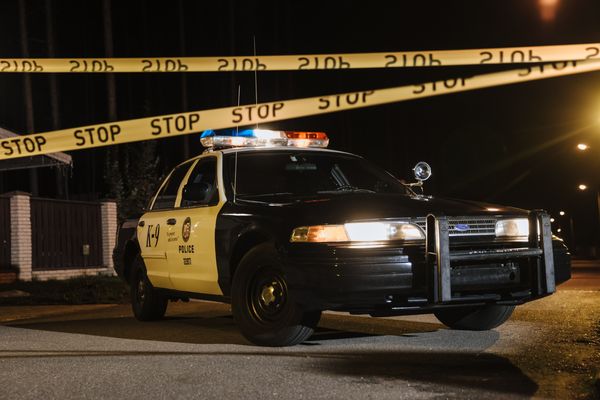
With this startling and sombre documentary, Mexican film-maker Rodrigo Reyes has conducted an experiment in verbatim cinema, or what you might call witness cinema. In 2014, Reyes was at his day job as a California court interpreter translating for a defendant: Sansón Noe Andrade, a young Mexican immigrant who was to be convicted for first-degree murder having been the driver for a drive-by gang shooting, conducted by his 15-year-old brother-in-law. Andrade got life without parole, having denied guilt and denied gang membership; he insisted he was reluctantly giving his brother-in-law a lift out of politeness with no idea of his intention. Andrade had turned down a plea bargain, but then made a bad impression on the jury by claiming not to have heard any gunshots.
Later, Reyes entered into a correspondence with Andrade, who was to tell him he refused any deal because he was scared of gang reprisals (although his brother-in-law took a deal) and still insists he was not a gang member, though had to join up once in prison for his own safety. So Reyes made it his mission to create a film based on Andrade’s unhappy life, using an actor, Gerardo Reyes, to play Andrade’s adult self and reconstruct their jail-visit conversations on the stage of a cinema in front of a blank screen. More audaciously still, Reyes got Andrade’s sister and brother-in-law to play his parents in reconstructions of his troubled childhood in the Mexican town of Tecomán, with his nephew Antonio, or Toñito, playing his pre-teen self.