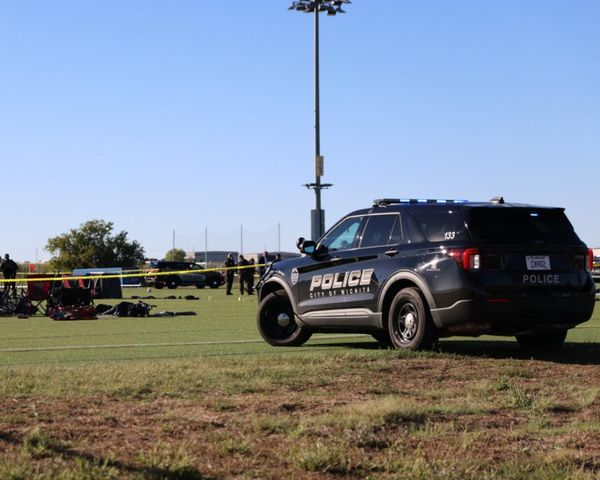
San Francisco police have arrested four people and seized more than 20,000 pills, including suspected counterfeit medications, in an investigation that began with the April overdose death of a 16-year-old boy, the city's first known fatal case involving the synthetic opioid cychlorphine. The San Francisco Police Department said Monday that officers served search warrants at three San Francisco homes on Sept. 8 and 9 after a months-long investigation that included multiple controlled drug buys.
The teen was identified as Dante Paul Lacourte, a Lower Nob Hill resident whose mother found him unresponsive at home on April 7, according to New York Times reporting republished by the San Francisco Examiner. His death raises a hard question for families: how a pill that looks like an ordinary prescription can carry an opioid that fentanyl test strips cannot detect.
Officials have not said the four adults supplied the pills that killed the teen, and it is not clear whether their alleged activities were linked to his death. The suspects were booked on narcotics sales and firearms charges, and police say the investigation remains open.
A Counterfeit Pill Problem Families Cannot See
Cychlorphine, also called N-propionitrile chlorphine, belongs to a newer group of synthetic opioids known as orphines. The Center for Forensic Science Research and Education first detected it in mid-2024 and reported that laboratory data suggest it is about 10 times as potent as fentanyl. That estimate comes from lab testing, and data on its effects in people remain limited.
The teen's toxicology showed cychlorphine along with another synthetic opioid, N-desethyl isotonitazene, and ethyl bromazolam, a benzodiazepine not approved by the FDA. Fentanyl was not detected, the San Francisco Department of Public Health said. The department warned that fentanyl test strips cannot detect cychlorphine and that "even a fraction of a counterfeit pill can kill someone."
Police said officers also found cychlorphine in counterfeit pills seized during earlier investigations, which suggests the drug may have reached the city through more than one source. The department is working with the FDA to determine whether any pills seized this month contain it.
"This tragic case highlights the dangers these deadly drugs pose to our community," Police Chief Derrick Lew said in announcing the arrests.
From Tennessee Labs to a San Francisco Bedroom
MedicalDaily previously reported that a Tennessee forensic center had linked 63 deaths to cychlorphine. That center has said its high counts partly reflect its early, targeted testing, since routine toxicology screens do not pick up the drug. The San Francisco case adds a confirmed death on the West Coast, a teenage victim, and a criminal investigation that identified suspected sources of the pills.
Federal controls tightened after the April death. The DEA published a temporary order placing cychlorphine in Schedule I on Aug. 27. The order lasts two years and can be extended by up to one year while permanent scheduling moves forward. State law has not caught up. District Attorney Brooke Jenkins said the drug is not yet listed as a controlled substance in California's Health and Safety Code, the San Francisco Chronicle reported.
Dr. Hillary Kunins, the city's director of behavioral health services, said no other local deaths had been reported, according to the Chronicle. She also warned that one dose of an overdose reversal drug is not always effective against it.
Detection remains a weak point. San Francisco's wastewater drug monitoring lost federal funding in 2024 and resumed in July, with public reporting planned this fall, according to the Times. Stanford psychiatry professor Keith Humphreys told the paper that wastewater monitoring can help officials spot new drugs before they start causing deaths.
Police say they will keep following leads from the investigation, but officials have not said how widely the drug is circulating in the city.
Protecting Teens and Families Now
The highest risk falls on teens and young adults who buy pills from friends, dealers, or social media, and on anyone who assumes a pill is safe because it looks like Xanax or oxycodone. A negative fentanyl test strip does not rule out cychlorphine. The Times reported that the teen had bought pills from dealers he found on Snapchat, that he had struggled with ADHD, anxiety, and depression, and that his parents had sought therapy and rehabilitation for him. His story is a reminder that mental health and substance use often overlap.
Warning signs of an opioid overdose include slow or stopped breathing, blue or gray lips, pinpoint pupils, gurgling sounds, and unresponsiveness. City health officials say naloxone can reverse overdoses from these synthetic opioids, and they advise calling 911 even if the person appears to respond. Because one dose may not be enough, families may want to keep more than one on hand.
Naloxone, also sold as Narcan, is available over the counter. Families can keep it at home, learn how to use it, and talk openly with teens about avoiding any pill that did not come from a pharmacy. San Francisco residents can reach the health department's treatment line at 888-246-3333, and the national SAMHSA helpline is available at 1-800-662-4357.
Two suspects were scheduled for arraignment on Sept. 15, and the other two on Sept. 23, KRON4 reported. MedicalDaily will update this story as test results and court actions are released.
Developing Story Timeline
Sept. 14, 2026: SFPD announced four arrests and the seizure of more than 20,000 pills after search warrants were served Sept. 8 and 9. News reports publicly identified the teen.
Aug. 27, 2026: The DEA published a temporary order placing cychlorphine and three related opioids in Schedule I.
July 1, 2026: The DEA published its notice of intent to temporarily schedule the four opioids.
April 23, 2026: San Francisco health officials sent providers an alert about a fatal overdose involving novel synthetic opioids, the city's first known cychlorphine death.
April 7, 2026: A 16-year-old was found dead in his family's home on Bush Street.
Key Questions Answered
What happened in San Francisco? Police arrested four people and seized more than 20,000 pills in an investigation that began with a 16-year-old's April overdose death, the city's first known death involving cychlorphine.
What is cychlorphine? It is a synthetic opioid first detected by a U.S. forensic lab in 2024. Lab data suggest it is about 10 times as potent as fentanyl, though data in people are limited.
Can fentanyl test strips detect it? No. San Francisco health officials say fentanyl test strips do not detect cychlorphine, so a negative result does not mean a pill is safe.
Does naloxone work against it? City health officials say naloxone can reverse overdoses from these opioids, but one dose is not always enough. Always call 911 as well.
Who faces the greatest risk? Teens and adults who take pills that did not come from a pharmacy, including pills shared by friends or bought through social media.
Have the suspects been charged in the teen's death? Police have not announced charges tied to the death. The four were booked on narcotics sales and firearms charges, and the investigation continues.
What should parents do now? Keep naloxone at home, learn the warning signs of an overdose, and talk with teens about the danger of any pill not dispensed by a pharmacy.