
Quick summary
Samsung has moved its new folding phones to silicon-carbon battery technology, but this battery tech doesn't last as long as traditional lithium-ion.
The stated supported recharge cycles is lower on the new devices compared to predecessors.
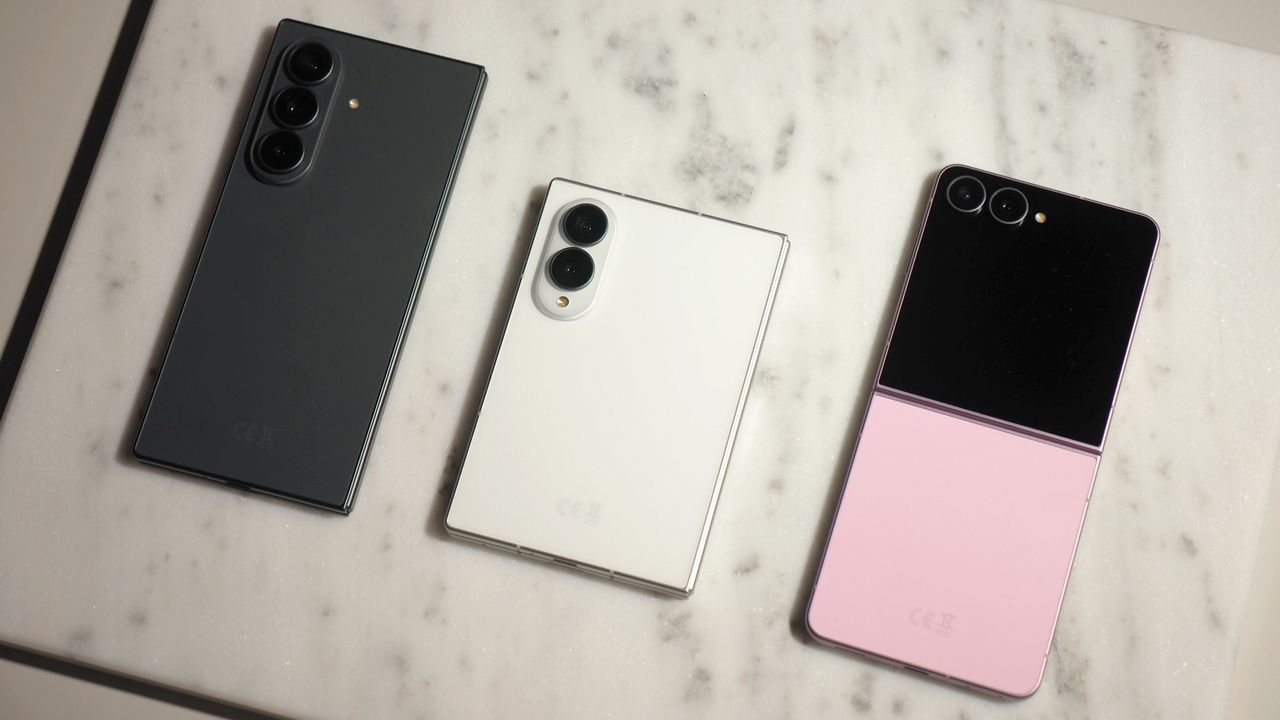
Samsung announced three new folding phones recently, featuring a change to the battery technology. Samsung has embraced silicon-carbon for the first time, following the lead of many smartphone brands. But there's a downside to that battery technology: it doesn't last as long.
The specifications for Samsung's new folding phones show the change clearly, with the Galaxy Z Fold 8 listed as having a minimum battery endurance (in charging cycles) of 1200. The Z Flip 8 is 1200 and the Z Fold 8 Ultra is also 1200.
While we can't compare the Galaxy Z Fold 8 to a previous model, we can check the details for the Galaxy Z Flip 7 and Galaxy Z Fold 7, both of which state that their batteries are good for 2000 charging cycles.
In the case of the Galaxy Z Flip 8, the battery capacity remains the same at 4300mAh, but its longevity is reduced because of the move to silicon-carbon battery tech. For the Galaxy Z Fold 8 Ultra there's some benefit, with an increase to 5000mAh over the 4400mAh so this battery will last longer between charges, but again, won't last as many years.
Silicon-carbon battery technology has the advantage of being more energy dense, allowing the manufacturer to get greater capacity within the same physical size. It's the tech that's see phones soar over 5000mAh which seemed to be the ceiling on battery capacity in a practical design.
That's resulted in phones with huge capacity, some over 7000mAh, with very little impact on the phone's design. For Samsung's part, it said that moving to silicon-carbon enabled the 45W charging now offered, but that's not strictly the case: the Samsung Galaxy S22 Ultra offered 45W charging in 2022, using a regular lithium-ion battery.
The evolution of silicon-carbon use in smartphones has followed a path that tells us a lot: it was first used by the Honor Magic 6 Pro in 2023 and then went on to be widely used by the likes of Xiaomi, OnePlus, Oppo and Motorola, all with the aim of increasing the capacity to extend the endurance of the phone.
These brands have also championed fast charging, while Samsung, Apple and Google have been a little more conservative.
That reluctance to move to silicon-carbon probably comes down to the fact that it doesn't last as long and with Samsung, Apple and Google all offering the longest software support to keep devices going, that doesn’t dovetail with a battery that has a shorter lifespan.
There have been calls for brands to adopt silicon-carbon from some corners of the media, but the true cost is right here in the specs: these phone batteries won't last as many years as they would with traditional lithium-ion.