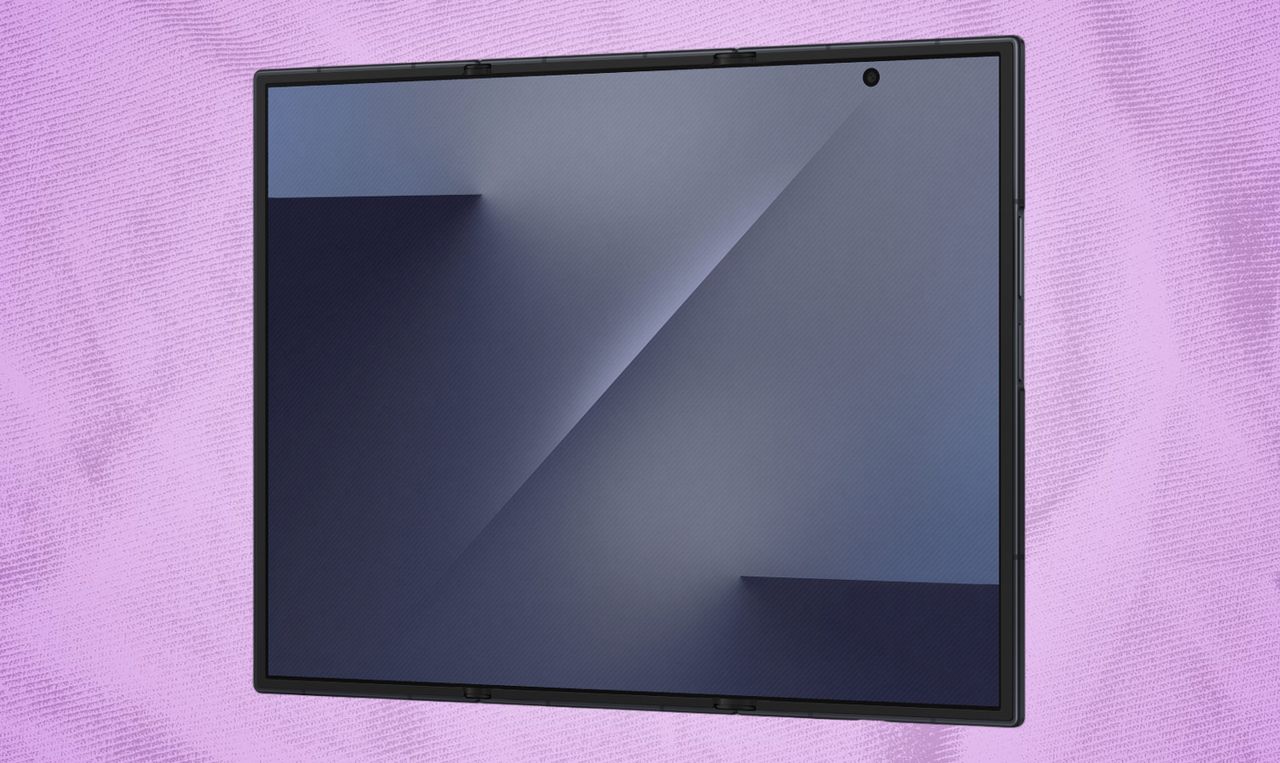
Rumors about the Samsung Galaxy Z TriFold had been boiling for months now, but we can now separate reality from fiction after Samsung formally revealed its triple foldable phone in full. The Galaxy Z TriFold is seriously shaping out to be a masterpiece, with a frame measuring in at a mind boggling 3.9mm at its thinnest point.
Updated December 3
• Samsung officially announced the Galaxy Z TriFold, coming to U.S. in Q1 2026
• The inner display of the Galaxy Z TriFold will measure 10 inches across, with an outer screen of 6.5 inches

Even though the triple-folding Huawei Mate XT Ultimate Design has been out since 2024, that phone lacks Google apps and never enjoyed a wide release. Samsung's TriFold will offer both, while also sporting a 6.5-inch outer display on a device that opens up to reveal a massive 10-inch main panel.
There's a ton of other exciting features about the Galaxy Z TriFold, like Samsung's updated DeX experience that aims to take multitasking to the next level. Similarly, the new device will offer the same triple cameras found on the Galaxy Z Fold 7, including that 200MP main camera. While all of this sound exciting, the only thing missing for now from Samsung's announcement is its price, at least for mext year's U.S. release.
Samsung Galaxy Z TriFold: Possible price and release
The Galaxy Z TriFold will launch first in South Korea starting on Dec. 12, 2025, which will be followed by China, Taiwan, Singapore, and the UAE. As for the U.S., Samsung says it'll be coming sometime in Q1 2026.
Given that January or February could also see the next Galaxy Unpacked event for the Galaxy S26 series, it'll be interesting to see if Samsung will wait to release the TriFold later in Q1, just to make room in between releases.
Now that we have a timeframe on when it'll come out, the biggest thing yet to be revealed about the Galaxy Z TriFold is its price. Rumors have hinted that it could be around $3,000, which is excessive when it comes to phones. That would make it even more expensive than the $1,999 cost for the current Galaxy Z Fold 7.
For what it's worth, the Galaxy Z TriFold is supposed to cost 3,594,000 won in South Korea, which converts to around $2,400. Phone makers usually set different prices for different regions, but at least we have some sort of estimated range for what the Galaxy Z TriFold could cost.
Samsung Galaxy Z TriFold: Specifications
Galaxy Z TriFold |
|
Price |
TBA |
Main display |
10-inch Dynamic AMOLED 2X (2160 x 1584; 120Hz) |
Cover display |
6.5-inch Dynamic AMOLED X2 (2520 x 1080, 120Hz) |
Chipset |
Snapdragon 8 Elite for Galaxy |
RAM |
16GB |
Storage |
512GB, 1TB |
Rear cameras |
200MP main (f1.7), 12MP ultrawide (f/2.2), 10MP telephoto with 3x optical zoom (f/2.4) |
Cover camera |
10MP (f/2.2) |
Main display camera |
10MP (f/2.2) |
Charging |
45W wired, 15W wireless |
Battery |
5,600 mAh |
Dimensions |
159.2 x 214.1 x 3.9mm open (6.3 x 8.4 x 0.15 inches), 159.2 x 75.0 x 12.9mm closed (6.3 x 3.0 x 0.51 inches) |
Weight |
309 grams (10.9 ounces) |
IP Rating |
IP48 |
Colors |
Crafted Black |
Samsung Galaxy Z TriFold: Design

The Galaxy Z TriFold is an inward-folding device, which means there's still be a separate cover screen on the opposite side of the device to the main flexible display. Being a premium device, Samsung designs the Galaxy Z TriFold with the same meticulous attention as its previous foldable phones.
For starters, it leverage two differently-sized hinges that build upon the Armor FlexHinge that was used with the most recent Galaxy Z Fold device. The frame of the Galaxy Z TriFold is comprised out of Advanced Armor Aluminum that gives it strength and rigidity.
If you thought the Galaxy S25 Edge and iPhone Air were thin, then you'll be astounded by how the Z TriFold measures in at 3.9mm at its thinnest point. However, it does come in pretty heavy for a phone at 10.9 ounces, but to its credit, there aren't many foldable phones that include a 10-inch display.
One of the biggest concerns about with the design could be how it holds up over time. The Galaxy Z TriFold features an IP48 construction that gives it some water and dust resistance, but nothing to the degree that most phones nowadays have with their better IP68 ratings. The Pixel 10 Pro Fold is one of the few foldables offering that degree of water and dust protection.
Samsung Galaxy Z TriFold: Display

On the outside, the Galaxy Z TriFold packs a 6.5-inch Dynamic AMOLED 2X cover screen with a resolution of 2520 x 1080 and a refresh rate up to 120Hz— identical to the outer panel on the Z Fold 7. What obviously makes the Galaxy Z TriFold notable is how it unfolds to reveal its main 10-inch Dynamic AMOLED 2X display, which has a 2160 x 1584 resolution and 120Hz display refresh rate.
With the device's specialized hinges, it'll be interesting to see how well Samsung minimizes the crease in the main display. It did a pretty good job with the Galaxy Z Fold 7, so we're confident it won't be much of a distraction. As far as how it looks? Samsung claims that the outer display can reach a peak brightness of 2,600 nits — while the main display gets to 1,600 nits.
That latter lsting is intriguing because our own labs testing revealed a 2,310 nit peak brightness with the Galaxy Z Fold 7. That means the TriFold's main display may not be as bright, which could make it problematic outdoors when it's competing against the sun.
Despite this, what makes the TriFold way more appealing than anything else is the fact that it's a phone that transforms into a tablet. Based on the video shared by Mrwhosetheboss, you'll be able to use the 10-inch display in both portrait and landscape orientations.
Another thing that sets the Galaxy Z TriFold apart from every other phone is how it's practically like having three phones in one because you can run three apps in full screen mode on its main display.
Samsung Galaxy Z TriFold: Cameras

There's a total of five cameras in the Galaxy Z TriFold — a triple camera system on the back of the phone, plus two selfie cameras. Based on what Samsung has officially shared, the TriFold looks like it's rocking the same triple camera system found on the Galaxy Z Fold 7.
That means a 200MP main camera, 12MP ultrawide, and a 10MP telephoto with 3x optical zoom. All three cameras share the same aperture values and field of views (FoV) found on the Z Fold 7 — which means it's going to be a solid best camera phone contender. Rounding things out, there are 10MP selfie cameras found on the outer and main displays.
Samsung didn't share much else about the Galaxy Z TriFold cameras, apart from the fact that the phone offers the same 30x space zoom feature as the Z Fold 7. We suspect that it'll have all the same AI-assisted features we've seen previously in other phones, such an Instant Slow-Mo, Generative Edit, Photo to Sketch, Audio Eraser, and much more.
Samsung Galaxy Z TriFold: Performance
Since it's been in development for a long while now, the Galaxy Z TriFold doesn't use the newer Snapdragon 8 Elite Gen 5 chip that powers the just-released OnePlus 15 as well as other upcoming Android phones. Instead, it's leaning on the same Snapdragon 8 Elite for Galaxy already used by the Galaxy Z Fold 7.
Knowing this, we suspect the TriFold's performance to be very similar — so we're confident it'll be more than enough to handle every day tasks. What's important, though, is that the new foldable comes standard with 16GB of RAM for both its 512GB and 1TB storage options. This should better allow it to juggle around multiple apps running at the same time on its 10-inch display.
Samsung Galaxy Z TriFold: Battery and charging

Under its sleek frame, there's a 5,500 mAh powering the Galaxy Z TriFold. This is one area we're eager to test because while that capacity it fairly average for the devices in our best phone battery life list, it seems tiny for something that acts like a 10-inch tablet.
For example, the Galaxy Z Fold 7 and its smaller 8-inch display managed a time of 10 hours and 55 minutes on our battery drain test. That's pretty short, but that phone relies on a 4,400 mAh battery. However, it may come down to the power optimizations with Samsung's software because the Galaxy S25 Ultra reached an even better time of 17 hours and 14 minutes.
Endurance may not end up being its thing, but at least the Galaxy Z TriFold has 45W wired charging speed that should get it juiced in no time. In comparison, the Z Fold 7 has a slower 25W speed.
Samsung Galaxy Z TriFold: Software and AI

As much as the hardware makes a compelling case for the Galaxy Z TriFold, its software could usher in a new era for phones. Out of the box, it'll be running Samsung's One UI 8 on top of Android 16 — the same exact software running on the Galaxy Z Fold 7 currently.
One area that's getting a lot of focus from Samsung centers around the Galaxy Z TriFold's multitasking features. It'll be the first Samsung Galaxy phone to feature a standalone DeX mode that can run on its 10-inch display natively, while connecting it to an external monitor extends its desktop.
Speaking of desktop, Samsung says that this version of DeX will have up to four workspaces that can run up to five apps at the same time. This takes multitasking to the extreme for anyone that needs to manage multiple things at once. It could potentially replace a laptop if you pair it with a wireless keyboard and mouse.
Apart from DeX, Samsung hasn't shared much else about the software except that it'll have most of the same Galaxy AI features we've found in its flagship devices.
Samsung Galaxy Z TriFold: Outlook
Samsung potentially has a gem here with the Galaxy Z TriFold. It's one of those devices that showcases a new form factor, which could redefine how we use our phones. So far, a lot of emphasis has been around its ultra-thin design, multitasking capabilities, and superb cameras.
Carrying around something like this is sure to start conversations the moment it's unfolded to reveal its 10-inch display — but the idea of it combining the features of a phone and tablet is what truly makes the Galaxy Z TriFold a revolutionary device.
The only thing that could hold back the TriFold is if it were to get an outrageous price. We suspect that will be revealed soon enough.

Follow Tom's Guide on Google News and add us as a preferred source to get our up-to-date news, analysis, and reviews in your feeds.