The Briefing:
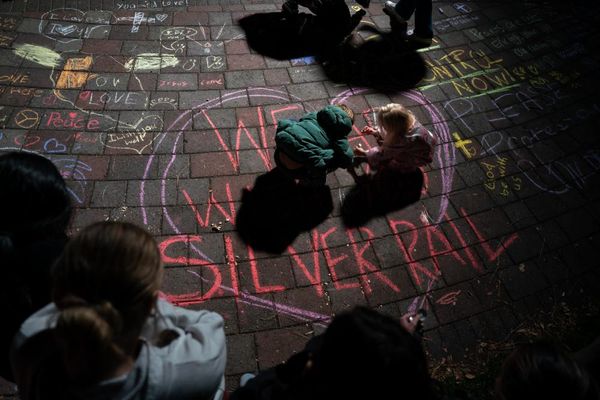
- More than 350 organizations marched from Congress to Plaza de Mayo on September 19 under the banner "Marcha de la Bronca," with crowd estimates topping 70,000 people in Buenos Aires alone.
- August inflation slowed to 1.7% monthly, its softest reading in 14 months, though the annual rate still sits at 33.5%.
- September's minimum pension totals $498,633.20 pesos, but the $70,000 bonus baked into that figure hasn't budged since March 2024.
- Country risk climbed to 533 points on September 21, a four-month high, the same day an IMF mission arrived to open the program's third review.
Organizers didn't soften their language. The eleven-page declaration read aloud in front of the Casa Rosada accused the Milei administration of overseeing the shutdown of 30,000 businesses and the destruction of 300,000 jobs nationwide, framing the protest as a call to "organize the rage to defeat Milei," according to the text obtained by Periodismo de Izquierda. The march, driven mainly by the Frente de Izquierda y de los Trabajadores–Unidad, drew replica demonstrations in dozens of cities across the country, per coverage from C5N.
Retirees at the Front of the Line
Pension recipients anchored the march's opening ranks, and the underlying math explains the frustration. Consumer prices have climbed 33.5% over the past year, according to INDEC's August report, while the extraordinary bonus attached to the lowest pensions has stayed fixed at $70,000 pesos since it was first set at that level in March 2024. Government officials defend the freeze on fiscal grounds, arguing that indexing the bonus without a funding source would widen the deficit and reignite the very inflation eroding pensioners' purchasing power in the first place.
Where a Factory Floor Went Silent
Laid-off industrial workers marched too, and the FATE tire plant has become their rallying point. The 80-year-old San Fernando facility shut down in February and dismissed its entire 920-person staff, telling employees that "changes in market conditions" left the company no alternative, according to Infobae's reporting on the shutdown. A sector analysis from consultancy PxQ, cited by La Nación, found tire imports rose 34.8% between 2023 and 2025 as import tariffs fell from 35% to 16%, while domestic tire prices dropped 42.6% in peso terms over the same period — the exact kind of foreign competition the government's trade-opening agenda aimed to produce. Seven months after the closure, occupying workers were still resisting a court-ordered eviction, according to Urgente24.
A Children's Hospital Fighting Over Its Own Numbers
Few fights have run hotter than the one over Garrahan, Argentina's leading pediatric hospital. A report from the Fundación Soberanía Sanitaria found the facility's 2025 budget was simply carried over from 2024 without adjustment, which — against that year's 117.8% inflation — translated into a real-terms funding loss of roughly 54%, according to the group's analysis published by Fundación Soberanía Sanitaria. The Health Ministry disputes that framing entirely, telling Ámbito that the hospital's funding actually grew 240% against that same 117.8% inflation figure once the year's full disbursements are counted rather than just the initial allocation. What both sides don't dispute: dozens of specialists resigned during the standoff, and by December 2025 ministry sources acknowledged to El Esquiú that the complaint was "understandable," since the proposed 2026 budget still didn't address either the hospital's or the disability sector's funding emergency.
A Debt Calendar That Doesn't Pause for Protests
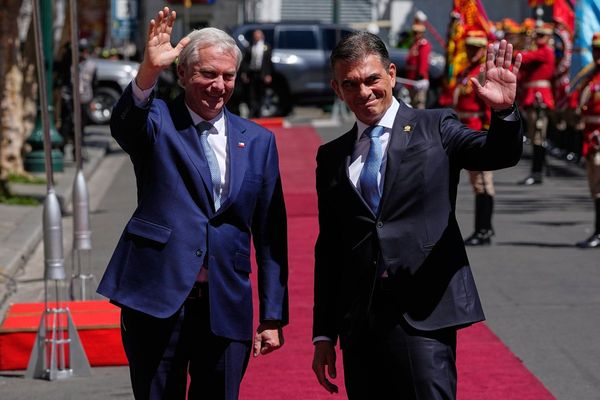
While marchers called for breaking with the International Monetary Fund altogether, the Fund's technical mission landed in Buenos Aires that same week to open the third review of Argentina's program — an evaluation that could release close to $900 million in fresh financing, according to La Nueva. The government has genuine wins to show the mission: gross dollar purchases by the Central Bank topped $14.2 billion this year, well past the $10 billion annual purchase target, while net reserve accumulation is estimated near $9 billion against an $8 billion goal, per analysis from consultancy Analytica cited by Mejor Informado. The fiscal side is tighter: Rava Bursátil analysts, cited by Misiones Online, put 2026's projected primary surplus at 1.3% of GDP, just short of the IMF's mandatory 1.4% target — a shortfall worth roughly 700 billion pesos. That tension showed up immediately in markets: country risk jumped nine points to 533 on September 21, its highest reading in four months, the same day the mission arrived.
Two Scoreboards, One Country
| Street protesters | Government & markets | |
|---|---|---|
| Top priority | Immediate income recovery | Preserving the fiscal surplus |
| Diagnosis | An adjustment paid for by workers | A necessary correction after years of deficits |
| Health & disability funding | An unresolved emergency | A push for efficiency over blanket increases |
| Preferred path with the IMF | Break with the Fund | Keep meeting targets to unlock financing |
The Number That Lands Next
INDEC's official poverty reading for the first half of 2026 arrives September 24, five days after the march. The last confirmed figure — 28.2% of the population, or 8.5 million people, covering the second half of 2025 — was already the lowest rate since 2018, according to La Nación. But INDEC's own quarterly breakdown shows the improvement had already stalled, with poverty bottoming out at 26.9% in the third quarter of 2025 before climbing back to 29.9% in the fourth, per Infobae. Private consultancy ExQuanti estimates the first-half 2026 total near 15.1 million people — which would mean close to 1.7 million Argentines slipped back below the poverty line in a matter of months, according to Opinando San Nicolás. Whichever way the official number breaks, it will color how much pressure builds before Congress opens debate on the 2027 budget — the moment organizers have already flagged as their next target.