Get all your news in one place.
100's of premium titles.
One app.
Start reading
The Conversation
The Conversation
Science
Carmel Mothersill, Professor and Canada Research Chair in Environmental Radiobiology, McMaster University

Russian capture of Ukraine's Chernobyl nuclear plant threatens future research on radioactivity and wildlife

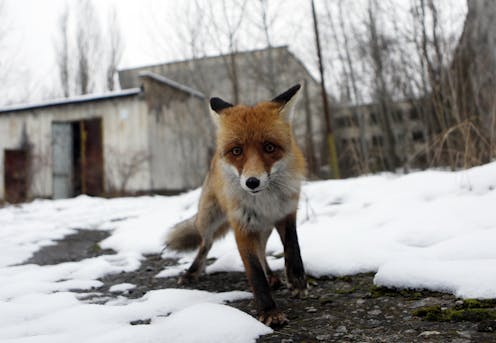
A fox roams the deserted town of Pripyat, three kilometres from the Chernobyl nuclear plant in Ukraine, in 2016. (AP Photo/Sergei Chuzavkov)

Shortly after Russia launched its attack on Ukraine, both governments said that the Russian military had taken over the decommissioned Chernobyl nuclear power plant, the site of the world’s worst nuclear disaster. In a tweet, the Ukrainian Ministry of Foreign Affairs raised fears of possible ecological disaster.

On April 26, 1986, a nuclear reactor at the plant near the city of Pripyat, Ukraine, exploded. The fire burned for 10 days, spewing a radioactive plume that stretched across Europe, as far as Ireland and Greece. The immediate area around the reactor was evacuated, and a 30-kilometre radius exclusion zone has remained in place for almost 36 years.

Sign up to read this article
Read news from 100's of titles, curated specifically for you.
Already a member? Sign in here
Related Stories
Top stories on inkl right now
One subscription that gives you access to news from hundreds of sites
Already a member? Sign in here
Our Picks
Fourteen days free
Download the app
One app. One membership.
100+ trusted global sources.