Get all your news in one place.
100’s of premium titles.
One app.
Start reading
International Business Times UK
World
Jay Gotera

Russia Invokes Nuclear Doctrine in Response to US-UK Seizure of Sanctioned Venezuelan Oil Tanker

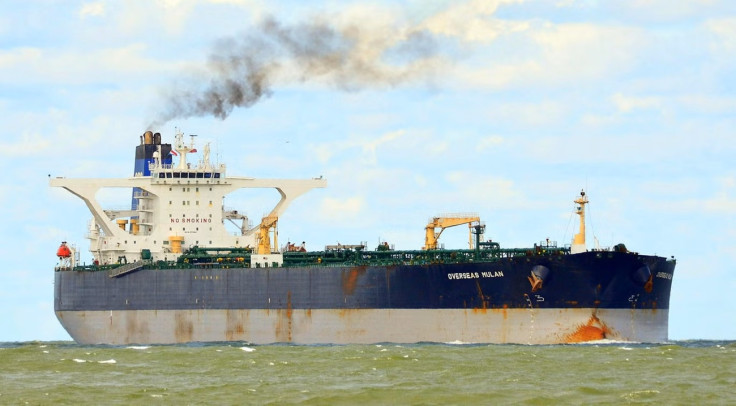
The Marinera tanker, pictured here in 2024, was previously known as Bella 1 and sails under the Russian flag. (Credit: Getty Images)

Tensions between Russia and the West have reached a boiling point as Moscow invokes its nuclear doctrine following the US-UK seizure of the sanctioned Venezuelan oil tanker Marinera.

Hardline Russian officials are calling for swift retaliation, including potential nuclear strikes, in response to what they describe as an act of piracy on the high seas. This high-stakes incident, unfolding in the North Atlantic, highlights the intensifying battle over Venezuela's oil amid broader geopolitical strife.

The Marinera, formerly known as Bella-1, was boarded by US special forces with British support on Wednesday after a weeks-long pursuit. The vessel had evaded a US blockade near Venezuela in December, repainting itself with a Russian flag and re-registering under Russian jurisdiction on 24 December 2025. US European Command confirmed the operation, stating it violated sanctions tied to illicit oil trade and links to groups like Hezbollah.

Russia's transport ministry lost contact with the ship around noon on Wednesday. They condemned the action, insisting no nation has the right to use force against properly registered vessels, and framed it as a breach of international maritime law. Russian officials exploded in anger over the seized oil tanker, demanding the crew's safe return.

The Tense Pursuit and Joint Boarding

The drama began last month when the tanker defied US Coast Guard attempts to board it off Venezuela's coast. Crew members renamed it Marinera and switched to the Russian flag mid-voyage, a tactic common among shadow fleets operated by Russia, Iran, and Venezuela to evade sanctions. US officials told CBS News they preferred to seize the vessel rather than sink it.

US forces, aided by the UK, executed the boarding in international waters between Iceland and Scotland. The UK provided surveillance from RAF aircraft and pursuit support from the RFA Tideforce. The UK's Ministry of Defence confirmed the assistance, accusing the ship of funding conflicts from the Middle East to Ukraine. A second tanker, the M/T Sophia, was seized in the Caribbean on the same day, amplifying pressure on Venezuela's exports.

US Defence Secretary Pete Hegseth emphasised the global enforcement of sanctions on Venezuelan oil 'anywhere in the world.' This rare direct action against a Russian-flagged ship raises the stakes in an already charged atmosphere. Russia had deployed a submarine and naval vessels to escort the Marinera, but they arrived too late to intervene. US reports indicate the tanker was empty at the time of the seizure.

Moscow's Rage and Calls for Nuclear Response

Russia's foreign ministry, under Sergey Lavrov, is closely monitoring the situation and has demanded humane treatment for the crew, including Russian nationals. The Kremlin accused the US of piracy, alleging a violation of the UN Convention on the Law of the Sea.

Alexei Zhuravlev, deputy chairman of the State Duma's defence committee, urged a strong reply. 'The response must be firm and swift – our military doctrine in such a case even provides for the use of nuclear weapons,' he said, equating the seizure to an attack on Russian soil.

Reserve Lt-Gen Andrey Gurulev supported strikes on Western targets using nuclear-capable Oreshnik systems. 'What's stopping us from striking, for example, at Rheinmetall, which produces ammunition for Ukraine? Nothing,' he stated. Likewise, Former US Marine John Mark Dougan, now in Russia, called the seizure 'theft and piracy' under legal guise.

Dmitry Medvedev, deputy head of Russia's security council, warned the Trump administration: 'Don't play games with Russia.'

In apparent retaliation, Russian forces hit Ukraine's energy infrastructure on Wednesday, leaving over a million without power in Dnipropetrovsk and Zaporizhzhia amid freezing conditions. Hospitals and transport were disrupted, with eight wounded in Kryvyi Rih from drone strikes.

Global Repercussions and Expert Analysis

Analysts compare it to Cold War standoffs, with risks reminiscent of the Cuban Missile Crisis.

The UK's Defence Secretary John Healey praised the operation as part of efforts to crack down on sanctions evasion. It follows previous US seizures, such as the Centuries tanker headed to China. Shadow fleets remain a key issue, enabling rogue states to circumvent sanctions.

On social media, reactions range from dismissing Russian threats as bluster to debates over the role of shadow fleets in funding conflicts.

No official US response to the nuclear rhetoric has been issued, but the seizure aligns with Trump's aggressive stance on Venezuela.

Latest Updates and Broader Context

As of Thursday, the Marinera remains in US custody after a peaceful boarding. Moscow continues to demand the vessel's release.

Experts warn that nuclear sabre-rattling could lead to unintended escalation, deepening East-West divides. Putin has remained publicly quiet, attending an Orthodox Christmas service, but the nuclear doctrine's invocation signals a dangerous new phase.

Sign up to read this article
Read news from 100’s of titles, curated specifically for you.
Already a member? Sign in here
Related Stories
Top stories on inkl right now
Our Picks
Fourteen days free
Download the app
One app. One membership.
100+ trusted global sources.