
Get all your news in one place.
100’s of premium titles.
One app.
Start reading
T3
T3
Technology
Lucy Miller

Runners often overlook this bodyweight exercise – but I’ve been using it to get faster

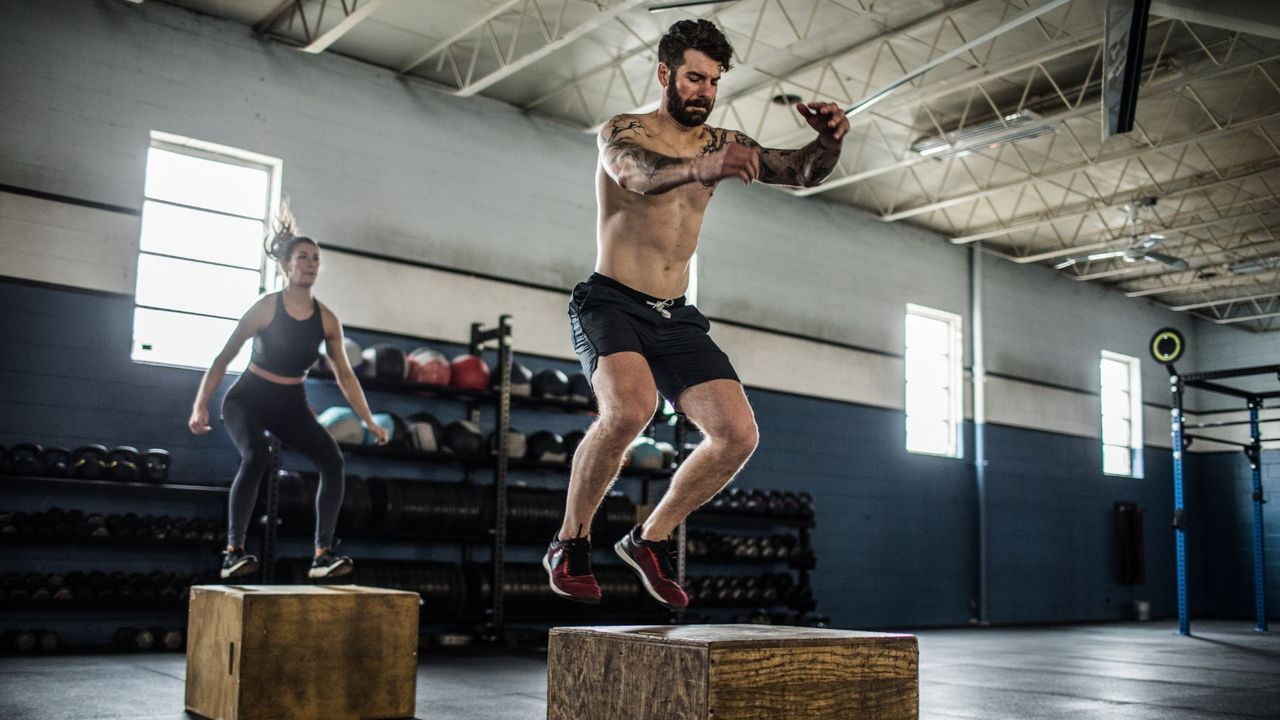
Plyometric exercise box jump being performed by a man and woman.

When it comes to getting faster, most runners think of hill sprints, intervals, or logging more miles. But there’s one move that rarely gets a mention, and it doesn’t require lacing up your running shoes.

The single-leg plyometric box jump is tough, effective, and could be the key to shaving seconds off your time. This challenging bodyweight move builds explosive power and functional strength while improving balance.

It might sound odd to train for a race by hopping onto a box, but the science is there. A study found that daily hopping drills improved running economy in amateur runners by boosting single-leg power and muscle elasticity.

It mimics the way you run – one leg at a time – but with more control and explosiveness, helping you run faster and more efficiently.

Lyndsey Hunter-Long, running coach and Les Mills trainer, also swears by the move. “Running is essentially a series of single-leg hops,” she explains. “So it makes sense to train your body in that same way.

Single-leg box jumps build explosive power, balance, and control - all of which carry directly over to your running stride. The stronger and more reactive your muscles are, the less energy you waste with each step, helping you run faster and longer.”

How to nail single-leg box jumps

Stand about a foot from a sturdy box and shift your weight onto one leg. Drop into a shallow squat, swing your arms, then explode up onto the box, landing softly and absorbing the impact through your hips and knees. Stand tall before stepping or jumping down. Finish all your reps, and then repeat on the other leg.

Focus on rhythm, control, and balance rather than chasing height. Lyndsey recommends beginners start with 2–3 sets of 5 reps per leg, taking a full 90-second recovery between sets. Once your technique feels solid, move up to 3–4 sets of 8–10 reps.

“Keep the box at a height you’re confident with, then gradually increase it as your power improves,” she adds. “It’s all about quality over quantity. Five perfect reps are far more valuable than 15 sloppy ones.”

What single-leg jumps did for my running

Every stride on a run requires power, balance, and stability. Single-leg box jumps replicate that, improving speed, efficiency, and muscular control. They strengthen stabiliser muscles around the hips, knees, and ankles, reducing injury risk and helping you spot and correct imbalances before they become a problem.

I’ve been doing these three times a week as part of my training for the Royal Parks Half Marathon with Sweaty Betty, and I’ll be interested to see how my time compares to last year.

So far, so good: I’ve had no injuries, and I’m running strong. Hopping onto a box felt daunting at first, but starting small and keeping my focus helped it click quickly. My confidence, speed, and agility have already improved thanks to staying consistent and moving with precision.

As Lyndsey sums it up: “It’s one of the most effective bodyweight moves a runner can add. Do them regularly, and you’ll feel the difference in every step. You’ll be stronger, more explosive, and more resilient on the road.”

Sign up to read this article
Read news from 100’s of titles, curated specifically for you.
Already a member? Sign in here
Related Stories
Top stories on inkl right now
One subscription that gives you access to news from hundreds of sites
Already a member? Sign in here
Our Picks
Fourteen days free
Download the app
One app. One membership.
100+ trusted global sources.