
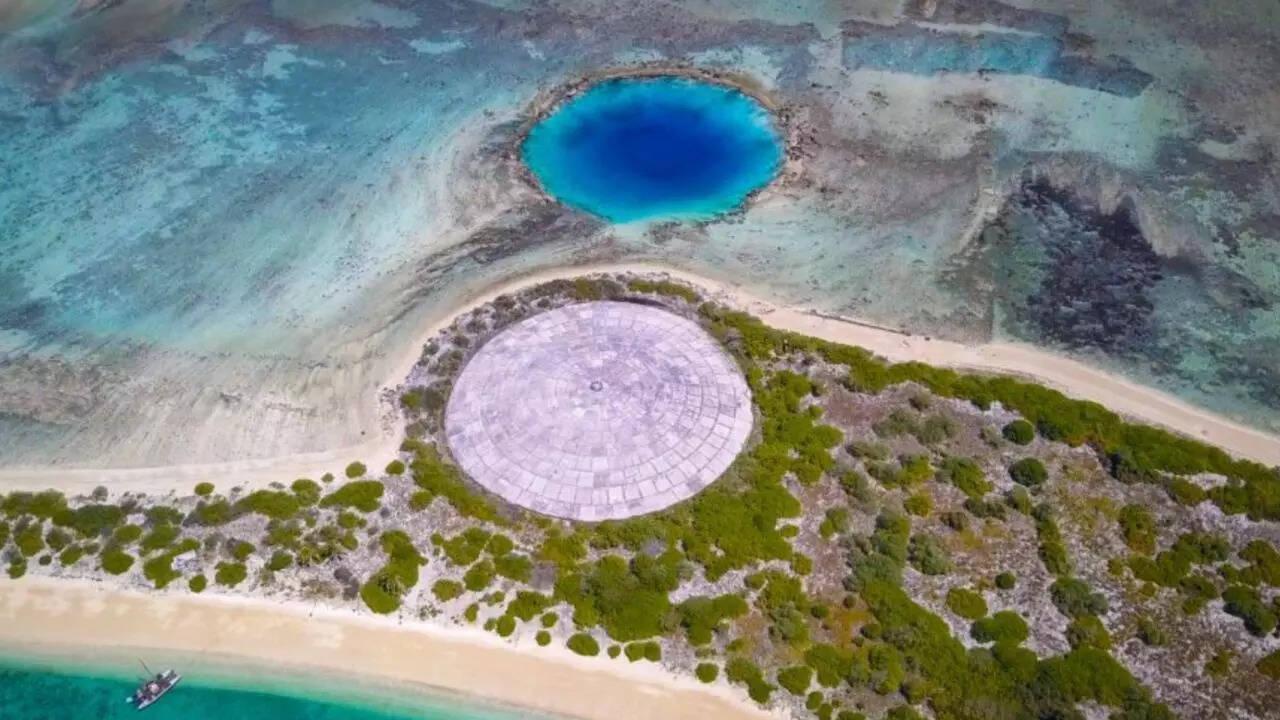
The structural integrity of the Runit Dome in the Marshall Islands, described as a 115-meter-wide concrete 'coffin,' is endangered according to the United States Government Accountability Office (GAO). This dome was built over an unlined crater from a nuclear explosion that occurred in 1958 and contains over 120,000 tonnes of radioactive debris- much of which is made of plutonium-239 contaminated soil. Rising sea levels and increasing storm intensity in the Central Pacific have caused the 18-inch-thick concrete dome cap to be compromised by forces (e.g., both rising and falling tides) that were not anticipated when the dome was built and were never taken into account for its permanently stored design conditions.
The porous nature of the coral substrate upon which the crater sits allows the radioactive waste to 'float' up and down with the tides and enables seawater to permeate the debris. The continued leakage of seawater from the degrading concrete cover, together with large visible surface cracks, has produced a 'ticking time bomb' environmental disaster that originated during the Cold War. International monitoring teams now warn that a catastrophic breach could saturate the surrounding lagoon with legacy isotopes, permanently devastating the Pacific’s fragile marine ecosystems.












