
Get all your news in one place.
100’s of premium titles.
One app.
Start reading
Tom’s Hardware
Tom’s Hardware
Technology
Zhiye Liu

Rumored RTX 5050 9GB GDDR7 could make hay from recycled RTX 5060 silicon — refreshed entry-level Blackwell card might finally have enough VRAM for DLSS and MFG in demanding games

GeForce RTX 5050.

The GeForce RTX 5050 may have been too modest a performer to make the list of the best graphics cards. However, rumors of an upcoming memory upgrade could make it more desirable for budget gamers. If the rumor mill is correct, the entry-level Blackwell SKU will transition from GDDR6 to faster GDDR7 memory and get a capacity boost from 8GB to 9GB of VRAM. Respected hardware leaker kopite7kimi reports that this upgrade continues Nvidia’s strategy of recycling flawed dies from higher-end models to maximize profits.

Go deeper with TH Premium: GPUs
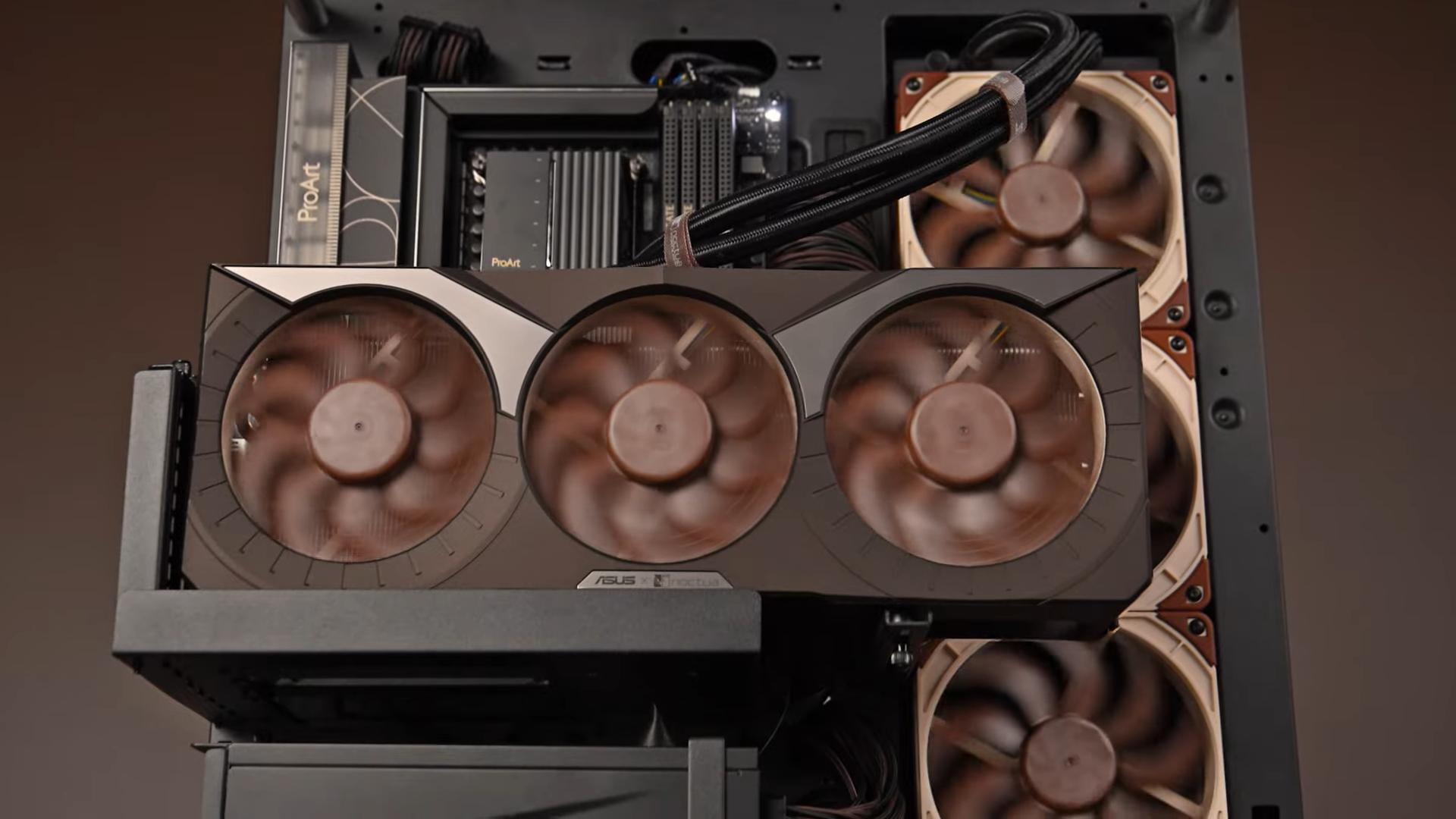
The GeForce RTX 5050 has always been the ugly duckling of the Blackwell family. While every other Blackwell GPU uses GDDR7 memory, Nvidia stuck the GeForce RTX 5050 with slower GDDR6 memory. GDDR6 is generally more affordable to purchase, and suppliers are still producing those chips. The problem is that they have begun transitioning to GDDR7. As a result, GDDR6 production is limited, and with the consequent shortages and high demand, GDDR6 prices are following a similar upward trend.

The limited supply and rising prices of GDDR6 are likely why Nvidia is revamping the GeForce RTX 5050 with GDDR7 memory. The chipmaker has probably already run the numbers, and GDDR7 makes more sense profit-wise. But the new RAM isn't just a drop-in replacement. According to kopite7kimi, the GeForce RTX 5050 9GB GDDR7 also uses a different die compared to the original model. While the vanilla GeForce RTX 5050 employs the GB207 die, the 9GB GDDR7 variant appears to switch to the larger GB206 die, which is present in higher-end SKUs such as the GeForce RTX 5060, GeForce RTX 5060 Ti, and the GeForce RTX 5070 Mobile.

A full GB206 chip features 4,608 CUDA cores, but any GeForce RTX 5050 would likely only use a little over half of that total. Nvidia can conveniently repurpose GB206 dies that don't meet the strict requirements for higher-end models in the GeForce RTX 5050. Salvaging dies like this is a common strategy in the semiconductor industry that helps chipmakers reduce electronic waste and optimize production efficiency by ensuring every usable chip reaches the market. The GeForce RTX 3050 went through the same process over its lifetime. It initially launched with the GA106 die and subsequently shifted to the GA107 die in its later three revisions.

GeForce RTX 5050 9GB GDDR7 rumored specifications

Graphics Card

GeForce RTX 5050 9GB GDDR7*

GeForce RTX 5050

GeForce RTX 3050 8GB

Architecture

Blackwell

Blackwell

Ampere

GPU

GB206

GB207

GA106

Shaders

2,560

2,560

2,560

Base Clock (MHz)

2,317

2,317

1,552

Boost Clock (MHz)

2,572

2,572

1,777

Memory Capacity

9GB GDDR7

8GB GDDR6

8GB GDDR6

Memory Clock (Gbps)

28

20

14

Memory Interface

96-bit

128-bit

128-bit

Memory Bandwidth (GB/s)

336

320

224

TDP (W)

130

130

130

*Specifications are unconfirmed.

The memory configuration of the GeForce RTX 5050 9GB GDDR7 differs significantly from that of its predecessor. While the original SKU has four 2GB GDDR6 chips, totaling 8GB of memory distributed evenly across four memory modules, the new 9GB variant uses a different approach, employing three 3GB GDDR7 chips. The upgrade not only increases the total available memory but also introduces a notable difference in its design.

Reducing the number of memory modules from four to three causes the memory interface to narrow. The launch configuration utilizes four 32-bit memory controllers, collectively providing a 128-bit memory bus. In contrast, the 9GB GDDR7 variant relies on three memory modules, each paired with a 32-bit controller, resulting in a narrower 96-bit memory interface.

However, GDDR7 mitigates this constraint because it’s significantly faster than GDDR6. The GDDR7 chips on the 9GB model run at 28 Gbps, 40% faster than the 8GB’s 20 Gbps GDDR6 memory chips. So, even with a reduced 96-bit memory interface, the former still delivers 5% higher memory bandwidth than the latter.

The GeForce RTX 5050 9GB GDDR7 will, in all likelihood, retain the standard GeForce RTX 5050's original 130W TDP. One of the key improvements from adopting GDDR7 regards power usage. While GDDR6 memory modules typically operate at 1.35V, the newer GDDR7 standard reduces the operating voltage to a range between 1.1V and 1.2V. This reduction in voltage theoretically translates into lower power consumption, but given that the rumored board power of the RTX 5050 remains the same as its predecessor, it seems possible that Nvidia is redistributing any power savings from the memory to the GPU itself.

A 12.5% increase in memory capacity and a 5% uplift in memory bandwidth will not magically make the GeForce RTX 5050 9GB GDDR7 much faster than its predecessor. Realistically, the 9GB version will be marginally better than the original if it comes to pass, since only the memory subsystem has improved, and the graphics card's other specifications remain unchanged.

An extra gigabyte of VRAM might address one of our largest complaints about the RTX 5050 (and other 8GB GeForces). 8GB of VRAM often isn't enough to run both DLSS upscaling and framegen together in some of today's most demanding games, even at 1080p, and that's a major issue as gamers lean more and more on those technologies to achieve a playable experience. The extra breathing room might allow for more consistent usage of DLSS and MFG on this rumored 9GB card, and that would likely be what it needs to be a solid budget contender. But we'll have to see whether it comes to pass at all, since this is of course only a rumor.

Sign up to read this article
Read news from 100’s of titles, curated specifically for you.
Already a member? Sign in here
Related Stories
Top stories on inkl right now
Our Picks
Fourteen days free
Download the app
One app. One membership.
100+ trusted global sources.