
Get all your news in one place.
100’s of premium titles.
One app.
Start reading
Digital Camera World
Tom May

Rugged phones completely changed my life in 2025 – here's why these big beasts have become my most trusted travelling companions

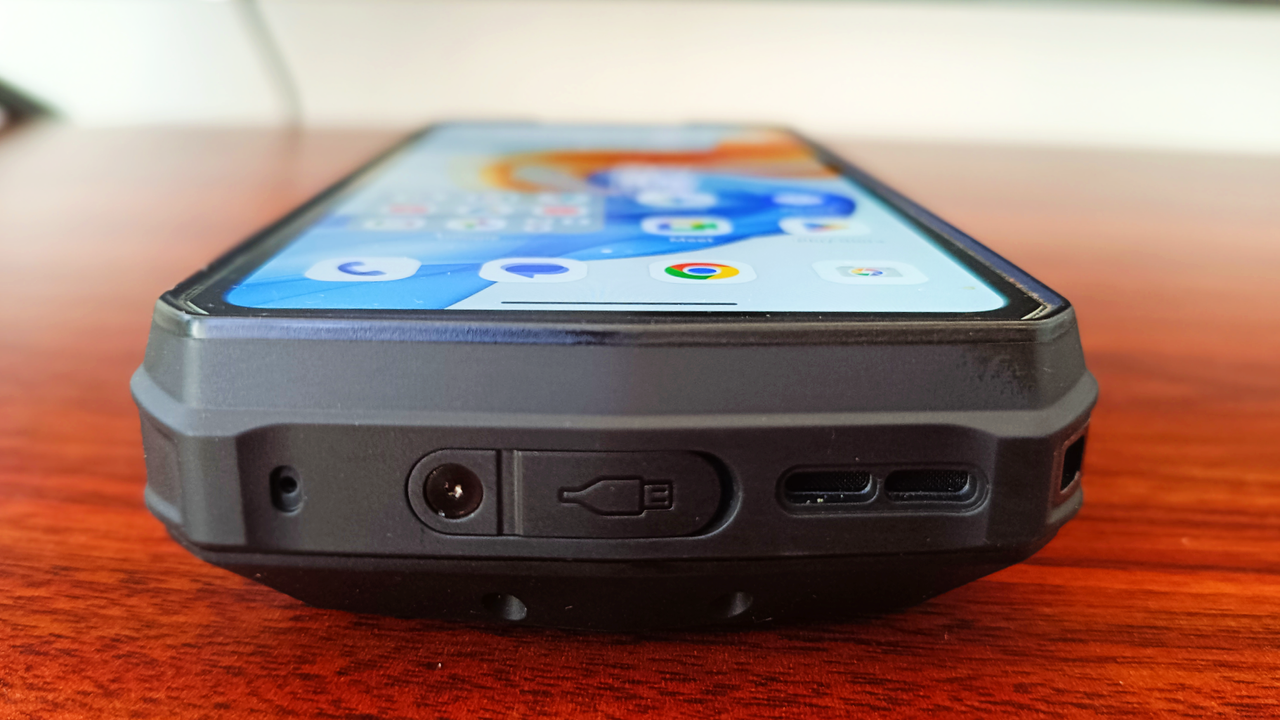
Ulefone Armor 29 Ultra phone on desk next to normal sized phone.

I'll be honest: when I first started reviewing rugged phones, I thought they were a bit of a joke. These massive, industrial-looking beasts that weigh more than a bag of sugar? Who needs them? Well, construction workers and the like, I guessed. But as for ordinary people…

As it turns out, though, I did need them. And after lugging either my Ulefone Armor 29 Ultra or Tank 4 Pro on countless press trips this year – from the Isle of Wight to Milan, Bilbao to Malaga, Kristiansand to Glasgow – I've had something of an epiphany.

These aren't phones. They're problem-solvers. And they've changed how I work.

The camera that fits in my pocket (sort of)

My Ulefone Armor 29, for example, has become my go-to phone camera. That 1-inch Sony IMX989 sensor allows in a ton of light and delivers genuinely impressive results that rival dedicated compact cameras. And yet I can chuck this beast in my bag without worrying whether it'll survive the journey.

(Image credit: Future)

Yes, it weighs 688g. Yes, it's 33.8mm thick. Yes, my jacket pocket looks like I'm shoplifting a brick. But when I'm on a press trip and need quick, quality shots without dragging around a proper camera setup, it's perfect.

The dedicated camera button means I can actually take photos like a human being rather than fumbling with touchscreen icons while my subject wanders off.

The ultrawide is brilliant for cramped hotel rooms and crowded events, while the infrared night vision has proved genuinely useful for shooting in museums and galleries where flash photography is banned.

Hotel room cinema

Here's another problem I've encountered (albeit the archetype of a "first-world problem"). I'm in a supposedly fancy hotel and want to watch something before bed to wind down. But the live broadcasts are all in a language I don't speak, and the "smart" TV is about as smart as a particularly dim houseplant.

The Tank 4 Pro's 1080p projector is top-notch (Image credit: Future)

Enter my Tank 4 Pro and its built-in 720p projector. I can now project my own content onto the hotel room wall – or ceiling, if I'm feeling decadent – without wrestling with incomprehensible TV interfaces or trying to work out which HDMI port might actually function.

The projector only works in the dark, mind you, and it'll chomp through about a quarter of your battery per hour. But for evening entertainment, it's absolutely brilliant. I've used it on camping trips, too, where it provides that cinema experience without having to pack anything particularly bulky.

The battery life of both these phones, by the way, is genuinely transformative.

At Glastonbury and Green Man festivals this summer, while everyone else was queueing desperately at charging stations or rationing their phone use, I was snapping photos, checking set times, recording interviews and calling mates without a care. Five days in a muddy field and my Armor 29 still had juice left.

Rethinking tech

So here's the broader point that's been brewing in my mind: maybe we've been thinking about tech spending all wrong.

Some people obsess over getting the latest, shiniest, flagship device. The newest iPhone. The fastest laptop. The thinnest tablet. We're convinced that one perfect device will solve all our problems, so we throw thousands at it.

But what if – hear me out – spending just a few hundred on multiple, more specialized devices would actually improve your life more?

The two screens and detachable keyboard of the Asus Zenbook Duo laptop made me much more productive (Image credit: Future)

When it comes to laptops, say, you might save more time overall with a two-screen setup like the Asus Zen Duo, rather than focusing on getting the fastest processor. While buying a cheap e-reader for the beach is much more practical than nervously clutching your expensive iPad, worried about sand and splashes.

The bottom line

Even the best rugged phones won't be for everyone. If you rarely leave your house, work in an office and primarily use your phone for social media, you probably don't need one. The bulk and weight will just annoy you.

But if you travel regularly, work outdoors or just want tech that won't spontaneously combust if you drop it, I reckon they're worth serious consideration. They've changed how I work and travel, solving problems I didn't even realize were problems until I found solutions. And really, isn't that what good technology should do?

Sign up to read this article
Read news from 100’s of titles, curated specifically for you.
Already a member? Sign in here
Related Stories
Top stories on inkl right now
One subscription that gives you access to news from hundreds of sites
Already a member? Sign in here
Our Picks
Fourteen days free
Download the app
One app. One membership.
100+ trusted global sources.